“It’s a girl!” Melissa Peterson exclaims.
Just outside the operating room, the hallway erupts in cheers. Joseph Dewane, an ob-gyn, has just delivered a healthy baby via C-section; Autumn Joi Goodwin-Samson, a neonatalist, tends to the newborn still slick with a waxy film.
It’s a successful delivery just like any other except for one, minor, difference: The patient is an orangutan.
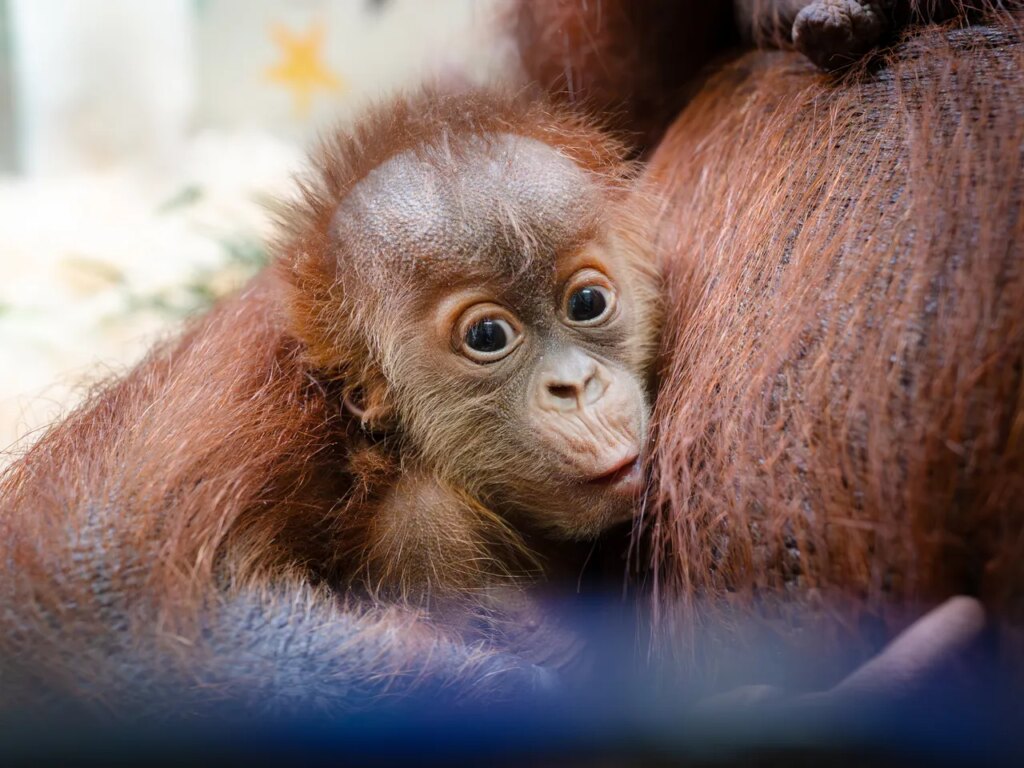
Ruhana—or just “Ru” for short—is one of eight orangutan babies born in a collection of US zoos since the beginning of 2025. For these critically endangered primates, that’s a staggering figure. It’s also not random: The baby boom is the result of a meticulous breeding plan and decades of research to weave a conservation safety net, one birth at a time.
“It might seem like it was all a coincidence that everyone was born at the same time, but it was very carefully planned,” says Angie Selzer, a senior animal care specialist with the Fort Wayne Zoo in Indiana and the Orangutan Species Survival Plan (SSP) program coordinator.
The SSP has been coordinating breeding recommendations since 1985; every two years, the program creates a breeding and transfer plan for animals at zoos accredited by the Association of Zoos and Aquariums (AZA). Geneticists from the SSP consult a “studbook,” which contains the pedigree of all the animals in their system.
“We want to maintain a healthy and sustainable population that mimics the natural history of wild orangutans while ensuring successful mother-rearing of offspring,” Seltzer tells WIRED. Their recommendation accounts for a number of breeding factors, including underrepresented genetic lines, each animal’s unique personality, and group dynamics—always aiming for the lowest relation between breeding pairs.
“We’ve had a very good, happy outcome,” she says. It all started in February 2025 when the Indianapolis Zoo welcomed Edi, a healthy baby boy. After that, Weila was delivered at the Hogle Zoo in Utah in June; Bintang arrived at the Los Angeles Zoo, and in December, the Memphis Zoo welcomed Ruhana. Peterson, the associate primates curator at the Memphis Zoo says being present for that moment was a “remarkable experience.” The run of babies has continued this year, with baby girls born at the Cameron Park Zoo in Waco, Texas, Sedgwick County Zoo in Wichita, Kansas, and Fort Wayne Zoo in Indiana. Just a few months ago, the Denver Zoo welcomed a baby boy named Rambutan.
Humans share over 90 percent of their DNA with orangutans, a figure well-evidenced in how they breed and give birth. Orangutans in the program are routinely given human birth control and human prenatal vitamins; they’re taught to pee on human pregnancy tests; they gestate for nearly nine months; and after humans, their offspring have the longest childhood of any mammal. While C-sections like Jahe’s are rare, some zoos keep ob-gyns on call for their orangutans and other primates.
“Looking at their eyes and their hands, it’s like a mirror,” says Matthew Lenyo, assistant curator of predators at Denver Zoo. “It’s humbling.”
As with humans, maternal behaviors are learned; training is a critical part of ensuring the health of orangutan babies. For first-time mom Hesty, the Sumatran orangutan at the Denver Zoo, training involved teaching her to pass the baby to and from keepers for essential health checks and nursing since Hesty’s mother had struggled with it.
For many zoos, prebirth training involves other orangutans in their care too. To be successful, this training requires a deep and hard-earned trust between keepers and these animals, and can prove invaluable if an orangutan cannot be cared for by their biological mother.
That happened at the Hogle Zoo, when Weila’s biological mom failed to bond with her. She was hand-reared by keepers while they prepared Acara—a proven foster who raised her younger brother—to take over as mom using a stuffed animal as a proxy. They slowly introduced the two to each other, rewarding Acara for properly handling Weila. “She also has a gentle behavior” and uses a very gentle touch, says Hannah Comstock, the animal care supervisor of primates at Hogle Zoo. The pair live together full-time now. Acara is a model parent, and Weila is thriving; she has even started adopting some of Acara’s mannerisms.
Still, zookeepers aim to be as hands-off as possible. “We do all this work, but then at the same time, the best outcome is when you’re not needed,” says Lenyo.
It’s estimated that there are around 100,000 Bornean orangutans and 11,000 Sumatran orangutans left in the wild. The population of Tapanuli orangutans is even more dire, with estimates indicating a few more than 700 are left in the wild. The rainforest habitat they rely on in their native Borneo and Sumatra is being razed to create palm oil plantations, and the great apes are also targeted by traffickers who kill orangutan mothers, kidnap their babies, and sell them on the black market as pets. Some estimates indicate that orangutans could go extinct in the wild within 50 years; some experts caution it could be even sooner, in the next 10 to 20 years.
While these new orangutan babies will not be released into the wild, they are a critical part of species conservation. Zookeepers call them ambassadors; when visitors can see the apes, abstract ideas like climate change and deforestation become more real.
But the captive population also has a direct impact on the well-being of wild and rehabilitated populations: Research conducted at AZA zoos on everything from disease management to quality of life is then relayed back to teams in Southeast Asia. Felicity Oram is a conservation practitioner and co-director of OrangJUGA, a Borneo-based conservation organization. Her research on orangutan’s teeth has been critical in the care of young orangutans rescued from the pet trade who live in rehabilitation and rescue centers. She quips that “captive orangutans can help their cousins in the wild and in rehabilitation centers just by opening their mouths.”
Before Oram’s research, estimating age was an imperfect science at best. “It’s very difficult with size,” Oram says. “It’s just like with human children—you go, ‘Isn’t that a cute 4-year-old!’ And then they tell you it’s 2.” She partnered with zoos, using data collected from captive orangutans to link tooth stages to behavioral and developmental stages. In turn, this research allowed rescuers to more accurately make critical decisions about nutrition, medical care, and socialization, giving these orangutans the best shot at having a successful life—and maybe one day having offspring of their own.
The post How a Secret Orangutan Breeding Program Is Creating a Baby Boom appeared first on Wired.