The headlines this week wrote themselves: Meta, humbled at last, agrees to pay up to $17.1 billion and accept the strictest limits ever imposed on teenage social media use. A combined two-hour daily cap across Instagram and Facebook. A midnight-to-6 a.m. blackout. Age assurance. Attorneys general from 47 states, the District of Columbia, and three territories took a victory lap.
But amid all this, Meta’s stock went up.
Wall Street understood something the headlines missed. Meta did not simply buy peace. It bought a government-backed campaign to press the same restraints on its rivals — restraints that, by design, might cost rivals far more than they cost Meta, thus serving Meta’s interests.
Start with the money. Only about 70%, roughly $12 billion over a decade, is guaranteed. The remaining $5 billion flows to the states only if Snap, TikTok and YouTube all adopt comparable restrictions. If even one rival firm holds out, the states forfeit the money to Meta. Meta has essentially posted a multibillion-dollar bounty, payable to the government, for regulating everyone else. Connecticut’s attorney general got the message within hours, telling TikTok, YouTube and Snapchat: “You’re next.”
But why would a company offer to pay billions to see its competitors shackled alongside it?
Because uniform restraints are rarely uniform in their effect. If a cost structure promises to hit a firm’s rivals harder than itself, those costs can be beneficial for the firm to pursue — a tactic known in antitrust law as raising rivals’ costs.
A canonical illustration is the 1965 Supreme Court case United Mine Workers vs. Pennington, in which small mine operators sued the United Mine Workers union and large coal companies for imposing a uniform wage scale on the entire coal industry. Though the new wages somewhat increased the big, mechanized producers’ labor costs, they knew that their smaller, less-mechanized competitors would suffer far more. Substitute teens’ social media activity for labor and Meta for big coal producers, and Meta’s new restrictions suspiciously resemble a Pennington wage standard for the social media industry.
Meta agreed to each restriction in the settlement expecting that its rivals will be bound just the same. For Meta to make its contingent payments to the states, rival firms’ limits must be “substantively equivalent” to Meta’s and may exclude nothing beyond messaging and long-form video without Meta’s written consent (which Meta may refuse to provide by showing that “significant competitive disadvantage” would result). And if a state grants a rival softer terms than Meta, that state will consent to soften Meta’s to match.
One particularly revealing provision is an exemption: “longform content,” defined as video running at least 22 minutes, does not count against teens’ social media use limits.
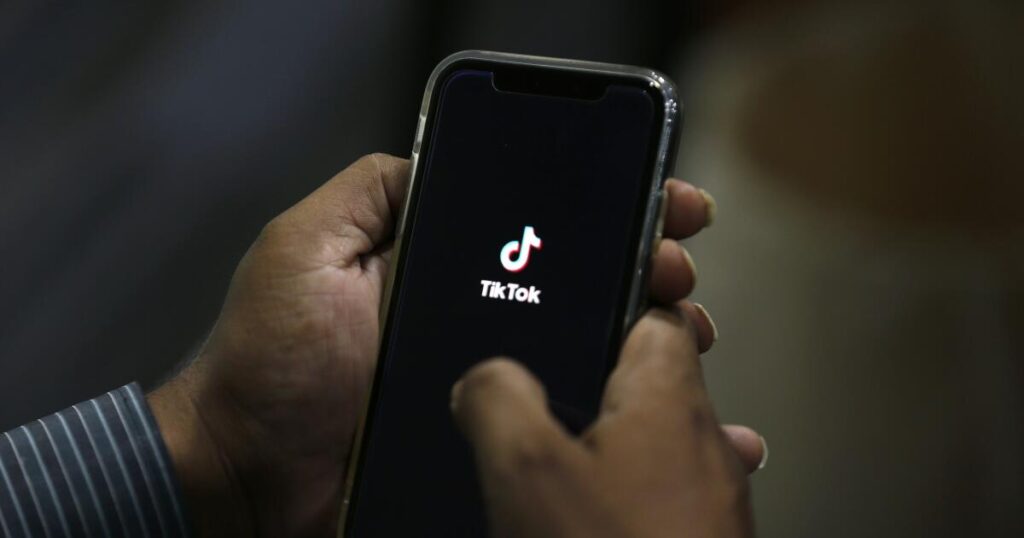
Consider which of Meta’s major rivals this exemption would spare. Despite their recent foray into short-form content, YouTube’s comparative advantage remains longer videos, and much of its teen usage could survive. TikTok’s core business, by contrast, is exactly the short-form, algorithmic scroll that Meta’s limits squarely target. The rule falls heaviest on the rival Mark Zuckerberg has called Meta’s most urgent competitive threat. The small mines, in this story, dance on your phone.
Meta’s insistence that its rivals be bound too may, in part, have an innocent explanation. Its lawyers have long argued that no single platform can be blamed for harming teens, because teenagers use all of them. On that view, if the harm is joint, the remedy ought to be joint too. The states wanted the same thing, to maximize what they collect and gain leverage over other firms.
But it is hard to see how this argument justifies provisions such as the 22-minute exemption, which has no clear connection to joint causation. And intent may not be what matters most. The unionized mine workers in Pennington genuinely wanted higher wages, yet their pay scale fell hardest on the mines that could least afford it. A uniform rule does not need a wholly bad motive to produce a lopsided result.
The strongest defense of this settlement is simple: The restrictions might meaningfully help our teenagers. Teen overuse of social media is a documented harm, so an industrywide cap promises a public-health benefit no matter who designed it or whose business interests it will serve — much as we once permitted a price-hiking cartel among major cigarette makers and credited it with cutting smoking.
None of this means that teenagers should go unprotected, or that the attorneys general were bought. The limits to which Meta agreed may do real good. But it is worth being clear about what happened. Meta did not surrender to regulation. It accepted restrictions it can absorb and paid the government a contingency fee to impose them on rivals that cannot. Antitrust law has little to say about that. The Pennington decision held that going to the government for an anticompetitive result can be lawful, “even though intended to eliminate competition.” That is the route Meta took. This settlement and the rules it imposes may be the company’s shrewdest acquisition.
Ian Ayres is a professor of law, management and public health at Yale University.
The post Teen-safety settlement is Meta’s shrewd move to hurt competitors appeared first on Los Angeles Times.