Subscribe here: Apple Podcasts | Spotify | YouTube | Overcast | Pocket Casts
The breakout crime drama Furious opens with a scene that’s hard to watch: Catherine, a serial killer played by Lola Petticrew, is keeping a man prisoner in a row house and taunting him as he dies: “I don’t like the sounds you’re making.” The show’s creator, Liz Meriwether, is announcing right away that you will be spending time with a monster, and the discomfort amps up from there. As the show progresses, we learn that Catherine has been trafficked, and the men she is killing were involved in her abuse.
In an era when “Epstein Island” exists, Catherine represents a specific kind of psychopathic serial killer. She is, as the title suggests, one of the Furies exacting revenge in a world that hasn’t managed to execute justice for her the legal way.
Meriwether says she did not set out to make a statement on the state of female rage or American justice, or even a commentary on Epstein, yet the show may have hit a nerve because those issues are so alive right now. Nine years ago, women’s anger fueled the MeToo movement, and it seemed as if the way society confronts sexual harassment and abuse was on the brink of transformation. “Misogyny is more overt on the internet than it’s ever been,” the Atlantic staff writer Sophie Gilbert says. “And you think about what happened to that anger and what happened to that rage, and I know from my own perspective, you can’t live with that kind of anger for a decade. You just can’t. It has to burn out. It has to go somewhere, or you just get numb.”
In this episode, Meriwether talks about the complications of humanizing a serial killer and how the project of creating complicated women characters has evolved in her decade of writing for television. And Gilbert talks about what it means that more women creators are owning the stories told about women.
The following is a transcript of the episode:
Hanna Rosin: A female monster is a rare but recurring creature. She often emerges at moments in history when women in society are collectively angry at the powers that be but unable to express it. Maybe they’re too defeated or maybe numb, so the monster gets revenge for them.
I’m Hanna Rosin. This is Radio Atlantic.
Right now, there is a particularly interesting monster out there taking revenge on a fictional Jeffrey Epstein. It’s playing out on the Hulu show Furious—the season finale aired this week.
Sophie Gilbert: Well, it was one of those shows that became a slow burn, I think.
[Theme song from Furious]
Rosin: This is staff writer Sophie Gilbert.
Gilbert: When it first debuted, there wasn’t that much chatter about it. But then you started to see people watch, and it became this word-of-mouth hit.
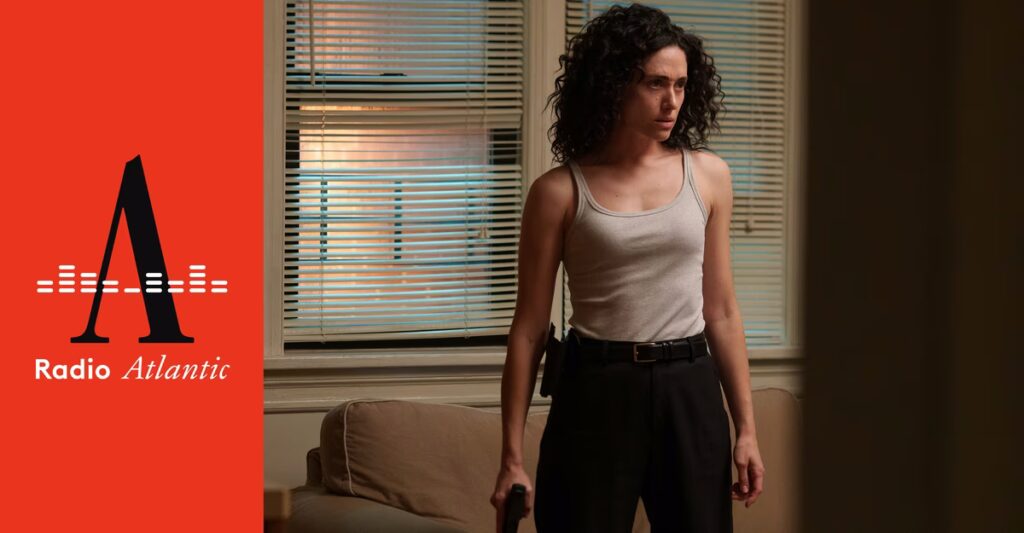
Rosin: Furious is a dark and sometimes disturbing TV show about a female serial killer, played by Lola Petticrew, who is pursued by a female FBI agent, played by Emmy Rossum.
Gilbert: So there’s a lot about it that is quite kind of tropey, old-school procedural. It’s a crime show. The cop and the killer being pursued, they have that kind of, Oh, we’re not so different, you and I, kind of thing going on.
But at the same time, it was also like no other procedural I’ve ever seen, in the sense that in so many crime shows, you see women’s bodies used like window dressing almost. And this is a show that really seems to be made about women, not for women necessarily, but it’s interested in women. It’s interested in what happens to women when they go through traumatic experiences, what happens to women when they become angry. There’s so much that is kind of really deep and tied to these mythological elements of transformation and violence. And it just works well on so many levels.
Rosin: The show’s mythological elements are in the name. It’s called Furious after the Furies, the Greek goddesses of vengeance. In the show, the Furies are implied to be serial killer Catherine, FBI agent Alice, and Alice’s mentor, Nora—three women who, in different ways, have all failed to find the justice they need.
Gilbert: So Nora Washington is the head of the FBI’s sex-crimes unit in the show. She’s played by Quincy Tyler Bernstine in this extraordinary performance. She’s so good. And she has a few speeches where she’s talking to Alice Black, sort of the main character in the show, who’s played by Emmy Rossum, who is trying to become an FBI agent under her wing. And she’s explaining to her the toll that this job takes, of looking into these horrendous sex crimes, these crimes often against underage girls, against children.
You take on this responsibility when you do this job of doing this thing that no one else will do, to try and achieve a measure of justice, or certainly a measure of justice that is often impossible, and it changes you.
Quincy Tyler Bernstine (as Nora Washington in Furious): Everyone likes it when there’s a sweet little woman lying on the floor, naked and cut up in pieces. I get so fucking angry.
Gilbert: Because you have to become, in some ways, a monster to do this day after day.
Bernstine: It doesn’t matter, anything you do. The ones who are really to blame don’t get caught. Never. Never.
Gilbert: So there are all these sort of elemental themes of Greek tragedy and Greek drama that seem to come through.
Bernstine: You think you’re ever gonna catch anyone who matters?
Gilbert: So this show starts with a scene of a woman whose name we later find out is Catherine—she’s played by Lola Petticrew—who is keeping a man prisoner in a Brooklyn row house on Halloween.
[Sounds from Furious]
Gilbert: And Catherine is wearing a mask, and she is eating candy corn, and she is clearly torturing this man. And then eventually, we see her murder him.
Lola Petticrew (as Catherine Grace in Furious): I don’t really like listening to you. I don’t like the sounds you’re making.
Gilbert: And the show begins in this really stark way of saying, This is who this character is. Like, Be horrified by this; be appalled by her actions. It’s sort of really uncomfortable to watch in lots of ways, really visceral. And then as the show goes on, you understand more about who she is. You understand her history. You understand why she’s doing what she’s doing, her flawed but in some ways very sympathetic logic. And you see her full humanity. And she becomes, yes, a serial killer, but one who does seem to be doing it for reasons that are, if not fully justifiable, you start to sort of empathize with them a little bit more.
Rosin: Yeah. And here’s the difficult thing: The parallels to the current world are apparent. This is essentially a Jeffrey Epstein setup. It’s a setup about people who are portrayed as rich. There’s a man at the center of it. There’s a sort of a twisted luring in of teenagers and young women. It really has obvious parallels to the world we are currently living in. And here’s a woman exacting justice because the justice system wouldn’t.
Gilbert: Yes.
Rosin: So as I describe it, it is sympathetic. You are, in some ways, supposed to root for this person who at the very first scene is gruesome.
Gilbert: I don’t know if you’re supposed to root for her, but it becomes impossible not to, in some ways.
Rosin: Yeah, yeah.
Gilbert: And I think that’s part of the trick. The show is not black and white morally. It reveals things, and it explains them, and it offers context for them. And we, as human beings, watch it, and we have our own context, and we have our own life experiences, and we add. And we’re supposed to make our own judgments, but I don’t think the show is telling us what to sort of presume one way or another. And that, to me, is what makes it so interesting as an experience.
But yes, this character Jay Easton is, obviously—he’s certainly in the Jeffrey Epstein mold. He’s a billionaire. He’s revealed to have preyed on hundreds, maybe thousands of young, underage women. And yet, what again is striking about the show is that he’s not really interesting. He’s not a character who the show is sort of interested in delving into, really. The show is much more curious about the impact he’s had on the lives of women and girls, and that, I think, is often what goes underplayed or what is missing in our Epstein discourse as well. So it’s shining a light on a different facet of this very topical issue.
[Music]
Rosin: As I watched episode after episode, I had a very uncomfortable reaction that I’m guessing other people had, that the creator of the show, Liz Meriwether—who we’ll talk to later—says she intended: I was not, not rooting for the serial killer, this deeply unlikeable, twisted, dark, criminal young woman who was effectively hunting down the men who had abused her when she was a teenager.
Gilbert: Without being, like, morally endorsing murder, it can be cathartic to see where they go with it and to imagine what happens when there’s no justice possible. What do you do with all that rage?
Rosin: Sophie wrote about the show recently for The Atlantic, about how the grief, anger, and rage in Furious reminded her of a different time, nearly a decade ago, when similar feelings of anger generated headlines, spawned think pieces and hashtags, and started the MeToo movement that ultimately fizzled out.
Rosin: Yeah. So what does that reflect in the culture then? A sense of frustration, helplessness? What does that mean?
Gilbert: For me, the show really resonated when I was thinking about—first of all, it’s been almost a decade since the MeToo moment, which is just wild to think about anyway, all this time. But when you think about what happened at the end of 2017, the revelations about Harvey Weinstein, the revelations about all these men—
Reporter (from ABC News): New Yorker magazine reporting new claims of sexual harassment, assault, and rape. One of his accusers going to police, secretly recording her confrontation with Weinstein, but no charges were ever filed.
Gilbert: —there was so much in the sense that we were in this moment of societal transformation and women’s anger. There were so many books written about women’s anger. There were TV shows written about women’s anger. It seemed like rage and fury, and righteous fury, was this great theme in our culture that might have a kind of revolutionary force, that it might help upend systems and overturn injustice.
Reporter (from CBS Miami): Instead of naming one person, Time magazine named its 2017 Person of the Year the “silence breakers,” the name given to the women who came forward to report sexual harassment and assault, sparking the MeToo movement.
Gilbert: And then you look nine years later and you think, Wow, actually, none of that has happened. We’ve, if anything, lost rights. Misogyny is more overt on the internet than it’s ever been. More and more injustices and horrific crimes against women and girls are revealed. I mean, really, it feels almost daily. We have an overtly misogynist president, I would say. And you think about what happened to that anger and what happened to that rage, and I know from my own perspective, you can’t live with that kind of anger for a decade. You just can’t. It has to burn out. It has to go somewhere, or you just get numb, I think.
And so what this show is doing, which really connected with my own sense of just being unable to feel that rage day after day after day, is wondering what happens when it becomes something else, when it takes a different direction, when it realizes that justice is impossible, and so vengeance is the next best thing.
Rosin: Hmm.
I wanna ask about the broad sweep of things. In your book, Girl on Girl, the thesis is that pop culture taught Millennial women to hate themselves, or maybe just that pop culture of the ’90s and aughts hated women in a certain way. This is a show conceived of by women, written by women, in which a woman and the Furies do get revenge. Does that at least agency, even if it’s a perverse agency, does that represent something different, like controlling the narrative?
Gilbert: Yes, the stories that we get now about women, about the complexities of their lives, the conditions that they’re living under, like the truth of their experience, are made by women about women.
There’s so much that is so much better than it was even 10 years ago. And I was reading an interview with Liz Meriwether, the creator of Furious, where she said—because she’s the creator of a much-beloved sitcom, one of my favorites, called New Girl—and she was mentioning the notes that she got from Fox in terms of sort of making the character more likable and making it broadly more appealing to men, and how now, making this show, Furious, there was none of that.
There’s much more appetite I think, or at least more understanding on the part of people commissioning work like this, that you can be interested in women as a subject and that will make great art that will connect with viewers and be enough of a justification. We don’t need to always be kind of shushing women in a way.
Rosin: Yeah. And it’s not just, you can be interested in women. You can be interested—I mean, the task she’s setting out for a viewer here is: You can be interested in a woman who’s, like you said, a monster. From the very first scene, she’s the exact opposite of a beautiful dead victim. She couldn’t be less likable, at least in the very beginning.
Gilbert: Yes. And the show really trusts us as audiences to see that and to keep watching, which I think is fascinating all on its own. Like, there’s this idea that we don’t need to be coddled into finding this woman cute and sexy. (Laughs.)
Rosin: Yeah.
Gilbert: We can see what she is and we can be hooked anyway, because we’re sophisticated enough consumers of media to understand that the payoff might be worth it.
[Music]
Rosin: After the break, we talk to the Furious showrunner, Liz Meriwether, about why she created a monster you don’t necessarily hate.
[Break]
[Music]
Rosin: Liz Merriweather started as a comedy writer. As Sophie mentioned, her breakout hit was New Girl. Then she wrote The Dropout, a show about Theranos founder and convicted fraudster Elizabeth Holmes—also not a classic lovable type. And then Dying for Sex, about a woman who has a terminal-cancer diagnosis—so potentially a perfect victim—but instead, she decides to spend her final months having a lot of sex.
We’ve talked a lot on this episode about post-MeToo progress being stalled. But this—this creation, by female writers, of female characters who test the bounds of likeability—is also a kind of progress. I talk to Merriweather—who is in the writers’ room working on Season 2 of Furious—about how her ability to write female characters exactly how she wants them has evolved.
[Music]
So the terrible word that’s imposed on female characters forever, which is likable— female politicians, everybody, likability—from the very first scene, you make the decision to make Catherine not likable. Did you get any pushback on that? Like, Put some woman in there who is more pure, or a sort of more recognizable person you can attach yourself to?
Meriwether: As somebody who’s been doing this for about 15 years now, and when I first started doing it, got that note all the time, I was surprised that I didn’t get that note.
Rosin: Can you actually talk about that? ’Cause you were mostly known as a comedy writer. New Girl was the breakout hit, and when you were writing that, what were the conversations like about how weird or unconventional a main character who’s a woman could be?
Meriwether: Yeah. The notes I got were, like—the first pilot I wrote was called Sluts. It was kind of Girls before Girls, in a way. It was three girls in New York who just, like, had a lot of sex and just were deciding to get their lives together and sort of stop having so much sex. And this was for Fox. It was never gonna get on the air. But that was the first pilot that I wrote, and I had conversations with executives that were like, She either is smart, or she likes sex, and that was a binary thing that I had to genuinely have a conversation with somebody about. Where I was like, No, you can be smart and also have had a lot of sex.
Rosin: So you were in your 20s when you wrote that pilot, when you wrote Sluts.
Meriwether: Yeah, I was, like, 25 or something. Yeah.
Rosin: And did you already know, I’m trying to push against some kind of tropes or ideas of how female characters should be?
Meriwether: Yeah. I mean, I think I’ve always come from a place of, like, I’m gonna make jokes about it or try to come at it from a little bit of a sneakier place. I’ve never been a writer that’s been very I have a big statement I wanna make. Which is, honestly, why this show kinda scared me a little bit, because I was like, I don’t get to hide as much.
I don’t get to kind of, like, you know, tap-dance and make jokes and say, like, No, look over here. Look over here. Look over here. But yes, I’ve always been interested in trying to put women on screen that are not what you have seen before. That’s been something that I’ve been interested in for a long time.
I just feel like we’ve taken steps forward and steps back over the past 15 years, but there’s definitely more complicated female characters on television now than there was back then. When New Girl first aired, I did a lot of press. It was, like, me and Whitney Cummings had comedies coming out, and [people] were like, We can’t believe there are, like, comedies written by women—more than one comedy written by women.
That was like the main thrust of the press. And that would never be a story nowadays. So yes, there, I mean, there is growth. I think that there’s also a lot of moving forward then moving backwards.
Rosin: Yeah. For this episode, we also interviewed my Atlantic colleague Sophie Gilbert, who wrote this book Girl on Girl, which is about how pop culture of the late ’90s and aughts hated women or taught Millennial women to hate themselves.
And I was thinking about you because you, that’s your era of pop culture. I also saw that you signed on to write the biopic of Britney Spears, who is the ultimate example of how the late ’90s and early aughts chewed some women up. And so I wondered if that was part of what motivates you or what excites you about these kinds of projects.
Meriwether: I think so. Yeah. I mean, I do kinda just keep my head down and keep moving forward. Like, I don’t go from a place of like I have an agenda. But yes, those are the characters that really excite me—the women where it’s, like, very hard to put into words how you feel about them. You don’t know if you’re rooting for them or not. I do think it’s a very interesting, fun place to be as a writer, maybe because of all of the notes I got about likability and the desire to sort of get away from that. But I also think it’s not interesting to make somebody completely evil. I think that middle space is really interesting.
Rosin: And maybe it just feels more true.
Meriwether: Yeah. There’s also a tendency to, say, victimize women in a different way, where it’s like they had no agency in what happened to them or, you know, they are completely products of a broken system, which I feel like is not fair either and a little bit patronizing and boring, honestly. So I think I’m interested in, like, all the nuances of why people do the things they do.
[Music]
Rosin: Sophie, you know what I was thinking about? The Olivia Rodrigo reprisal of Lilith Fair.
Olivia Rodrigo: 45,000 people at this festival tonight. Can you believe it?
Rosin: I don’t know if you saw the documentary about Lilith Fair.
Gilbert: I did, yeah.
Rosin: So I watched that documentary, and I think I might have cried, honestly, because I thought, Oh, well, that era is dead. Like, We will never, ever have that back again.
[Sounds from the Lilith Fair: Building a Mystery trailer]
Rosin: A sort of collection of women getting together, talking about their music, entirely made for and run by women, and yet here it is reprised this summer. And I thought, Oh, maybe the sense of agency that’s emerging, it does feel different than what you wrote about [in your book]. It does feel different than the Britney Spears era, the era in which women died by those cultural stories. Now it feels like they’re writing the stories, and so even though they might be grim or they might be inspirational, they are controlling the narrative.
Gilbert: That Lilith documentary was so good and I think so sad, for exactly the reasons that you said, which was: It seemed the last moment when this idea of a women-centric society, or at least an alternative society, seemed possible. (Laughs.) And then everything that happened afterwards in the 2000s, and just this real decade of victimizing women for living their lives in public.
But yes, again, we have this moment of a mainstream pop star holding a massive music festival for abortion-rights charities and reproductive rights, which you can’t imagine someone like Taylor Swift doing that.
Rodrigo: Today I’m so aware of all the women who came before me, who fought for me to enjoy the rights that I enjoy today.
Gilbert: All right, it’s not as subversive and as edgy as what riot-grrrl musicians were doing in the ’90s, but it’s political. It’s active. It’s angry about the way that things are, and it’s willing to take a stand to change them. And then it also—I think the thing that I found so fascinating about this festival, Daisy Chain, was that it just demonstrates the power that women have in the music industry.
Of all the different cultural industries, music really seems to be one where women are dominant right now—where they sell the most records, where they’re making the most interesting music, where they’re the ones that we are drawn to. They have these huge tours, and they have this huge fandom, and they are front and center in music and powerful in a way that men are not. And that, I think, is interesting right now, in this moment. And the question of why, I don’t know. But if we’re looking for things to be hopeful about, that’s definitely one.
Rosin: Right, ’cause in thinking about women’s anger, I got stuck in a kind of limited narrative, which is, Oh, in 2017, women were able to channel the anger in a productive direction. People told their stories. Sort of a dam burst open. There were truths out there, and that was cathartic. And in 2026, we get a serial killer. So then I was trying to think, Well, maybe that’s not that simple. There are places that anger finds an out that are more joyful or productive, and so this is one that I look to.
Gilbert: Yeah. Olivia Rodrigo just released a song called “Serena Joy,” which is named, obviously, after the character in The Handmaid’s Tale who has helped subjugate other women. One of the lyrics in it is, “If you can’t throw a punch, you can learn how to spit.”
[“Serena Joy,” by Olivia Rodrigo]
Gilbert: Just, it’s this idea that numbness is not inevitable. We don’t have to just be complacent forever and ever and ever while our rights are eroded and things are taken away—that in some ways, cultural power is still there, and that there are still women sort of taking a stand for things, and in some ways, storytelling is able to do such interesting work now because we are in a different place than we were in 2017, and we’re much more open to ideas about what’s possible, even if it doesn’t seem like it’s easily achievable.
Rosin: Yeah. Well, Sophie, thank you so much for talking this through with me today.
Gilbert: Oh, it’s a pleasure. Thank you for having me.
[Music]
Rosin: This episode of Radio Atlantic was produced by Rosie Hughes and Jinae West with help from Jacob Smollen. It was edited by Claudine Ebeid. Rob Smierciak engineered and provided original music. We also had music from Breakmaster Cylinder. Fact-checking by Sam Fentress. Claudine Ebeid is the executive producer of Atlantic audio, and Andrea Valdez is our managing editor.
Listeners, if you enjoy the show, you can support our work and the work of all Atlantic journalists when you subscribe to The Atlantic at TheAtlantic.com/Listener.
I’m Hanna Rosin. Thank you for listening.
The post Creating the Perfect Female Monster appeared first on The Atlantic.