Last year, the Trump administration proposed a “compact” to nine universities, attempting to dictate campus governance on items ranging from admissions criteria to the potential elimination of departments that “belittle” conservative ideas. Schools were told they would receive favorable treatment if they signed. Those that refused might forfeit federal benefits. As one law school dean wrote in these pages, it was “extortion, plain and simple.” Wisely, the targeted institutions didn’t sign on.
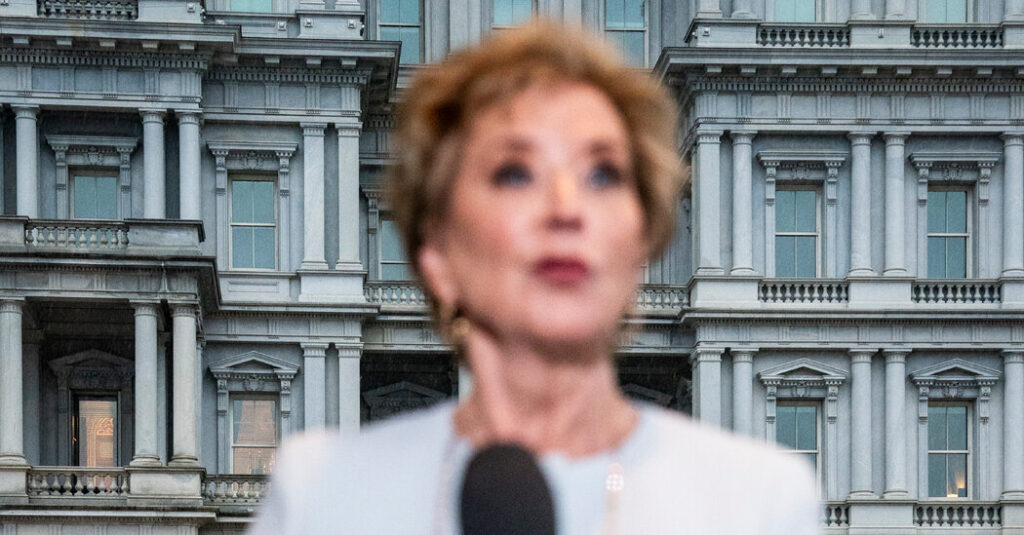
A few weeks ago, Education Secretary Linda McMahon introduced what some are calling Compact 2.0: an open letter urging university presidents and governing boards to post statements “prominently” on their websites that address seven topics and detail intended reforms.
It’s a trap.
Ms. McMahon asks how universities will ensure that admissions are “based on merit” and how they will promote free expression and ideological diversity, guarantee that protesters do not harass students or disrupt classes, make education more affordable, fight grade inflation, protect against foreign influence and meet work force needs.
On their face, these aren’t unreasonable questions, and this time around they are presented more like requests than demands. But a closer look reveals how responding unwarily could expose universities to grave risks.
Ms. McMahon doesn’t spell out consequences for noncompliance, but as the American Council of Learned Societies has noted, her letter should be understood in the context of the damage that the administration has already done to higher education. Since returning to office, President Trump has pursued a multipronged assault, threatening universities with the loss of federal funding and tax-exempt status and putting up barriers to enrolling international students and hiring international faculty.
Amid government pressure, universities have been pushed to alter syllabuses, close academic programs and penalize faculty, flouting the First Amendment. Schools have been coerced into legally dubious agreements.
The administration has hammered universities with investigations and lawsuits that purport to be ferreting out bias, but should be seen for what they clearly are — attempts to impose an ideological agenda. In August, The Times reported on a whistle-blower complaint that Trump officials employed “a predetermined, outcome‑driven approach” to antisemitism inquiries, “rather than a fact‑based investigative process.”
The Trump Justice Department has stated its intention to use the False Claims Act, with its severe penalties, including treble damages, to pursue cases against schools for “civil rights fraud.” The General Services Administration has proposed a requirement that federal funding applicants certify compliance with the administration’s nebulous and overbroad definition of unlawful discrimination. The White House Office of Management and Budget has put forth a plan that would essentially allow political appointees to veto any federal grant not aligned with the president’s priorities.
You can see how universities might hope to head off government attacks by trying to meet Ms. McMahon somewhere in the middle. But universities that respond with the detailed declarations she requests risk having their words turned against them.
Take, for instance, university admissions. Ms. McMahon cites “allegations of favoritism, unjust outcomes and illegal discrimination” and “accusations of covert attempts to evade” the Supreme Court’s decision in Students for Fair Admissions v. Harvard — the case that ended race-based affirmative action in college admissions. But the administration defines discrimination very differently than the court did. The court acknowledged diversity as a laudable objective and explicitly allowed for consideration of how an applicant’s race has affected his life, “through discrimination, inspiration or otherwise.” By contrast, the Trump Justice Department has issued guidance suggesting that the use of factors such as socioeconomic status, geographic diversity and even “overcoming obstacles” is prohibited.
The tension between these interpretations isn’t just theoretical. A recent Justice Department letter said that Duke Law School’s consideration of applicants’ eligibility for financial aid or first-generation status in making admissions decisions is evidence of impermissible racial discrimination. This view, if taken to its logical conclusion, would mean that a school could be punished for considering the character and resilience of a student from a rural, low-income background when comparing him to an applicant who attended an elite prep school and enjoyed all the advantages of parental wealth.
What might happen to another school that articulates a commitment to race-neutral admissions — and posts it on its website — but then considers economic hardship in admitting students or granting scholarships?
Or imagine that a private college announces rules about on-campus demonstrations and students violate them. Even if a school has pledged, in Ms. McMahon’s words, to make sure that “unruly” or violent protesters don’t disrupt campus life, it could be targeted for failing to discipline students to the administration’s liking.
The government’s ever-changing, sometimes erroneous definitions of unlawful conduct put schools in an unacceptable bind. They could say what they think Ms. McMahon wants to hear and later stand accused of deceiving the government or the public if they don’t follow through to the secretary’s satisfaction. If their statements fall short of her shifting expectations, the administration could initiate investigations or take steps to pull their research funding.
Ms. McMahon’s letter might appear more benign than the compact. But she still implies that core academic decisions should be overseen by the federal government.
When CNN’s Dana Bash asked Ms. McMahon whether the administration would withhold federal funds if a university’s response was inconsistent with her aims, the education secretary answered vaguely, “We’re certainly going to always monitor what our universities are doing.”
Coercion is coercion, even if it’s not explicit. Unwary universities could wind up ensnaring themselves while helping to legitimize the administration’s assault on academic freedom — and the Constitution.
Serena Mayeri and Amanda Shanor are the authors of the journal article “In the Name of Equality: The Assault on Civil Rights and Constitutional Democracy.”
The Times is committed to publishing a diversity of letters to the editor. We’d like to hear what you think about this or any of our articles. Here are some tips. And here’s our email: [email protected].
Follow the New York Times Opinion section on Facebook, Instagram, TikTok, Bluesky, WhatsApp and Threads.
The post College Presidents, Don’t Be Fooled by Linda McMahon appeared first on New York Times.