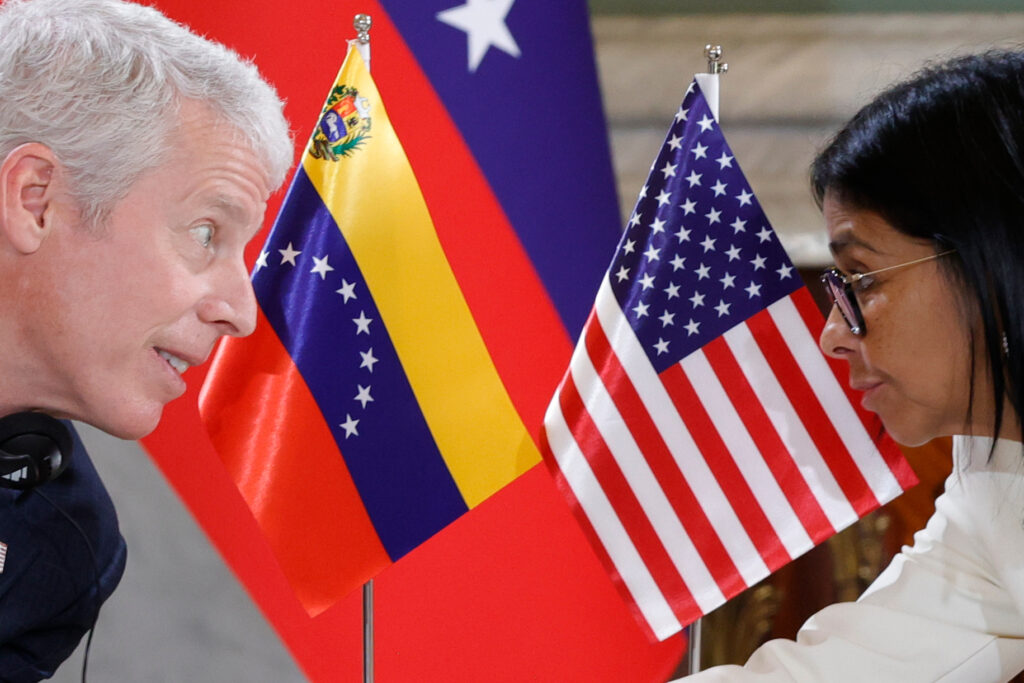
President Donald Trump’s removal of socialist dictator Nicolás Maduro in January offered a generational opportunity to counteract the failures of Venezuela’s socialist policies. A pro-America opposition appeared ready to usher in a free market and end the state’s suffocating grip on oil production. Eight months later, the White House’s deal with Maduro’s former vice president risks entrenching the people and repeating the policies that tanked the country’s economy in the first place.
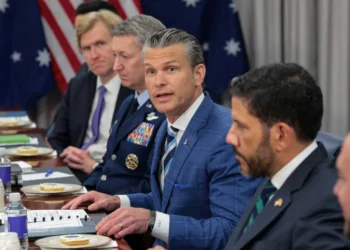
Under the sketchy terms of an agreement Trump unveiled this week with Venezuela’s interim leader, Delcy Rodríguez, the Pentagon receives a 35 percent stake in North American Blue Energy Partners, which has just been granted 100-year concessions to drill in 17 oil fields that contain an estimated 65 billion barrels. The State Department receives rights to buy 20 percent of the output at cost and first dibs on purchasing the remainder. The Venezuelan government would purportedly receive $200 billion in tax and royalty payments over the next 25 years.
The Trump administration has earned a bad reputation for crony capitalism by taking equity stakes in at least 30 private companies, including Intel and Westinghouse. But a deal of this magnitude makes the U.S. government, at least on paper, one of the world’s largest corporate holders of oil. State control of the industry was an original sin of Chavismo, named for left-wing populist strongman Hugo Chávez, whose despotic rule from 1999 to 2013 included a nationalization drive that kicked off Venezuela’s economic death spiral.
Trump touts the agreement as promising lower gas prices and replenishment of the U.S. Strategic Petroleum Reserve. But in an industry as capital-intensive as oil, neither of these promises can be fulfilled quickly — if ever.
For starters, Venezuelan crude is physically incompatible with the oil in the strategic reserve. Then there is the problem of Venezuela’s mismanaged, neglected oil infrastructure. The country possesses the world’s largest proven reserves, but investments of approximately $100 billion would be required to restore Venezuela’s oil output to its levels 20 years ago, before Chávez’s socialist wrecking ball was fully engaged.
In both countries, the legality and long-term feasibility of the deal are unclear. The Pentagon office designated for the oil share wasn’t intended to be used this way. It’s hard to imagine a future Venezuelan government feeling bound by the current kleptocracy’s 100-year giveaway of oil rights, especially after Trump leaves the White House.
Another distasteful aspect of the agreement: Trump has put the U.S. government into bed with a shady business partner named Alejandro Betancourt, who controls the company that Trump has, on behalf of the United States, taken a stake in. Betancourt has faced multiple investigations into alleged money laundering in Switzerland, Spain and the U.S., though he has not been charged and has denied wrongdoing.
As it happens, Betancourt was awarded no-bid contracts by Chávez from 2009 to 2011 to build electricity plants. Transparencia Venezuela, a civil society organization dedicated to fighting corruption, accused Betancourt’s company of overbilling by nearly $3 billion.
Strategically, administration officials are correct that it is preferable for the U.S., and not China or Russia, to control these oil fields. Reducing dependency on the Middle East with a more reliable energy supply in this hemisphere would be hugely beneficial, if it happens. All of this, however, can better be achieved through competitive markets.
The major oil companies, and the private capital backing them, are better suited than the federal government to determine whether the risks of a project are worth the potential benefits. Chevron, which has continued to operate in Venezuela, announced plans Wednesday to invest $7 billion over the next five years to more than double its oil production there. That’s unrelated to Trump’s deal.
The White House has struggled to convince ExxonMobil and ConocoPhillips to reenter the Venezuelan market. Both companies have bad memories from losing billions of dollars in expropriations. The companies have signaled that more stability is needed to risk fresh capital.
In their place, an oddball cast of characters is hoping to make a financial killing. A co-founder of the cryptocurrency exchange Coinbase, for example, is reportedly seeking control of at least three Venezuelan oil fields.
Whatever happens, not a single American tax dollar should be wasted on rebuilding Venezuelan oil infrastructure. Taking on projects that sophisticated oil majors have yet to pursue smacks of a bad deal. A better path for the U.S. government would be to reduce the risk of doing business in Venezuela by securing free and fair elections as soon as possible and shoring up the rule of law.
By opting for a flashy agreement with his handpicked dictator in Caracas, Trump risks leaving a legacy in Venezuela that, far from promoting democracy, just prolongs its socialist misery.
The post State control over oil broke Venezuela. Why is Trump doubling down? appeared first on Washington Post.