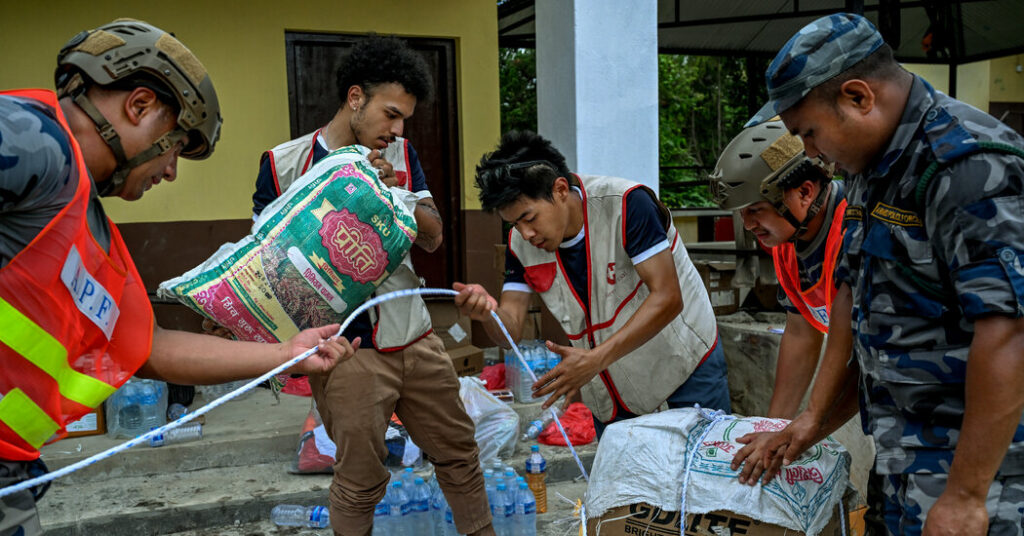
The government of Nepal has appealed for aid after flash floods on the border with the Tibet region of China last week killed more than 1,000 people.
Thousands more are missing, and the toll is expected to rise as rescue operations continue. For those who want to help the recovery efforts, here is a guide.
Be cautious
Natural disasters can be fertile ground for scammers, who try to take advantage of people’s generosity in times of need. The Nepalese government issued a warning about individuals and groups using fake QR codes to solicit donations for relief efforts.
You can use websites like Charity Navigator and GuideStar to verify the legitimacy of organizations. And make sure to do your research before donating.
Where to donate
The Nepalese government’s Prime Minister Disaster Relief Fund is accepting donations online using QR codes depending on where you live. It also accepts bank transfers and the use of other online platforms that transfer funds. The government is asking people who use a QR code to verify that the information in the code matches the officially released information. More information can be found here.
Here are some other organizations that are looking to help:
-
UNICEF, a U.N. organization that provides humanitarian and developmental aid to children and mothers, said it was working with the Nepalese government to provide relief and increasing its operation in the country. UNICEF said it was distributing aid, mobilizing mental health and psychosocial support teams, and working to reunite missing children with their families.
-
The World Food Program, a U.N. organization focused on fighting hunger, said it was supporting the government’s emergency response with local assistance and food.
-
The World Health Organization, an agency of the United Nations that coordinates responses to international public health issues and emergencies, said it had a team on the ground and was working with the government to maintain essential health services.
-
The Nepal Red Cross Society is delivering items like first aid kits, tents and mattresses. It has also set up a station for phone charging so people can communicate with relatives and friends.
-
Catholic Relief Services, which provides emergency relief and development services around the world, is working alongside local partners to deliver some of the $3.6 million that the United States has committed to relief efforts. Catholic Relief Services is delivering supplies like mosquito nets, blankets and mats and working to build up its operation on the ground.
-
Save the Children, a global charity focused on children’s health and education, warned about the potential aftereffects of the floods, including contaminated water, poor sanitation and crowded relief centers. It said it was delivering essential items such as drinking water, blankets, mosquito nets and baby kits.
-
World Vision International, a Christian organization that fights poverty and injustice, started a 90-day emergency response in Nepal with a focus on providing shelters, food and safe water.
-
Plan International, a development and humanitarian organization that works to protect children’s rights and equality for girls, is working to provide kits for shelter, hygiene and menstrual health management.
Sajal Pradhan contributed reporting.
The post How to Help Nepal Flood Victims appeared first on New York Times.