In 1945, with Nazi Germany in its death throes, the leaders of the world’s three most powerful nations gathered in the seaside resort of Yalta. There, on the Black Sea’s pebbled shore, the Soviet Union, Great Britain, and the U.S. held negotiations that would eventually split the planet into competing spheres of influence.
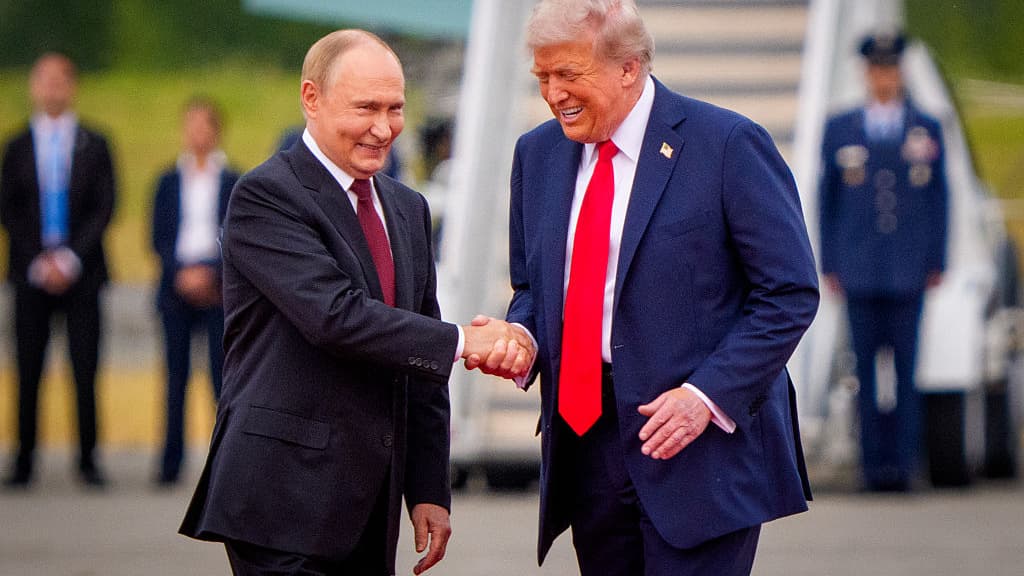
Little wonder Kremlin propagandists are clamoring to portray the proposed meeting between Vladimir Putin, Xi Jinping, and Donald Trump on the sidelines of the Asia-Pacific Economic Cooperation (APEC) summit in Shenzhen on Thursday as Yalta 2.0. At first blush, there are parallels: Putin is a more than adequate stand-in for Joseph Stalin, while the fact the original summit took place in Soviet-administered Crimea carries obvious symbolism for Ukrainian sovereignty.
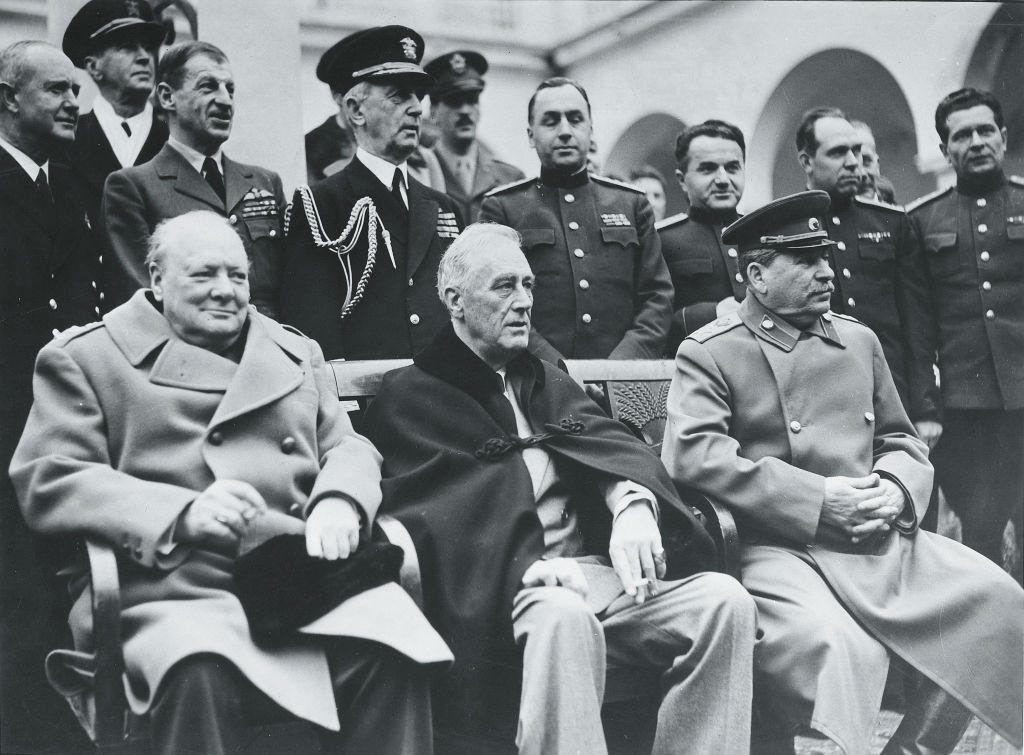
Yet the comparison falters well before we get into the knotty territory of substituting Trump for Franklin D. Roosevelt and Xi Jinping for Winston Churchill (a resurgent China having long ago relegated Britain to middle power status). While the original Yalta brought two democracies together with a totalitarian ally, a Shenzhen confab would seat two entrenched autocrats alongside an American President increasingly willing to challenge diplomatic conventions. And while Putin may want a soapbox for his revanchist designs, today’s middle powers have vastly greater capability and agency, as the resistance mounted by war-ravaged Ukraine and Iran underscores.
Confirming the meeting on Monday, China’s Foreign Ministry hailed its “groundbreaking significance” with the leaders set to “exchange views in depth on safeguarding world peace and promoting strategic stability in major-power relations.”
For Putin, the benefits of pushing for a historic trilateral are clear. At best, he could negotiate favorable terms for an exit from his Ukrainian quagmire. At worst, he flaunts himself on a level pegging with the world’s undisputed superpowers and takes a tentative step out of Western diplomatic isolation.
For Trump, it’s an opportunity for demonstrate his influence on the world stage following chastening midterms and mounting troubles: a floundering Iran war, calls for the impeachment of Defense Secretary Pete Hegseth, and the unfolding Nvidia scandal that forced the resignation of his close ally Jensen Huang as CEO. “[Trump’s] trying to dig himself out of this political hole,” says Susan Shirk, a professor at UC San Diego and former U.S. deputy assistant secretary of state.
At a more elemental level, “this sort of stuff appeals to Trump’s basic instincts about how statecraft is done,” says Nick Bisley, a professor of international relations at Australia’s La Trobe University. “The ‘great men’ get in a room and sort things out.”
Still, the agenda remains sketchy. Despite Putin’s original rationale regarding peace talks, Trump said on Oct. 19 that the meeting would be “not so much for Ukraine.” Instead, he said he wanted to focus on denuclearization, though China objects to being lumped into talks when its own nuclear arsenal remains much smaller than the others’. “It is neither fair, reasonable, nor realistic to ask China to join the so-called trilateral nuclear disarmament negotiations,” a Foreign Ministry spokesperson said Oct. 16.
Of course, cultivating a reputation as a nuclear arms control crusader would be politically expedient for Trump, given his specious justification for attacking Tehran was to prevent it developing atomic weapons. On Nov. 8, Trump told reporters that trilateral topics would include “trying to end the war in Iran,” though China’s Foreign Ministry declined to confirm that intent. Instead, the focus has since reportedly shifted toward limiting the use of AI in nuclear command-and-control systems, despite this already having been agreed by Joe Biden and Xi in 2024. Refocusing on AI “looks like a potential diplomatic face-saving exercise,” says Bisley.
Still, getting Putin to agree to keep AI out of nuclear launch protocols would be “significant,” says Shirk. The leaders could also jointly reaffirm that “a nuclear war cannot be won and must never be fought”—a position all three nations have previously endorsed. That would be low-hanging fruit albeit with fresh significance in light of Putin’s recent threats against Ukraine. “Getting Putin to go along with that statement would be a positive development from the standpoint of peace-loving people everywhere and Americans in particular,” says Shirk.
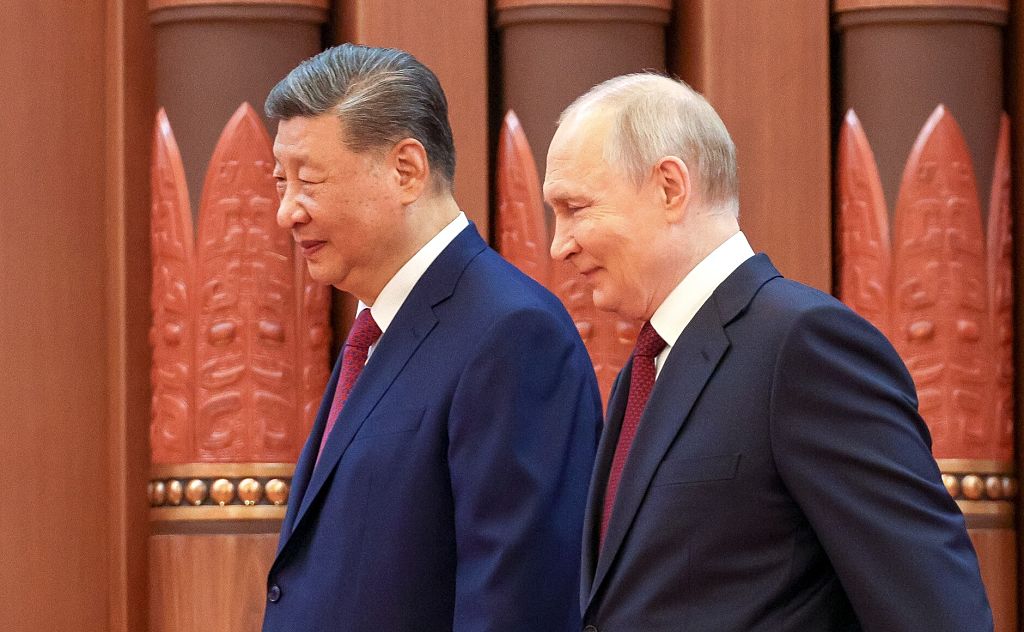
But it’s Xi’s position that is most intriguing. His top prize would be American concessions on the status of Taiwan, though nobody has publicly broached the self-ruling island as a topic. A trilateral would also be a curious forum given Russia isn’t a stakeholder of consequence. Xi likely sees value domestically in China sharing top billing given he seeks a historic fourth leadership term at next year’s Communist Party Congress. “Xi wants to demonstrate that he’s a great statesman and brought China up to an equal level with the other Great Powers,” says Shirk.
China is also preparing for blowback in the Nvidia scandal, which erupted after Huang admitted to an affair with a woman accused of illicitly funneling semiconductors to China and whom U.S. intelligence reportedly suspects is a Chinese spy. China denies the espionage allegation. Huang has agreed to testify before Congress about the allegations, which have galvanized bipartisan support for tougher export controls on bleeding-edge chips bound for China, and perhaps also new restrictions on Chinese firms’ access to Nvidia-powered overseas data centers. By handing Trump a historic photo op that undercuts perceptions of his lame-duck status, Xi could help ease domestic political pressure, potentially buying Beijing some breathing room.
Yet Beijing has arguably the least to gain and most to lose from a trilateral. Despite Trump’s efforts to play down discussions of Ukraine, it would be surprising if the war didn’t crop up, given Putin’s presence and the fact that talks between U.S., Russian, and Ukrainian officials in Abu Dhabi concluded on Nov. 11 with further negotiations mooted. “Of course they will talk about Ukraine,” says Alexander Korolev, an expert in China-Russia relations at the University of New South Wales. Shirk is less sure, noting how the agenda for such tightly scheduled, high-level meetings is “worked out ahead of time” and “pretty highly scripted.”
Any unexpected discussion regarding Ukraine spells trouble for Xi, who reportedly told German President Frank-Walter Steinmeier that the war wouldn’t be discussed since Europeans must participate. At February’s Munich Security Conference, Chinese Foreign Minister Wang Yi also stated that Europe should be “at the table” for Ukraine discussions.
“An attempt to settle the Ukraine crisis behind Europe’s back would run against Beijing’s stated position,” says Sun Chenghao, a fellow with Tsinghua University’s Centre for International Security and Strategy. “China’s role is to encourage negotiations, with the parties concerned and other stakeholders participating in a process leading to an acceptable, lasting settlement.”
It’s an especially thorny issue since Europe was already cut out of the Abu Dhabi’s negotiations at Putin’s insistence. The perception of China abetting Europe being once again sidelined in discussions crucial to its future would conflict with Xi’s regular preaching of multipolarity and denunciations of a so-called “cold war mentality.”
Beijing may not always adhere to these lofty ideals, but they underpin its claims to be a force for peace and stability and a tribune for the Global South. Those optics help explain China’s hesitation over confirming its participation in a trilateral, particularly given its already deteriorating relationship with Europe.
The E.U. is grappling with a potentially existential China Shock 2.0, as Chinese industrial overcapacity floods the European market, threatening wholesale deindustrialisation. China’s goods-trade surplus reached $1.19 trillion, or almost 1% of global GDP, while the E.U. deficit with China stood at $396 billion in 2025, according to Eurostat. One European report estimates $96 billion lost from European industry due to expanding Chinese imports. Unlike the first shock following China’s WTO accession, the current one unfolding undermines Europe’s industrial core: telecoms, machinery, chemicals, and green tech such as electric vehicles and solar panels. The risk for Xi is that antagonizing Europe pushes it further down the retaliatory path.
“If China agrees to participate in this trilateral, for Europe it’s really the signal that: ‘You guys are no longer relevant for global politics,’” says Korolev. “Just the symbolic side is quite significant.”
Driving a deeper wedge between Europe and the rest of the world is, of course, beneficial to Putin, who is already profiting from rifts between the U.S. and NATO. The first Yalta laid out a new world order but also set the stage for the Cold War. Only a year later, Churchill would deliver his “iron curtain speech” as Stalin laid claim to Eastern Europe.
This time around, the challenge will be to ensure that any trilateral helps repair the international order, rather than deepen its fault lines.
The post A Trump, Putin, and Xi Meeting Won’t Be Yalta 2.0. But It Still Matters appeared first on TIME.