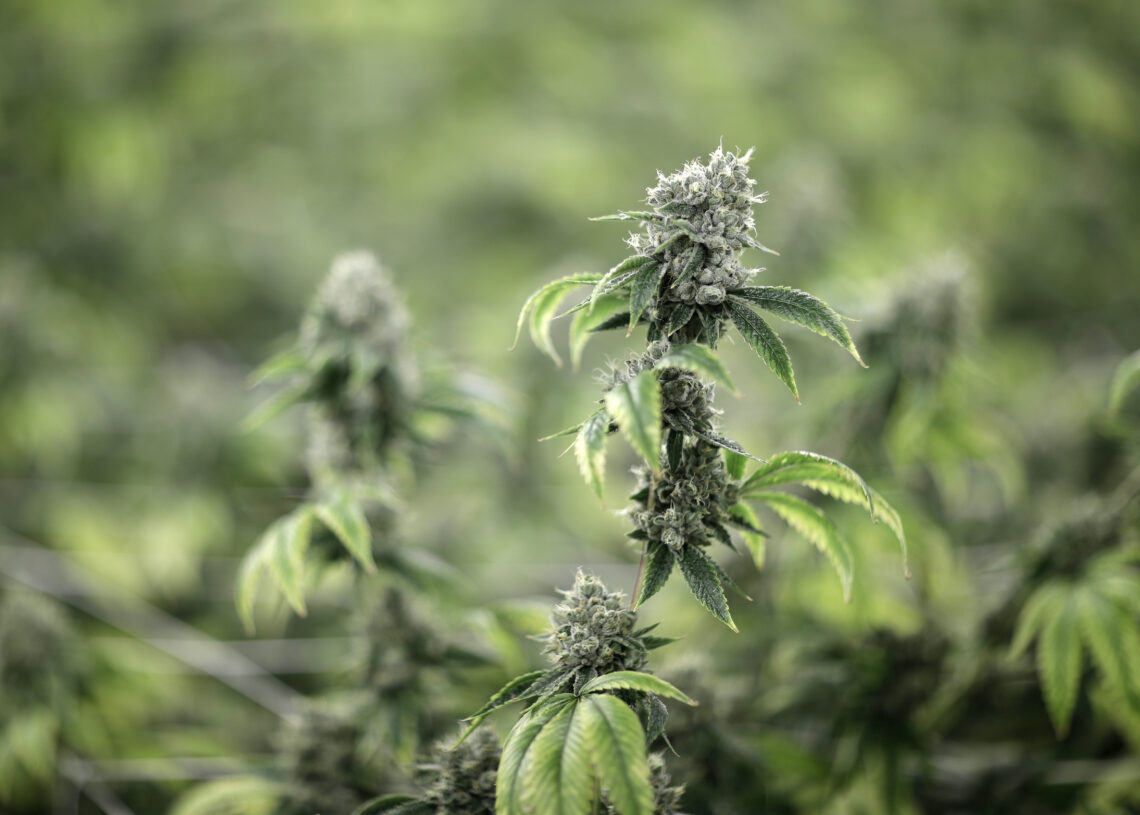
About 1 in 6 Americans adults smoke cannabis, according to a Gallup poll published last week. A similar proportion consume it through edibles. Many may not realize, however, that regular use can result in a serious and debilitating complication marked by repeated cycles of relentless vomiting and intense abdominal cramping.
Every emergency physician I know is well aware of this condition, known as cannabinoid hyperemesis syndrome. Michael Gottlieb, an emergency physician at Rush University Medical Center, told me it is not like a typical stomach bug, where someone throws up a few times and then starts to feel better. “It’s a pretty pronounced degree of vomiting and severe discomfort that our patients are experiencing,” he explained. “People say, ‘This was awful. This is the worst I’ve ever felt.’”
Kathleen Clem, an emergency physician at Dartmouth Health, said she often recognizes these patients right away because they are screaming as they throw up. “It’ll happen every 10 to 20 minutes, and they’re just miserable,” she said. The phenomenon has even acquired its own name: “scromiting,” a combination of screaming and vomiting.
Another telltale sign of CHS is that patients feel temporary relief from hot showers or baths. Clem told me about one patient who ran out of hot water and became so desperate that he went next door and used up all of his neighbor’s. “At that point he came to the emergency department,” she said.
Doctors believe heat helps because it floods the nervous system with a powerful sensation that can temporarily crowd out the signals triggering nausea. This is also why another treatment used is capsaicin cream, which is derived from hot chile peppers. It can make the skin feel intensely hot and burning, but for patients in the throes of unremitting vomiting, it is preferable to the alternative.
Traditional medications that stop vomiting, like ondansetron, don’t seem very effective. In the short term, patients can get some relief with diphenhydramine, also known as Benadryl, as well as haloperidol, a medication traditionally used for psychosis. In the long term, the only cure is stopping cannabis use.
Gottlieb explained that symptoms may be so bad that patients miss work and stop spending time with family and friends. Throwing up repeatedly can also lead to severe dehydration, tooth enamel erosion, electrolyte imbalances and kidney damage. In the most serious cases, patients can develop heart rhythm abnormalities and tear their esophagus, which can be life-threatening.
CHS is estimated to affect more than 2.7 million Americans. The risk appears to be highest among daily cannabis users, but clinicians should know it can also develop in people who use cannabis as little as once a week. Patients are often surprised by the diagnosis because they have used the drug for years without symptoms. “We’ll see people in their 60s and 70s that will come in with this and they’re like, ‘Well, why is this now a problem?’” Clem said.
Many of her patients are using marijuana to self-treat symptoms such as chronic pain and anxiety. Because avoiding the drug is the only way to prevent CHS from recurring, these patients need help not only to reduce and ultimately stop their use, which can be especially difficult for those who have developed an addiction to it, but also to address the underlying problem that led them to use it in the first place.
Last year, a new diagnostic code was created for CHS, enabling physicians to distinguish cases of it from broader diagnoses, such as cyclical vomiting, and making the true prevalence easier to track. The Centers for Disease Control and Prevention reports that the proportion of emergency department visits identified as being for CHS jumped nearly fourfold since the code was introduced.
I expect diagnoses to continue increasing as awareness grows, which is a good thing because patients who otherwise would be misdiagnosed could get the correct treatment. Unfortunately, the actual incidence of CHS will probably increase, too, as cannabis use rises and more states permit widespread sale. Plus, products today contain much higher concentrations of tetrahydrocannabinol, cannabis’s main psychoactive ingredient, than they did decades ago, putting more people at risk of developing CHS.
None of this is to say that cannabis should be outlawed. The Food and Drug Administration has approved medications derived from or related to cannabis, and more research should be encouraged to determine other legitimate medical benefits.
But there is a major disconnect between public perceptions of the drug and scientific reality. The Gallup poll found that nearly half of respondents believed marijuana had a positive effect on most users, even though most purported medical uses are not supported by science. And the list of well-documented harms is growing, such as impaired driving and lasting problems with memory and learning. More users need to be aware of these risks, as well as of CHS.
The post Beware of this ‘miserable’ complication of long-term cannabis use appeared first on Washington Post.