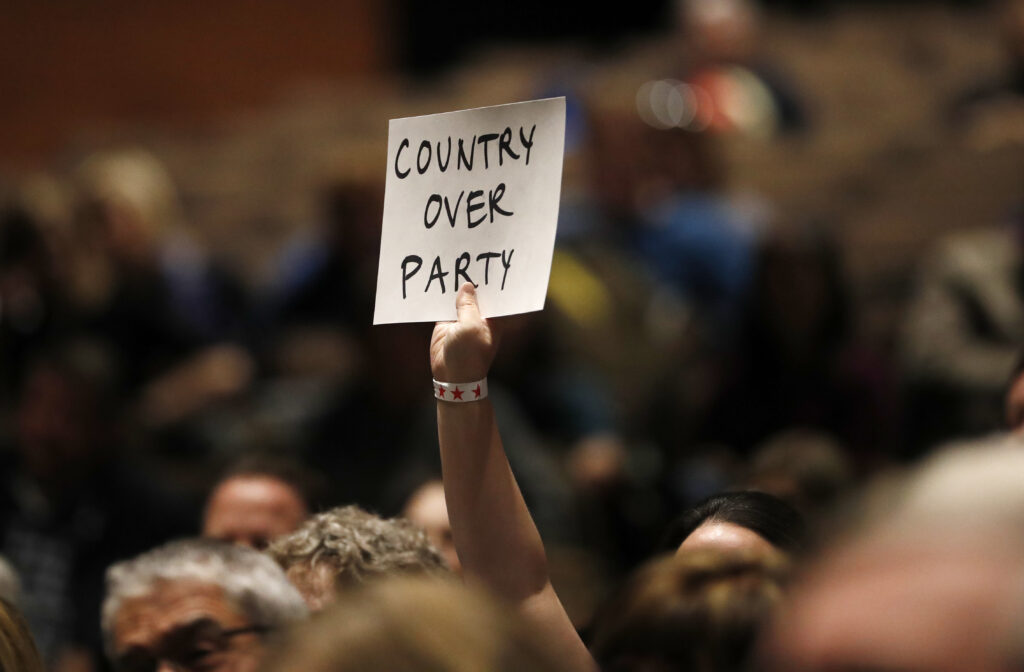
The August recess used to be prime time for the congressional town hall. Scores of lawmakers, freed from their duties in D.C., would tour their districts and engage directly with constituents. While not always cordial, such interactions have been a hallmark of American representative democracy since the colonial period.
Unfortunately, they’re on their way to becoming a relic. During this year’s recess, only 42 members of Congress — 35 Democrats and seven Republicans — scheduled at least one in-person town hall, according to LegiStorm’s tracker. A decade ago, in August 2016, more than 170 appeared for such events.
The coronavirus pandemic accelerated the downward trend. There were 2,309 in-person town halls in 2019. That number never recovered from its collapse during the shutdowns. In 2025, there were 1,095.
The decline of political civility in the 2020s is one likely cause. Elected officials may be leery of uncontrolled settings where they might be pressed on difficult issues in ways that can turn ugly. Activists sometimes try to hijack town halls.
Members of the majority party tend to be more reluctant to hold town halls than members of the minority party. Several town halls for Republican members descended into chaos last year, with booing or chanting attendees drowning out the lawmaker. That prompted Rep. Richard Hudson (North Carolina), chair of the National Republican Congressional Committee, to advise against in-person events.
Democrats faced so much anger at town halls over the Affordable Care Act during the Obama administration that they, too, avoided them. There might be a vicious cycle where politicians retreat from town halls as political tensions increase, and the remaining town halls are even angrier.
Part of the problem is polarization, exacerbated by gerrymandering. Lawmakers in safe districts face fewer consequences for failing to engage with people outside of their party’s base.
Then there’s the threat of political violence. At a town hall in May, a man sprayed Rep. Ilhan Omar (D-Minnesota) with a vinegar mixture. Omar wasn’t harmed, but the incident can’t have encouraged other members to hold such events. The good news is that Congress last year dramatically increased funding available for lawmakers’ security.
The decline of a centuries-old tradition is a warning sign about the vigor of representative government. Social media regularly serves voters short video clips of politicians — often out of context — but that’s no substitute for direct conversation.
Restoring the town hall would require braver politicians and less antagonistic constituencies. Until that comes to pass, it seems likely that Americans’ ability to interact with those who govern them will continue to wane.
The post The sad decline of the great American town hall appeared first on Washington Post.