Regarding George F. Will’s Aug. 16 column, “Michigan swaps first-semester freshman grades for participation trophies”:
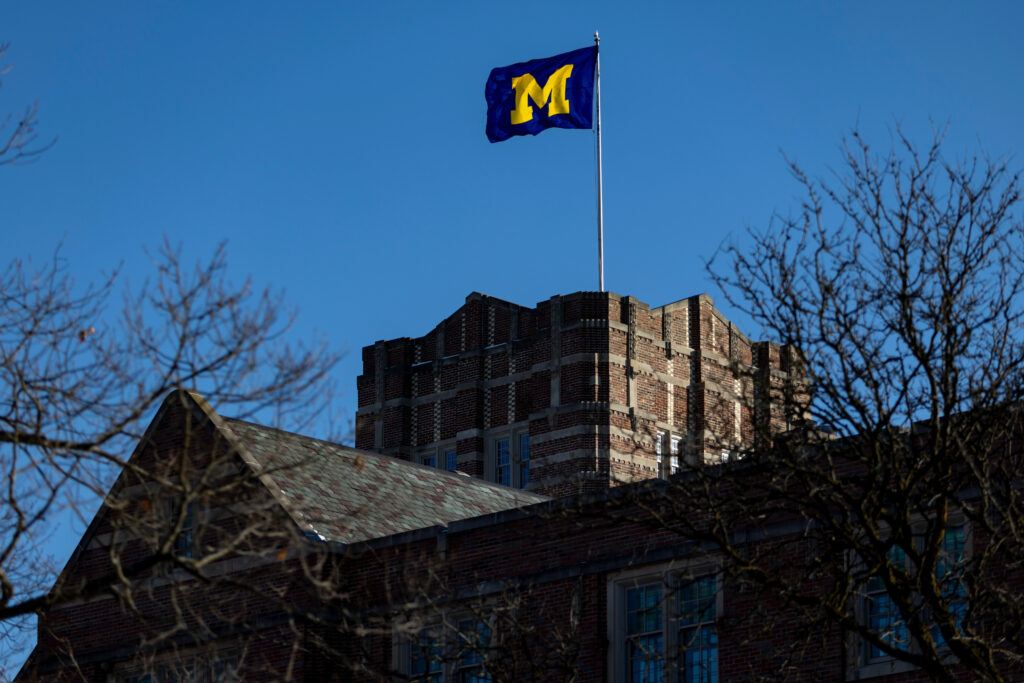
I am about to start my senior year at the University of Michigan, where the school’s administration has just approved a plan for its College of Literature, Science, and the Arts to suspend all letter grades for incoming freshmen in their first semester.
This move is deeply confusing. There was a consensus in the making, one which posited that universities had lost the plot and that students were being coddled. And I agree. This makes Michigan’s recent decision all the more upsetting to me, both as a student and as a subscriber to the idea that schools should be places of friction, discomfort and growth.
In the policy’s reveal, the university cited “mental health” as a reason for the change, claiming that the revamped system would help students “acclimate to the demands of college” while allowing them to try different courses without fearing the “long-term consequences” of a bad grade. In its unveiling of this new policy, Michigan’s administration cites real problems. It is true that some young people are going through a mental health crisis. It is also the case that the transition into college living is among the most emotionally uncomfortable parts of the American collegiate experience. The school’s so-called fix, however, is hardly a solution — in fact, it’s bound to make things worse.
Many young people are eager to take on new challenges primarily because they know that it is a part of learning and growing up. My school’s administration, however, doesn’t seem to agree. And as long as it opts its pupils in to the path of least resistance, it is likely that Michigan’s students will lose — unless, of course, they are up against a Buckeye.
Mateo Álvarez, Ann Arbor, Michigan
George F. Will contends that the University of Michigan’s decision to adopt pass/fail grading for first-semester freshmen will demotivate students and delay their adaptation to college-level work. The university insists it will help students “acclimate to the demands of college” and help “curb the mental health crisis” afflicting college campuses. The evidence does not support either proposition.
Pass/fail grading may temporarily reduce some students’ motivation, effort and learning, but students adapt quickly when regular grading resumes. As a recent study by professors at Copenhagen Business School concluded, pass/fail grading in the first year “has no significant effect on students’ later academic achievements.”
MIT and the California Institute of Technology, two of the country’s most competitive and academically rigorous universities, have similar policies. Their graduates fare at least as well as their graded peers.
Pass/fail policies also are unlikely to enhance students’ mental health. Though some students may find the transition to college less stressful, others will shift their competitive focus to securing elite internships, landing coveted research slots or finding other ways to build their resumes. And pass/fail grading likely does little to mitigate more consequential stressors, such as family and relationship issues, financial concerns and the always-on culture of social media.
Given the present political climate, we think Michigan should have left well enough alone. Its new policy benefits its students little and leaves the university open to criticism from those who, like Will, see it as more coddling of a generation that has already been coddled too much.
David Wippman, Bethesda
Glenn Altschuler, Ithaca, New York
David Wippman is president emeritus of Hamilton College. Glenn Altschuler is a former vice president of Cornell University.
George F. Will’s Aug. 16 column about the new pass/fail grading system for first-semester freshmen at the University of Michigan’s College of Literature, Science, and the Arts, especially his comparison to a football game, trivializes a subject that should concern all parents. That subject is the mental health of college students.
Suicide is the second-leading cause of death among college students. Self-harm is also too common. MIT implemented pass/fail grading for freshmen in 1968 in hopes of reducing academic pressure and mitigating the tragedy of student self-harm. Nearly 60 years later, that practice remains in place.
Pass/fail grading will not solve the mental health problem on college campuses, but it might help. No one should trivialize the problem of mental health on college campuses.
Mark Evers, Lake Oswego, Oregon
AI for college admissions? Let students know.
I’m 15, and I’ll soon write and submit college essays that are supposed to sound unmistakably like me. Somewhere in that process, I may be asked to explain where my own work ended and any AI assistance began. I think that’s a reasonable ask. I want to know whether the college on the other end is willing to answer a version of the same question.
I don’t see artificial intelligence as something inherently sinister in college admissions. But I worry that an AI summary might be the only version of my file a human seriously considers. Applicants should know whether that is happening.
Any college using AI to review applications should disclose that before students apply. If AI is used only to sort documents or extract information, colleges should disclose that. If AI scores essays, summarizes recommendations, flags discrepancies or otherwise influences evaluation, colleges should disclose that, too. If an automated system introduces a factual error about an applicant — misreading a course, grade or transcript — there should be a way to correct that.
A college application is already an extraordinary exercise in disclosure. Students hand over grades, activities, recommendations, family information and essays that can contain some deeply personal stories. And colleges are entitled to set rules about how much AI helped us produce those materials. But they should also disclose how they use AI to evaluate us.
Arjun Sharda, Round Rock, Texas
Letter submissions
Send letters to [email protected].
Submissions must be exclusive to The Post and should include the writer’s address and day and evening telephone numbers. Letters are subject to editing and abridgment. Please do not send letters as attachments. Because of the volume of material we receive, we are unable to acknowledge submissions; writers whose letters are under consideration for publication will be contacted.
The post I’m a University of Michigan senior. The school shouldn’t coddle freshmen. appeared first on Washington Post.