As Iran’s largest trading partner, China would seemingly have much to lose from President Trump’s threat this week to impose “tremendous economic consequences” on nations doing business with Tehran.
For decades, China has defied Western sanctions on Iranian oil by buying up to 90 percent of Tehran’s oil exports. China has also supplied Iran with technology and raw materials to build an arsenal of missiles and drones.
But Beijing has reasons to feel confident it can withstand Mr. Trump’s latest warning — if it is ever fulfilled. And increasingly, Chinese analysts see the war in Iran, which the White House seems unable to end on favorable terms, as a sign of America’s mounting weakness.
“This threat reveals how desperate the Trump administration has become on the issue of Iran,” said Wu Xinbo, a leading American studies scholar at Fudan University in Shanghai, who advises China’s foreign ministry.
“They issue this threat, not because they think it is workable, but because they have no other options,” he said, to get out of this “self-created dilemma.”
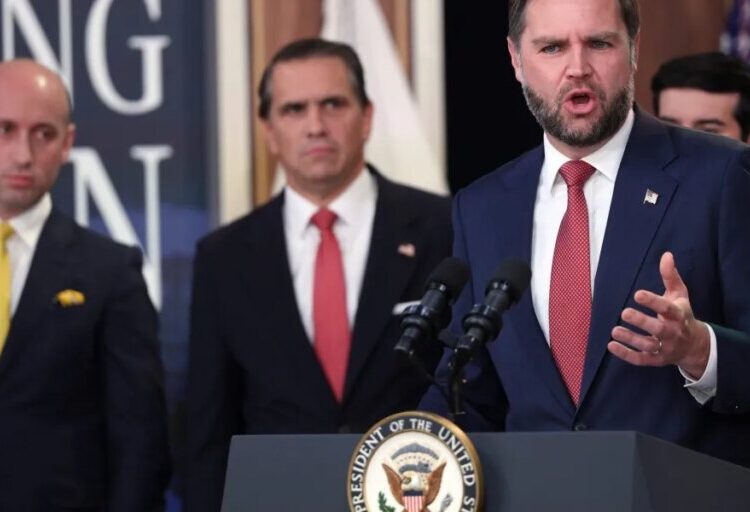
In a social media post on Wednesday, Mr. Trump vowed to inflict an “economic D-Day” on Iran, as well as to punish countries that “provide any type of lifeline” to the country. On Thursday, Treasury Secretary Scott Bessent implied that it was in China’s best interest to cooperate.
But China might be feeling emboldened as the United States withdraws military assets in the Pacific that were largely meant to project power in Asia. Most recently, that included moving the aircraft carrier George Washington out of the region to support operations in the Middle East.
Lin Jian, a spokesman for China’s foreign ministry, said on Friday that China opposed unilateral sanctions and that pressure would not resolve the crisis in Iran.
One major reason that pressure may backfire against the United States is that China is equipped to cut the supply of critical minerals to American companies, including makers of U.S. weapons, which have been depleted because of the war.
China demonstrated the power of this chokehold when it forced Mr. Trump to pause a blistering trade war last year by cutting off its critical minerals exports. That détente that has largely held.
The threat of economic consequences now raises questions about the durability of that truce, nearly a month before Mr. Trump is scheduled to host China’s top leader, Xi Jinping, for his first state visit to Washington since 2015.
Mr. Trump and Mr. Xi last met in Beijing in May, in a summit that China interpreted as highly successful. Mr. Trump did not challenge Mr. Xi on divisive issues like the status of Taiwan, the self-governed island claimed by Beijing, and he was effusive in his praise, calling Mr. Xi a “great leader.”
“I doubt either side wants Iran to derail Xi Jinping’s upcoming visit to the United States. President Trump has clearly attached considerable importance to his relationship with Xi and to the visit itself,” said Wang Zichen, a foreign policy analyst at the Center for China and Globalization, a research institute in Beijing.
Mr. Trump’s threats could also just be bluster, Mr. Wang said.
“There is by now a considerable credibility discount attached to individual statements by President Trump on Iran,” Mr. Wang said.
Regardless of Mr. Trump’s warnings, China’s interests in the Middle East are nuanced. Tehran is Beijing’s closest strategic partner in the region and a fellow authoritarian regime that wants to weaken U.S. global power. At the same time, China has deepened ties with some of Iran’s rivals, such as Saudi Arabia, which could provide greater economic opportunities than Tehran.
It is unclear how the Trump administration would pressure China to cut its business ties with Iran. Mr. Bessent said he would hold a news briefing on Monday to provide more details.
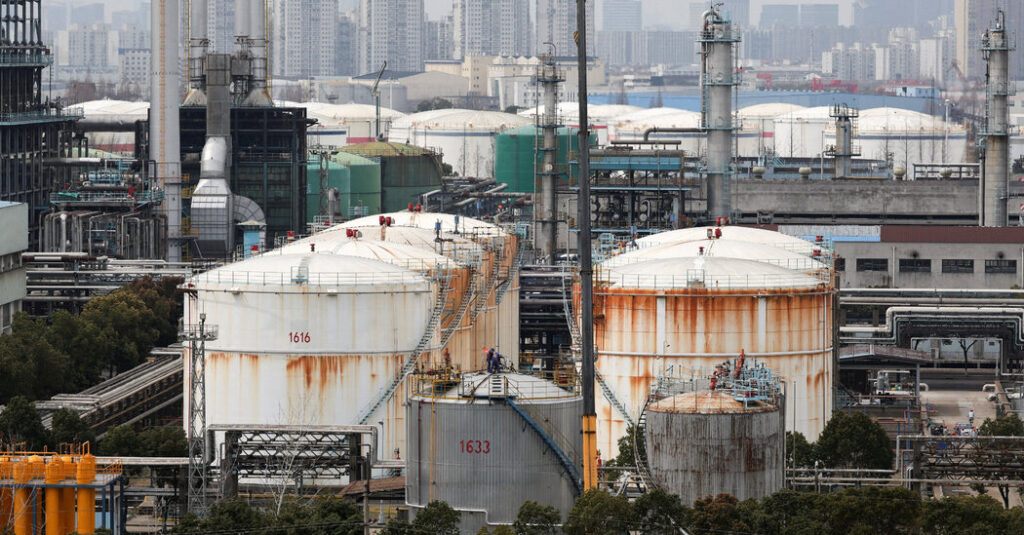
Washington could try to interrupt the flow of Iranian oil to China, which often goes through small, independent Chinese refineries, known as teapots.
Those refineries are less exposed to American sanctions because they are usually disconnected from the global financial system. The United States could try to step up interdiction of the ships that carry Iranian oil to Chinese refineries, or it could increase its scrutiny of banks that help Iran launder the Chinese yuan that it receives from the teapots as payment.
China has also stockpiled months worth of oil and increased its purchases of oil from Russia to account for reduced oil flows through the Strait of Hormuz.
Cutting China’s access to discounted Iranian oil could also force Beijing to purchase more oil elsewhere, which would likely raise global oil prices.
“The United States is not a paper tiger,” said Diao Daming, a professor of international relations at Renmin University of China in Beijing. “It can bite and cause bleeding.”
However, he added, “it will also harm itself, which does not serve the interests of either country.”
The post Why China Thinks It Can Resist Trump’s Economic Threats on Iran appeared first on New York Times.