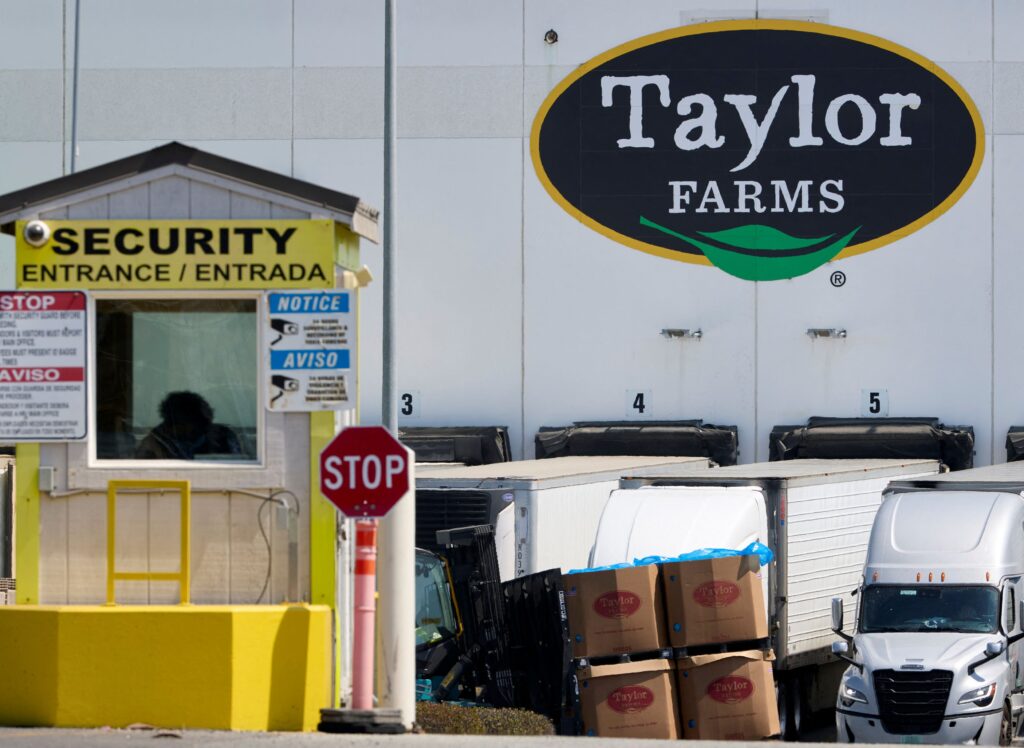
Federal officials said Thursday that recalled Taylor Farms lettuce linked to a large cyclospora outbreak may have been distributed to nine additional jurisdictions, expanding the potential reach of contaminated products.
The best-by dates for these recalled products have passed, officials said, and they should no longer be available for sale in stores or restaurants. Consumers who previously bought or received food items with the recalled iceberg lettuce should carefully clean and sanitize any surfaces or containers that it may have touched.
The expanded distribution information provides a fuller picture of where the recalled lettuce may have traveled than was known when Taylor Farms de Mexico announced a voluntary recall July 17. The company removed iceberg lettuce sourced from central Mexico from the U.S. market after it was linked to the outbreak and said it had been distributed to 27 states.
The Food and Drug Administration previously confirmed distribution to 31 states. On Thursday, the FDA said recalled lettuce also may have been distributedto California, Delaware, North Dakota, Rhode Island, South Dakota, Vermont and Washington state, as well as the District of Columbia and Puerto Rico.
Nationwide outbreaks of cyclospora this summer have sickened people in 47 states, hospitalized 828 and resulted in the deaths of two people in Michigan, according to the Centers for Disease Control and Prevention. Federal officials are investigating multiple clusters of cyclospora cases. The largest one is the outbreak involving shredded lettuce from Taylor Farms de Mexico that has been linked to 17 states.
The CDC said that 17-state outbreak has resulted in 10,930 illnesses, including 454 hospitalizations and two deaths.
FDA has begun inspections and sampling at iceberg lettuce growers in Mexico in coordination with Mexican officials.
Catch up quickly every weekday morning with a rundown of the 7 most important and interesting stories. Sign up for The 7 newsletter.
The post Taylor Farms lettuce may have reached 7 more states, D.C. and Puerto Rico appeared first on Washington Post.