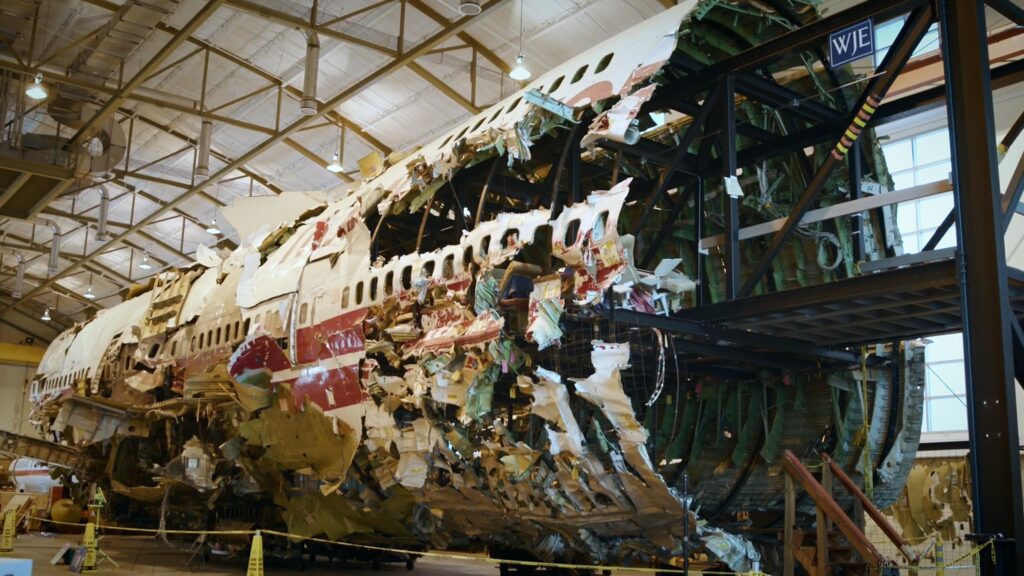
For Boeing, Lion Air Flight 610 and Ethiopian Airlines Flight 302 live in infamy. The first plane crashed in October 2018 in the Java Sea shortly after taking off, and the second crashed in central Ethiopia only five months later. Both were Boeing 373 Max aircrafts, a newer and more fuel efficient model that had was certified by the Federal Aviation Administration (FAA) in 2017. Within two years of first entering into service, every 737 Max had been grounded after the same malfunction led to a combined total of 346 fatalities. Three years later, Netflix released Downfall: The Case Against Boeing, exploring how the company’s obsession with profit and maintaining a competitive edge led the former titan of aviation safety to the point of endangering anyone who flew their newest aircraft model—as well as Boeing’s efforts to deny their own complicity.
That was in 2022. This year, Freefall: A Reckoning for Boeing takes a wider look at Boeing’s continued reputation. “When we finished that film, Boeing ultimately had taken responsibility,” says Rory Kennedy, director of both documentaries. Speaking to TIME over Zoom, she says the company “assured the flying public, as well as the airlines and Congress, that it had learned its lesson and changed its ways. It did seem initially that it had made some corrections, but soon after the 737 Max got [back] into the air, I started seeing the headlines again.”
The need to return to the Boeing story
Kennedy has made documentariesabout the Abu Ghraib torture scandal, the final weeks of the Vietnam War, and the impact that the death of her father—Robert F. Kennedy—had on her mother Ethel. Freefall is her first sequel, motivated, she says, by Boeing’s refusal to improve its once venerated, now dire safety standards. “I was getting approached by whistleblowers inside Boeing saying, not only had things not improved, but they were actually getting worse, and would I consider revisiting this?”
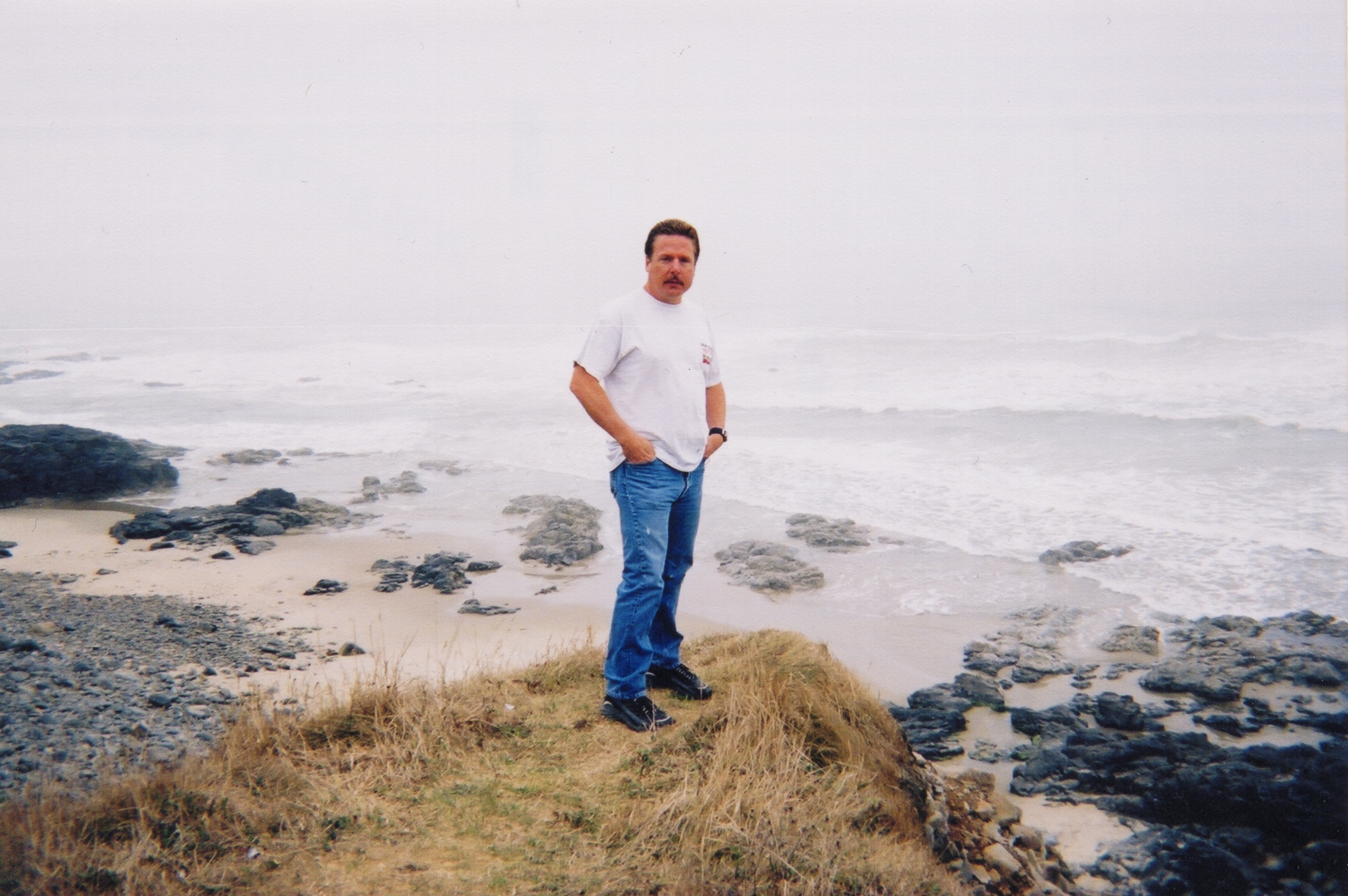
At a certain point, you didn’t need to be a whistleblower to recognize Boeing was struggling to improve its recent track record. In January 2024, a 373 Max 9 plane operated by Alaska Airlines lost a rear door plug in midair, plunging the 171 passengers into pure terror until the plane was able to land with no fatalities. An investigation found that Boeing had improperly fitted the outsourced fuselage and door plug parts in cost-cutting moves that once again resulted in danger. Kennedy was also motivated by a highly publicized but personally-felt tragedy—the death of prime whistleblower John Barnett, who by the end of his 32 years working in quality control at Boeing had made detailed reports on the company’s manufacturing negligence. In March 2024, Barnett was giving a lengthy deposition against Boeing in South Carolina when he failed to appear for his third day of testimony. He was later found dead in his truck from a gunshot wound that the Charleston County coroner described as self-inflicted. Barnett was a friend of Kennedy and lent his expertise to Downfall, and his interviews play throughout Freefall, forming what Kennedy calls a “defining thread” of the film.
“When we started, we didn’t know what had happened to John Barnett, we didn’t know how the Alaska Airline incident was going to unfold,” she says. “There were whistleblowers still working at Boeing coming forward and wanting their stories to be shared for the first time. Frankly it’s one of the things I love about filmmaking, you’re on a journey. We followed what was happening and pivoted as necessary to pay justice to the stories as they were unfolding.”
Still, to Kennedy the heart of the story is crystal clear. “If there was one reason I went back to make this film, it was because of John.”
Dreamliner, greed, and a reputational nosedive
By all accounts, Boeing used to be a great place to work. Headquartered in Seattle, Washington, the aviation company went from strength to strength in the postwar period and beyond, boosted by international aircraft sales and defence contracts. Safety and rigor was paramount, and engineers and quality inspectors held a lot of sway. As the narrator of an old company promotional film claims, Boeing’s ethos is to “make everything a little better than it needed to be.”
But the whistleblowers featured in Freefall, including Merle Meyers, Sam Salehpour, and Roy Irvin, found that Boeing’s former “safety culture” was scrapped in the modern era: quality inspectors were undermined and harassed for doing their job, the crews building the planes were less skilled or closely supervised, and outsourcing parts became the norm. The company’s $14 billion merger with aircraft producer McDonnell Douglas in 1997 confirmed their new trajectory—increasing shareholder value and lowering production costs, overseen by a series of CEOs like James McNerney and Dennis Muilenburg who had been mentored in Wall Street worship prior to taking the role.
While Downfall dips into the history of Boeing to explain why the new 737 Max aircraft was unsafe, Freefall paints a more revealing picture of a company contributing to its own decline. In 2009, Boeing opened a facility in North Charleston, South Carolina—a non-union state—to produce the Boeing 787 “Dreamliner” plane as cheaply and quickly as possible. The majority of the plane structure was outsourced from cheaper suppliers rather than being assembled in-house. The facility was soon full of shoddy engineering—ill-fitting pipes were sledgehammered into place, holes were found in aft body fuselage sections, and tiny metal slivers that were liable to cause massive electrical problems were found in the planes.
Barnett was one of many Seattle employees sent to South Carolina to work on the 787, where quality inspectors received a rude awakening on Boeing’s new safety culture. Management would dismiss and mock their complaints, discipline whoever spoke up, and demanded that recordings were deleted. In 2013, the entire 787 fleet was grounded after the plane’s lithium-ion batteries caused two separate electrical fires; a subsequent Al Jazeera investigation included clandestine recordings of Boeing employees joking about the Dreamliner’s haphazard and unsafe construction. To Kennedy, the footage was too revelatory to not use in her own film. “It’s so shocking to think that the people who are building the airplane won’t get on the airplane.”
John Barnett was indicative of how Boeing treated whistleblowers
If Boeing grew careless in how it built planes, it was ruthless in how it responded to internal complaints. Barnett diligently documented all the faults at the Charleston facility after his attempts to use the official channels of complaint were met with dead air, or worse, harassment. Every few months, Boeing moved him from site to site in an effort to demoralize him and stop him from getting too comfortable, which actually meant that Barnett got to witness a wider range of defects and malpractices. Ultimately, he was disciplined and “benched” for not toeing the company line, and after his retirement in 2017, Barnett filed a defamation suit, accusing the company of deliberately harming his career after he spoke out against Boeing.
Barnett was back in South Carolina in March 2024, to give evidence on the hostile work environment in Charleston. His body was found in his truck on the morning of his scheduled third day of deposition. “He talks about how he’s exhausted, and could he take some time off from the deposition? And the Boeing lawyers respond, “No. You can’t take the time. You can’t leave. You have to keep going.” And this is after years and years and years of just being trampled by Boeing,” says Kennedy.
In response to Barnett’s death, his lawyers Brian Knowles and Robert Turkewitz said, “He was in very good spirits and really looking forward to putting this phase of his life behind him and moving on. We didn’t see any indication he would take his own life. No one can believe it.” Although the coroner found no physical evidence that someone other than Barnett was responsible for his death, conspiracy theories spread online, further fanned by a friend of the whistleblower who claimed that Barnett told her, “If anything happens to me, it’s not suicide.” Barnett left a note, a line of which read, “I hope Boeing pays.” As his lawyers put it, “while Boeing may not have pulled the trigger, the company is responsible for his death.”
Boeing addressed the claims raised in Freefall in a statement to Kennedy and Netflix: “The allegations in this film have been widely reported over the years. Some remain unfounded claims to this day while others are issues that Boeing thoroughly addressed or continues to improve upon. Under the leadership of our new CEO and with feedback from our employees, we introduced new values and behaviors that are strengthening our culture.”
The continued fight for change
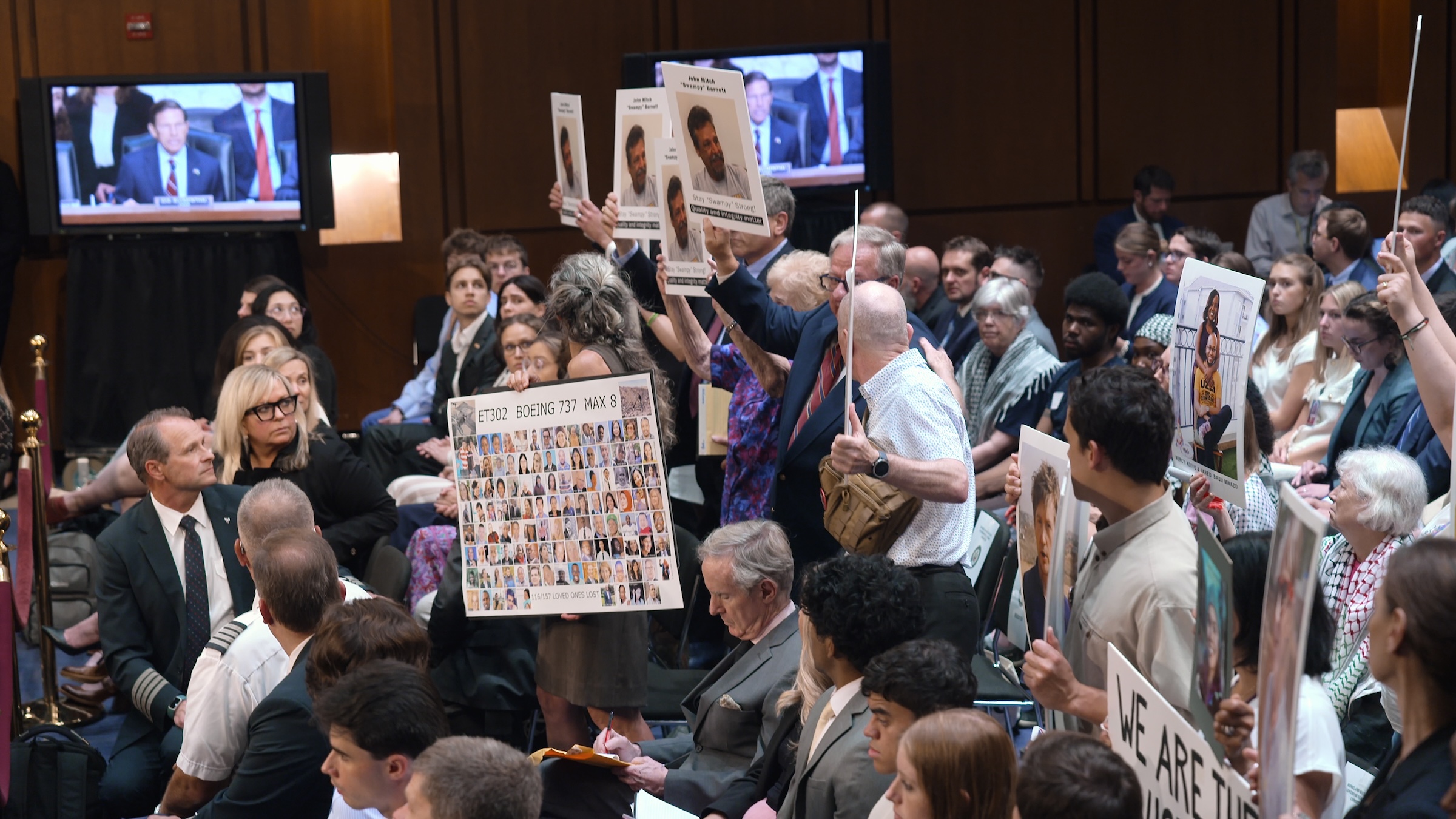
While the whistleblowers drive Freefall’s investigative narrative, they are far from its only focus. After the two 737 Max crashes, Boeing negotiated a “deferred prosecution agreement” with the Justice Department, which meant that criminal fraud charges would be dropped if the company avoided more scandals and accidents for a probation of three years. For the loved ones of the crash victims, this was not good enough, and they pushed their fight for meaningful accountability from Boeing and assurances that aviation companies wouldn’t be able to shirk on safety ever again. “One of the things that comes through is just the remarkable humanity of the people who work there, and the remarkable lack of humanity by the corporation,” says Kennedy.
Naoise Connolly Ryan is the widow of Mike Ryan, a United Nations employee who died in the Ethiopian Airlines crash. In Freefall, she comes across as a clear-minded, courageous and dogged organizer, appearing with her fellow activists with placards and posters of her husband in the benches of senate chambers where Boeing leaders are being grilled. Just before Freefall’s release, a Chicago jury awarded her $29 million for a civil suit brought against Boeing. It sets a strong precedent for the other families, but it’s a small step against a stubborn giant—a company once regarded as symbolic of American growth and excellence that has turned its back on the public.
“You’re seeing this company really be destroyed, and at the same time, the people running it have become some of the richest people in the world,” says Kennedy. “It does speak of a larger correction that needs to happen to make sure that corporations and governments are focused on the public interest and not destroying these institutions for the profit of a very small group of people at the expense of everybody else.” Boeing’s downfall is ultimately a historic betrayal.
The post The True Story Behind Freefall: A Reckoning for Boeing appeared first on TIME.