Every August, our country celebrates new beginnings. Families fill cars with bedding, desk lamps, laptops, notebooks, and high hopes. Students decorate dorm rooms and imagine the people they will become, while parents drive away with a mix of beaming pride and quiet, heavy lumps in their throats.
Every August, I go back to 2006.
Twenty years ago this fall, I helped my daughter, Reema, begin her freshman year at Virginia Tech. I remember believing she had her whole life ahead of her. Like every parent, I assumed the biggest challenges she would face would be exams, homesickness, and choosing a major.
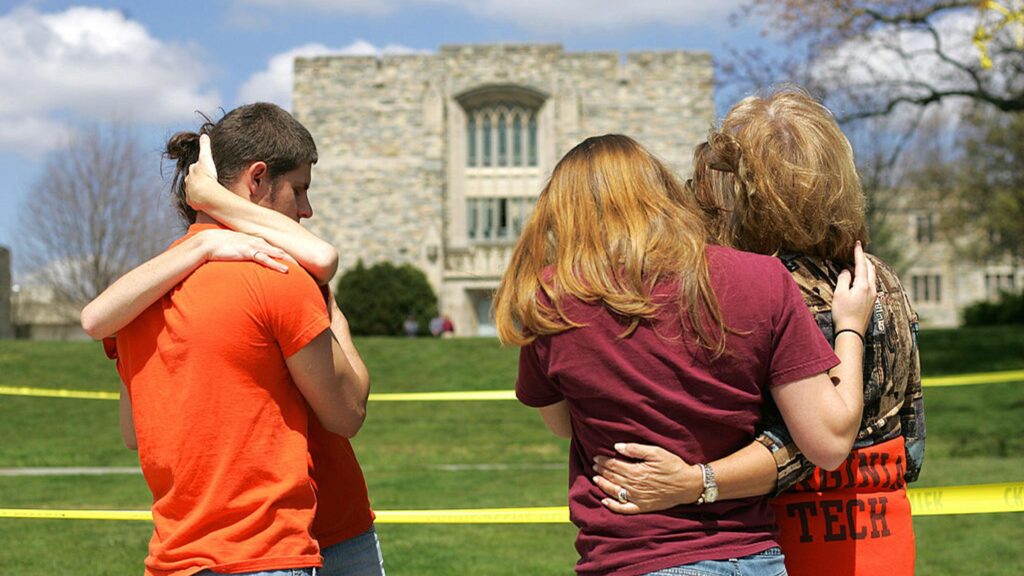
My family could never have imagined that eight months later, she would be among the 32 people killed in her classroom on April 16, 2007, coming home in a mortuary van.
In the years since, mass violence has become a recurring nightmare in American life. Yet every August, millions of parents still make that same drive, entrusting their children to colleges and universities across the country. No parent should have to make that journey wondering whether their child will come home safely.
We have learned a great deal since 2007. We know more about recognizing warning signs, responding to mental health crises, and building stronger safety protocols on campus. We know more about what proactive prevention requires. The problem is that knowing what works and consistently doing it are two different things.
As another academic year begins, we cannot rely on prayers or goodwill to keep our students safe. While most colleges and universities spend phenomenal budgets emphasizing sports, campus events, and academics, parents need to ask the most important question: how safe is my child? We need sustained, measurable, and accountable action from lawmakers, university leaders, and citizens.
First, campus safety cannot remain reactive. Every college president and administrator will tell you that student safety is a top priority. But a pledge to safety is not enough. Colleges should be able to demonstrate, through regular and rigorous self-assessment, where their vulnerabilities are and what they are doing to address them.
Every single college and university should be using the 32 National Campus Safety Initiative, or 32NCSI. Through the VTV Family Outreach Foundation, in partnership with NASPA (Student Affairs Administrators in Higher Education), we launched this campus safety tool in memory of the 32 people killed at Virginia Tech. It gives colleges a framework for assessing critical areas of campus safety and infrastructure, including threat assessment teams, emergency communications, mental health services, and physical security.
The tools exist. The question is whether we are using them consistently, and whether we are holding ourselves accountable.
Second, campus safety cannot begin when a student arrives at college. It must begin years earlier. Every elementary, middle, and high school should have access to evidence-based programs that help educators and school resource officers recognize concerns, build positive relationships, and address problems before they escalate.
One such model is Preventing Problems by Promoting Positive Practices, or P5, developed by the Virginia Tech Center for Applied Behavior Systems with support from the U.S. Department of Justice’s COPS Office, and in conjunction with VTV Family Outreach Foundation. P5 provides a comprehensive safety model and training program for K-12 school resource officers and administrators to create a safety net for students when they are in the yellow zone, prior to entering into the red zone. Simply put, it creates a culture of caring.
Finally, we need to restore national infrastructure for campus safety. The National Center for Campus Public Safety was established in 2013 to conduct research, develop best practices, and provide campus security training. Its federal support eventually lapsed after funding allocations ran out, and the federal government no longer maintains the Center as the sustained national resource it was created to provide. While archived federal documents and reports remain available through the Office of Justice Programs Virtual Library, an active national center is no longer doing the work it was created to do. This needs to change.
In 2026, there is no reason to wait for another warning sign, another missed opportunity, or another family to experience an unimaginable loss. When I watch parents drop off their freshmen this month, I do not want them to live in fear. Hope is a vital part of entering college, and every student deserves to experience the wonder of a new beginning.
But hope is not a policy. If we truly want to honor the memory of Reema and the countless others lost to mass violence, we must match our back-to-school hopes with uncompromising action.
Twenty years after I helped my daughter move into Virginia Tech, every parent should be able to drive away from a college campus believing their child has a whole life ahead of them. That belief should not be a matter of faith. It should be a matter of policy.
The post 20 Years After Virginia Tech, We Can Do More to Keep Students Safe appeared first on TIME.