A small museum, not far from The Post, is overshadowed by the leviathans of the Smithsonian, but what the institution lacks in size, it makes up for with purpose. The Victims of Communism Museum, in a handsome 1912 Renaissance Revival building across from McPherson Square, is “dedicated to commemorating the more than 100 million people killed by Communism around the world,” its website says, “and to those pursuing freedom from totalitarian regimes.”
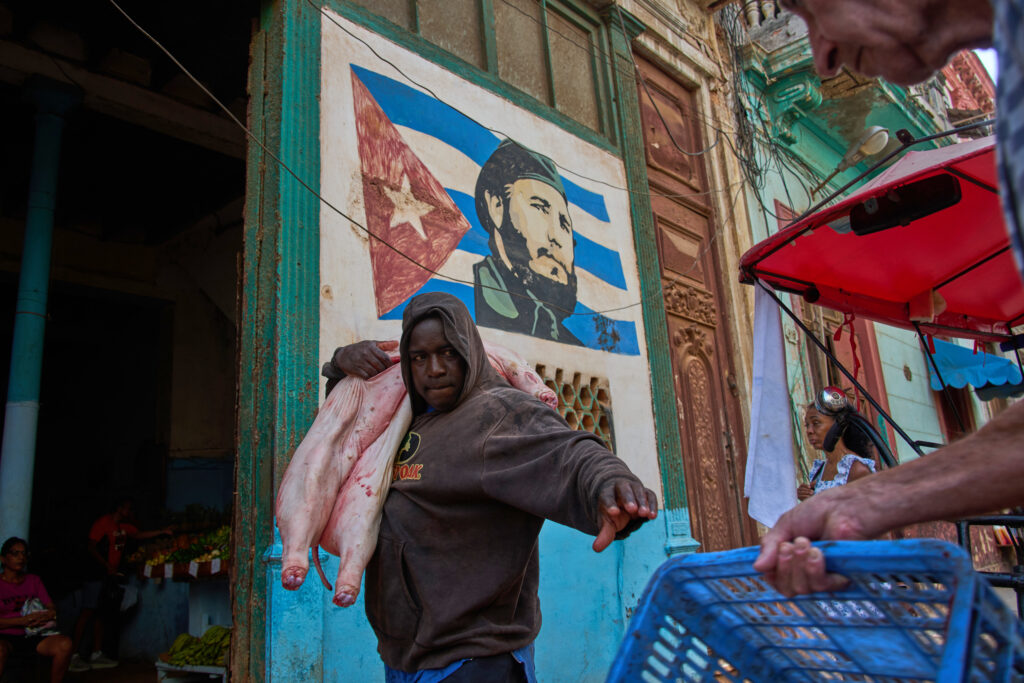
Last week, Cuba’s communist government held a weeklong marathon of compulsory public gaiety marking what would have been dictator Fidel Castro’s 100th birthday on Aug. 13. But birthday parties, even weeklong ones, are ephemeral affairs; a more substantial tribute would be appropriate for El Comandante and his ruinous legacy.
Given the contemporary fashion for museums establishing branches in other countries — the Guggenheim Bilbao, the Louvre Abu Dhabi — we suggest a new entry: the Victims of Communism Museum Havana.
Many people in Cuba long for freedom from the totalitarian regime that has immiserated the island for 67 years. Cuba will be free one day, the arrival of which the Trump administration is, in its ham-fisted way, trying to hasten. But the human and economic wreckage inflicted on the Cuban people should not be allowed to fade from memory.
The Castro regime survived for decades thanks to the Soviet Union sharing the meager spoils of its own dilapidated communist system. With the fall of the Soviet Union, Moscow in the early 1990s took its communist client off life support, yet the patient refused to die. The island persists in a vegetative state.
An estimated 1 million Cubans, or about 10 percent of the population, have fled in recent years, spurred by the regime’s 2021 crackdown on protests, according to the University of Navarra in Spain. As Post columnist George F. Will noted in these pages in February, “a threadbare geopolitical irrelevancy” once famed for its cigars and sugar now must import tobacco from Spain and sugar from Brazil. Cuba’s bartering system with Venezuela — Havana traded its expertise in terrorizing civilian populations for Venezuelan oil — ended with the U.S. extraction of dictator Nicolás Maduro from Caracas last winter and the imposition of an oil blockade.
Now, trash piles up in the streets because garbage trucks have no fuel. But on the bright side, the squalor is at no risk of driving away tourists, who basically quit coming during the pandemic and never returned. Perhaps the charms of sipping a mojito in moldering Old Havana, gazing upon a cowed and fearful citizenry, have waned even for vacationing social-justice warriors.
An abandoned waterfront hotel might make a nice home for our envisioned Victims of Communism Museum Havana, though nothing could top the museum’s D.C. headquarters. The building on 15th Street was originally the University Club, its cornerstone laid by President William Howard Taft. A private retreat for Washington’s business and political elite might have raised the hackles of long-ago socialists, as it would today, but in one of those delicious ironies of American life, the building was sold in 1936 — to the United Mine Workers of America. No revolución required.
The post How to commemorate Fidel Castro’s 100th birthday appeared first on Washington Post.