Her daughter is only six weeks old, but Eleanor Trenary is already worried that it could be difficult to secure childhood immunizations over the next several years, given shifting vaccine guidance from the federal government. It was something she and her husband fretted about throughout the pregnancy.
“What if we can’t protect our second baby as well as we could our first?” said Ms. Trenary, 35.
For many parents, rapidly changing recommendations around vaccines have added a layer of anxiety in navigating what is typically a stressful time with a new baby at home. New moms said the shifting health advice from the Trump administration has made an already seemingly endless number of decisions feel even more daunting.
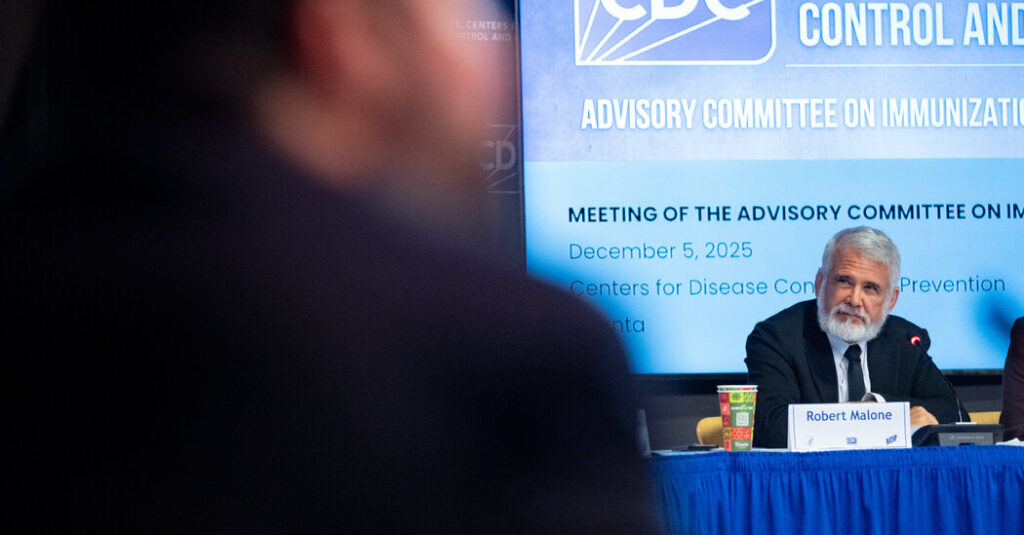
On Friday, a federal vaccine committee at the Centers for Disease Control and Prevention voted to end a decades-old recommendation that all newborns be immunized at birth against hepatitis B, a highly infectious virus that can cause severe liver damage. Many medical groups and public health experts immediately pushed back, saying that the universal vaccination at birth had helped to eliminate nearly all cases among newborns in the U.S. and that there was no evidence of harm from the shots at any age. The shift is not expected to affect insurance coverage for people who decide on their own to get the shot.
But remaking the childhood vaccine schedule has been a major goal of Health Secretary Robert F. Kennedy Jr, who fired all 17 members of the vaccine panel in June, replacing them with people who largely share his well-documented skepticism about vaccines. More changes to vaccine policy are likely to follow in the coming months, as the committee goes on to review all childhood immunizations.
Ms. Trenary, who lives in St. Paul, said she strongly believes in vaccines, and thinks the recent changes have been driven by politics instead of science. But she added that she felt sympathetic toward parents who may now choose not to vaccinate because of confusing and conflicting guidance from authorities. The American Academy of Pediatrics and the American Medical Association, for example, now disagree with the C.D.C.
“It feels like a brave new world to not trust C.D.C. recommendations anymore,” she said. “All of us just want to do what we can to keep our kids safe.”
Yasemin Saka was about month from her October due date when President Trump began claiming that taking Tylenol during pregnancy caused autism in children. Ms. Saka, who was having her first baby, had been regularly taking the painkiller for a pregnancy complication.
Ms. Saka, who lives in Seattle, said she had to turn off notifications for news apps to minimize her stress.
Then, as she made her birth plan, doctors told her that federal guidelines for the hepatitis B vaccine, typically administered to all babies at birth, may be changing around the time her baby was born. Ms. Saka, 39, opted to get her daughter the vaccine, but resented that she had to question whether it was the right decision.
“Pregnant women go through so many ups and downs, and so many complications, and now you add this layer of guilt, questioning, whatever, and it’s just insane,” said Ms. Saka. “It kind of makes you feel like, ‘Am I failing my baby already?’”
She said that the changing vaccine guidance is “just opening the flood gates for more anxiety among expecting parents.”
The C.D.C. has recommended since 1991 that doctors administer the first dose of the hepatitis B vaccine within 12 hours of birth to infants whose mother is known to be infected, and within 24 hours for all other newborns.
But Mr. Kennedy and his associates have argued that hepatitis B is primarily a sexually transmitted disease and that babies do not need the protection unless their mothers are infected. The panelists recommended that for infants born to mothers who test negative for the virus, parents should decide whether and when to immunize their babies in consultation with their health care providers.
Parents and their providers should “consider vaccine benefits, vaccine risks, and infection risks” and administer the shot “no earlier than 2 months of age,” the committee’s new recommendation says.
The American Medical Association on Friday warned that the federal committee’s decision unnecessarily created confusion for parents who want to keep their newborns safe. The vote “is reckless and undermines decades of public confidence in a proven, lifesaving vaccine,” the organization said in a statement.
Supporters of the vaccine note that the virus can be spread by people who do not know they have it, as well as by household objects like toothbrushes, razors or combs that are used by an infected person. Only about half of the cases before 1991 were a result of transmission from an infected mother.
Dr. Ari Brown, a pediatrician in Austin, Texas, was so alarmed by the hepatitis B committee decision that this week between patients she was watching a livestream of the meeting. She called the decision a “stunning spectacle.”
Dr. Brown said that already this year parents have more questions than ever about vaccine side effects, ingredients and timing. She blamed a “post-expert era” and misinformation on social media.
“There’s a lot of noise, and every parent wants to do the best thing they can to protect their kids and raise healthy, thriving children,” said Dr. Brown, who has been practicing for 30 years. “It’s very troubling, and I foresee that there will be more of these things coming down the pike with this current advisory group.”
Bobbi Jones, who lives in San Diego, said she was worried throughout her pregnancy this year about changes to the vaccine schedule and whether insurance coverage would end for some childhood shots.
She said that her doctor told her that if vaccines became difficult to access for her older children, ages 5 and 3, and her baby, who was born in September, she could drive across the border and pay for any vaccines in Tijuana. That remains her backup plan, she said.
But then she began hearing about measles patients being admitted to hospitals, potentially coming into contact with newborns. That made her realize, she said, that she can only do so much to protect her family.
“You start to worry about, wow it’s not just my household vaccination, it’s much broader than that, and what could happen to my newborn?” she said. “It’s so scary.”
Earlier this year, California, Oregon, Washington and Hawaii formed a “health alliance” that would review scientific data and make vaccine recommendations for their residents, pushing back on the C.D.C. That group released a statement hours after the vote affirming that it still recommends the hepatitis B vaccination should be given within 24 hours of birth.
Dana Guy is the executive director of a Seattle-based nonprofit that runs support groups for new parents. She said the changing vaccine guidance is another stress point for parents who are already feeling overwhelmed and isolated in a system that isn’t set up to support them, with a lack of affordable child care options and limited paid family leave.
“We hear every day how challenging it is for parents right now,” she said. “Families are carrying a lot.”
Soumya Karlamangla is a Times reporter who covers California. She is based in the Bay Area.
The post Confusion, Anxiety for Parents as Vaccine Guidelines are Upended appeared first on New York Times.