Scott Lincicome is the vice president of general economics and trade at the Cato Institute.
When the Trump administration took a 10 percent stake in semiconductor giant Intel last year, I argued that it was a costly mistake and an affront to American free enterprise. President Donald Trump disagreed. He even took a victory lap in June when Intel’s stock rose more than sixfold in the 10 months following the government’s intervention.
Look closer, though, and Intel’s inflated share price hardly vindicates the administration’s purchase. And the grand experiment that Intel kicked off isn’t just as bad as I warned. It’s worse.
The administration’s holdings are growing at breakneck speed. The running tally at the Cato Institute counts 31 government equity deals — spanning companies in steel, critical minerals, semiconductors, nuclear power, rocket motors and quantum computing — enacted by three different federal agencies acting under murky legal authority. The Commerce Department has based more than a dozen semiconductor and quantum computing deals on the Chips and Science Act, which does not expressly authorize federal shareholding. Some of the equity deals appear to have been coerced by the administration — or at least conditioned on the granting of a permit, subsidy or other government privilege. And more stakes are rumored to be on the way. In a single year, Washington went from one position to a diverse and questionable portfolio, with nary a vote from Congress or the American public.
These stakes have already corrupted American businesses. The Trump administration exercised its “golden share” of U.S. Steel last year to prevent the company from shutting down production at an antiquated Illinois plant. And when Apple CEO Tim Cook visited the White House in August 2025 to lobby for a tariff exemption, Trump and Commerce Secretary Howard Lutnick reportedly pressured Cook to manufacture Apple’s chips using Intel’s factories. Apple ultimately received the tariff carveout. Then, 10 months later, Trump announced (and took credit for) a deal between Apple and Intel that reportedly blindsided Intel’s own executives.
Nvidia and SpaceX have announced tie-ups of their own with Intel, reportedly under similar pressure from the White House. Japan’s SoftBank, meanwhile, invested $2 billion into Intel days after the government’s stake was first leaked — in line with the firm’s history of splashy spending to curry favor with Washington.
Government favoritism has shown itself in other ways, too. Three months after the Pentagon invested $1 billion into L3Harris’s rocket-motor unit, the Trump administration and Lockheed Martin handed the firm two contracts to dramatically expand missile propulsion systems — arrangements L3Harris described as its largest to date. Critical minerals firm MP Materials received the administration’s very first equity stake in July 2025 and signed a contract with the government that guaranteed mineral purchases at a price floor well above the market rate.
The deals have also invited cronyism. The Pentagon’s Office of Strategic Capital, with as much as $200 billion in lending capacity, is run by a former Cerberus Capital Management executive whose old firm invests in the same industries. One beneficiary, Vulcan Elements, is backed by Donald Trump Jr.’s venture capital firm. Lutnick’s former investment firm is connected to USA Rare Earth, which is now partially state-owned. And the president himself has disclosed myriad stock trades involving Intel and other companies either with government ownership and or in the state-backed firms’ close orbit.
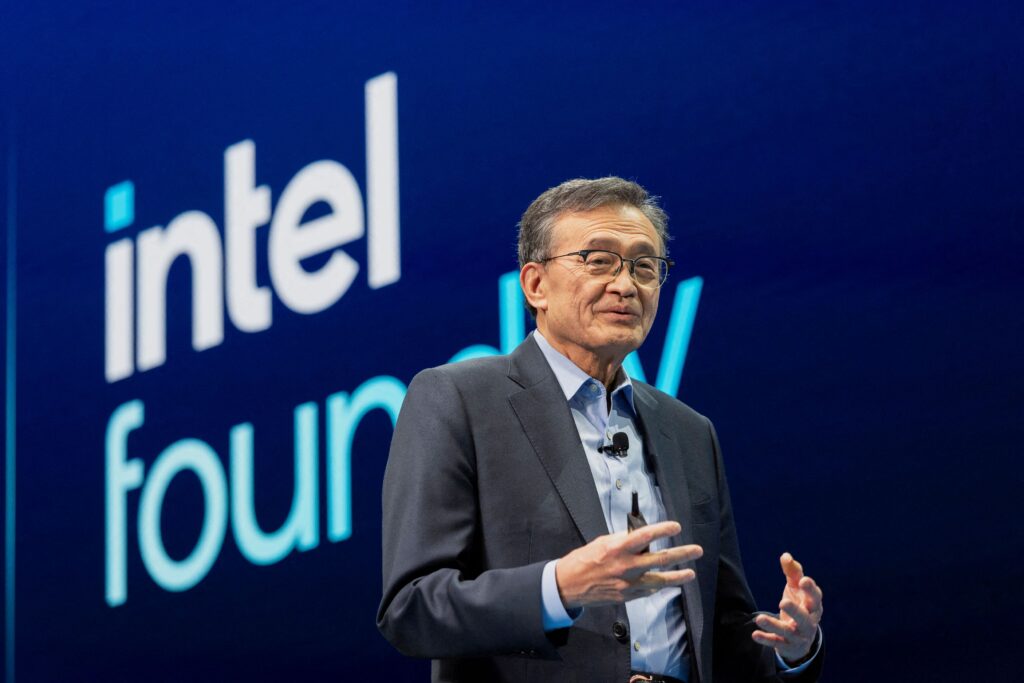
These are just the seen costs; the unseen ones are bigger. As expected, speculators are investing billions of dollars in companies based on perceived political momentum, rather than the companies’ actual performance or promise. According to a Cato Institute analysis, if Intel’s share price had followed the growth rate of the broader semiconductor industry over the past year, its market capitalization would have been $268 billion less than it is now. Not all these billions reflect an unearned political premium — Intel CEO Lip-Bu Tan’s turnaround plan has borne some fruit — but a good chunk of them surely do. The company’s linchpin foundry business is still hemorrhaging money, and Trump’s announcement of the still-unconfirmed Apple deal alone inflated Intel’s market cap by tens of billions in a single day.
This textbook capital misallocation has spread beyond Intel. Hedge funds are reportedly betting against MP Materials and other U.S. critical minerals companies because their stocks seem to be growing based on political “rhetoric,” not “economic substance.” Other investors have openly begun pricing stocks based on the firms’ coziness with Trump. All these dollars are finite capital that cannot go to other, more deserving American companies — and that means lower growth down the road.
Any taxpayer gain from the government’s investments, meanwhile, is an illusion twice over. First, profits are realized only if the government sells, an unlikely move because private investors would abandon the firms, too. Second, the government’s windfall is so far driven by just Intel. Strip it out, and the picks have returned little. Several of them, in fact, traded lower in early August than when the government bought in. Even Intel’s premium is not guaranteed: The stock dropped almost 40 percent from June to August, as investors questioned both the artificial intelligence boom and the company’s turnaround. Unsurprisingly, Trump didn’t brag about that.
These are the most serious problems from the Intel deal, but there are others. A government investment signals that unbacked rivals are riskier bets, raising their cost of capital and creating an invisible barrier to new ideas and market entrants. Most of the deals are of dubious legality, and there are no rules surrounding what an administration can buy, what information it must disclose, when it can sell or how it reports to Congress. The clearest tell in this regard is that the pending defense policy bill would only now explicitly authorize the Pentagon to take ownership stakes, subject to certain guardrails.
This legislative provision gets the solution exactly backward. Instead of authorizing government equity deals, Congress should set hard terms for divestment now, before the government’s holdings become a permanent feature of the U.S. economy and a permanent departure from America’s free enterprise system. The United States has spent years explaining to the rest of the world that governments make lousy shareholders. It would be a shame to prove it.
The post The government’s Intel bet was even worse than expected appeared first on Washington Post.