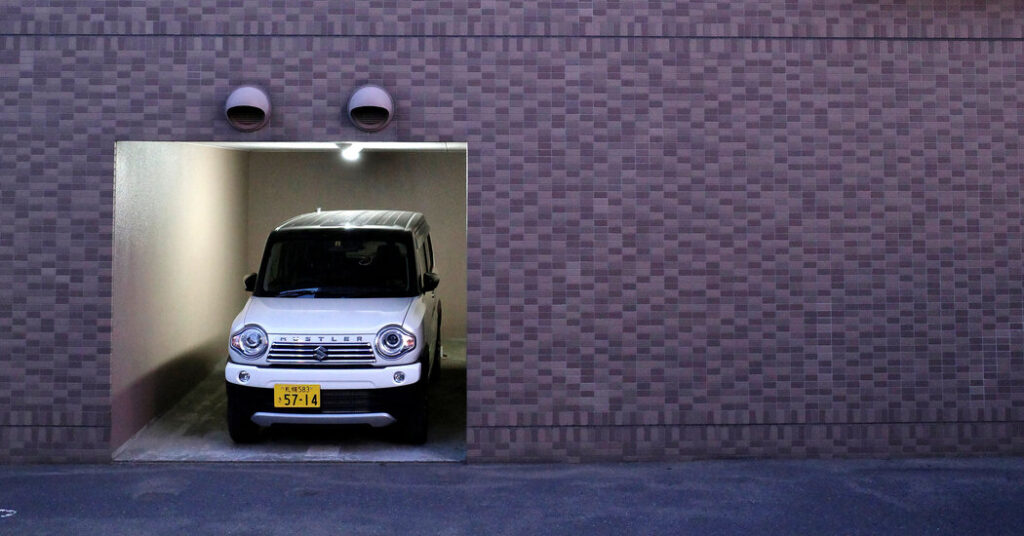
They’re lean. They’re pint-size. They’re oh so cute.
They’re Japan’s beloved kei microcars and trucks. And they have an unlikely new fan: President Trump.
Mr. Trump calls the cars “really cute” and “sort of like the Beetle used to be.” On Friday, he posted on Truth Social, “I have just approved TINY CARS to be built in America.”
Could Mr. Trump really bring kei cars to the United States?
That would be difficult, but not impossible, said Tifani Sadek, director of the University of Michigan Law School’s Law and Mobility Program.
It would take some big changes.
Kei cars and trucks are a distinct vehicle category Japan, with limits on size. They have tiny, 660-cc engines. Created in 1949 to encourage car ownership, they qualify for significantly lower vehicle taxes and insurance premiums, and are a fixture, especially in rural Japan.
But the keis, which typically weigh less than half of standard cars, most likely would not meet the mandatory safety requirements for vehicles sold in the United States. Older models can lack safety features like airbags.
Despite those setbacks, kei vehicles are winning a loyal American following. Enthusiasts can import vehicles that are more than 25 years old, under a provision meant to accommodate classic car collectors. An estimated 7,500 kei vehicles were imported into the United States last year.
At a meeting in the Oval Office with major U.S. automakers on Wednesday, Mr. Trump said he noticed the tiny cars on his recent trip to Japan and wondered why they couldn’t be brought to America.
Sean Duffy, the transportation secretary later said that Mr. Trump’s newfound enthusiasm for kei cars was spurred in part by concern about affordability. They are “much more affordable than other options that are on the market today,” he told CNBC.
In Japan, a basic new kei car or truck costs about $10,000, while used models can go for less than half that price. The average price of a new car in America now exceeds $50,000, according to Kelley Blue Book,
For automakers to be able to sell, let alone manufacture, similar cars in the United States, one of several things would need to happen.
Congress would need to update the National Traffic and Motor Vehicle Safety Act, enacted in 1966 to empower the federal government to set and administer vehicle safety standards. Experts say that is unlikely.
The National Highway Traffic Safety Administration could also embark on a new rule-making process to change federal vehicle standards. But that could take months, if not years, and would involve rounds of public comment and industry input.
Automakers could also apply for a limited exemption from federal standards, but only up to 2,500 units — a provision normally used by companies looking to test autonomous vehicles and other experimental cars.
Even then, some states don’t allow the microcars on highways, or do not allow them to be registered. Getting insurance can be tricky, too.
“You don’t have all of the crash bars, or the sturdy metal frame that’s going to protect you,” Ms. Sadek said. “If you get into a collision with a 5,000-pound pickup truck, you’re going to lose.”
Brandon Savoca, an ironworker from Long Island, is unfazed. He first saw a kei truck on the road about six years ago — a Mitsubishi Pajero Mini. “I was like, ‘What is that?’” he said.
He was intrigued and imported one for about $5,500. Now, he is hooked, helping others import kei trucks and adding safety updates like steel bumpers. He also moderates a Facebook page for fellow kei enthusiasts.
“They’re the most practical vehicle you’ll ever buy,” Mr. Savoca said.
The biggest obstacle to American-made kei vehicles may come from the automakers themselves.
“The auto market in the United States is going is toward bigger, more luxurious cars,” said David Friedman, former acting administrator at the National Highway Traffic Safety Administration. Those cars are also more profitable. “So I’d be curious how much the auto industry would fight this.”
When asked whether they might consider producing kei cars in America, automakers demurred. General Motors stressed that its portfolio already “offers a wide range of choice.” Ford Motor said it was “always looking for ways to give U.S. customers more choice and affordability.” Nissan said it would “consider additional vehicle types if a strong opportunity exists.” Toyota said it doesn’t comment on future production plans.
Mr. Friedman said the president was perhaps unwittingly highlighting some harsh realities facing the U.S. auto market. New cars are becoming increasingly unaffordable for American households. A cheaper car could help.
And for all of the safety concerns of kei trucks, meanwhile, larger cars don’t necessarily make roads safer, he said. “In fact, heavier cars are making the roads more dangerous,” he said. “We might all be better off if everyone drove around in cars that were lighter.”
Hiroko Tabuchi covers pollution and the environment for The Times. She has been a journalist for more than 20 years in Tokyo and New York.
The post Could President Trump Bring Japan’s Tiny Cars to America? Not So Fast. appeared first on New York Times.