Photographs by Haruka Sakaguchi
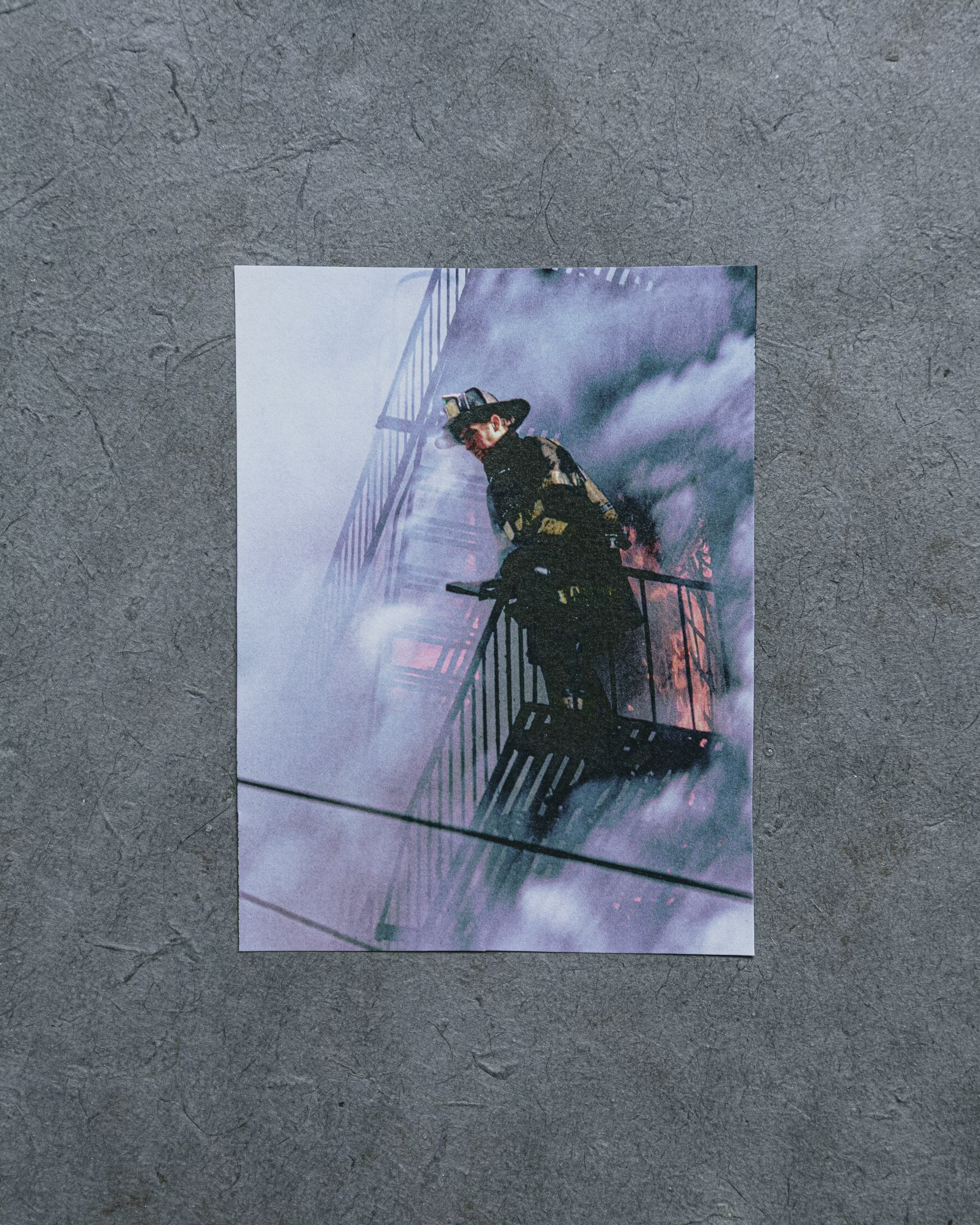
To a firefighter who is inside one, a fire creates as much darkness as heat. Flames start bright but throw off smoke that can swathe everything in pitch black. Lieutenant Kevin Dowdell did not fight fires so much as he groped through and problem-solved them, relying on half-blind judgment and expertise—and his fellow firefighters to keep flaming debris off his back.
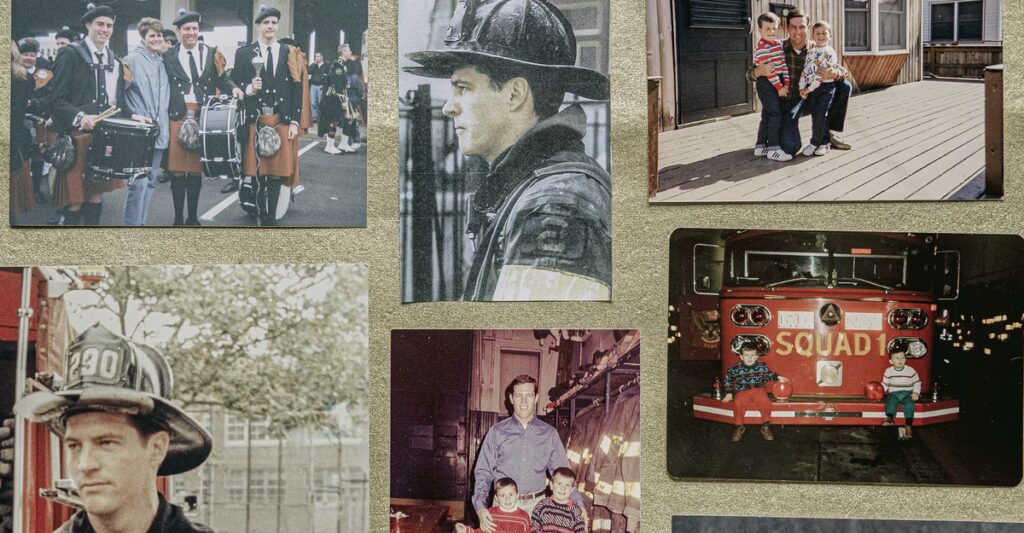
At the cindering end of a successful 24-hour shift with the New York City Fire Department, Kevin would hang up his helmet, so ash-rubbed that it looked salty, and drive home to his wife and two sons in Rockaway Beach, Queens. “Oh, we had a good job last night,” he’d say, elated as well as exhausted. By “good,” his family knew, he meant the fire had been big.
In his innermost firefighter’s heart, Kevin liked it when the alarms went off. A good job broke the tedium of drills and doughnut-dunking in the firehouse kitchen. It called on Kevin’s whole mind and body; he had to calculate burn rates and airflow while wielding 40 pounds of gear. Fire needs four elements: oxygen, heat, fuel, and a chemical reaction. Deprive a fire of even one of those, and it goes out. But in New York—a steel-stacked, deep-tunneled metropolis with architecture ranging from tenements to glass towers—the interaction of the elements is complex. One of the questions on the test to become a lieutenant: What is the expansion factor of a 100-foot steel beam as it reaches the inherent heat level of 1,200 degrees Fahrenheit?
A firefighter had to be part chemist, part engineer, and part daredevil. But the mission itself was simple. “You show up on someone’s worst day and try to make it better,” Kevin told his sons, Patrick and James.
The FDNY had a saying: There were people who just worked for the department for a paycheck, and then there were firefighters. Kevin was a firefighter. “They love to go to a fire,” his widow, RoseEllen, told me, sitting at Patrick’s kitchen table in Rockaway Beach. “They’re waiting for a good fire.”
But on September 11, 2001, Kevin met a fire that looked like hell’s own flames. It burned a quarter of a mile up in the sky, unreachable by any ladder, almost at the top of the World Trade Center’s Twin Towers. Kevin’s unit, Rescue 4 in Queens, arrived about 20 minutes after the second hijacked plane had hit. He would have read the color of the smoke and picked apart the elements of the fire: aviation fuel, combustible office materials, and an oxygen-rich chimney effect. They did not make for a good fire. They made for an uncontainable one. Nevertheless, Kevin led his men into the South Tower.
Twenty-five years after the attacks, “Never Forget” is a T-shirt slogan. A third of the American public is too young to recall that day. Anniversaries have become rote rituals in which politicians describe scenes they did not witness and national unity that no longer exists. To get beyond the benumbed abstraction, it’s necessary to remember with specificity. September 11 was a lived event. One way to recall it meaningfully, then, is through a life.
Kevin Dowdell was handsome in a regular way, with dark-brown hair in an old-fashioned side-comb and a lean triangle of a face that tapered to a good chin. But he had some gravel in him, and his forearms were as thick as the fat end of a baseball bat. He was the grandson of an Irish longshoreman who’d left a dying fishing port in Fingal and arrived at Ellis Island in 1904 with $3 in his pocket. Kevin’s father, a butcher, raised seven children on leftover baloney ends in an 1,100-square-foot rowhouse in Brooklyn.
At the age of 18, Kevin went to work as a “sandhog,” the nickname for miners who dug the city’s maze of tunnels that carry cars, steam, sewers, water. He spent his early manhood descending hundreds of feet into compression chambers, which sometimes caused the “staggers” or “chokes,” as sandhogs called the bends. He dynamited through rock and dug out muck up to his knees—slow, grimy work so hazardous that it was said to kill a man for every mile. But a four-hour shift paid as if you’d worked eight.
When he wasn’t sandhogging he was at Rockaway Beach, where he surfed and hung out in Jacob Riis Park with a crowd from his old Brooklyn neighborhood. Among them was RoseEllen Fedele, a tall, slim 18-year-old college student. At first he was too shy to make eye contact, but he eventually got her number. They dated for five years, which was how long it took him to get out of sandhogging—and she never doubted that he would. Between shifts he studied for and took every civil-service exam in the city. In 1980, Kevin qualified to be a police officer, and he married RoseEllen, who had become a schoolteacher. He spent just a year wearing a badge before he transferred to the fire department, intrigued by a brother-in-law’s stories about how satisfying the job was.
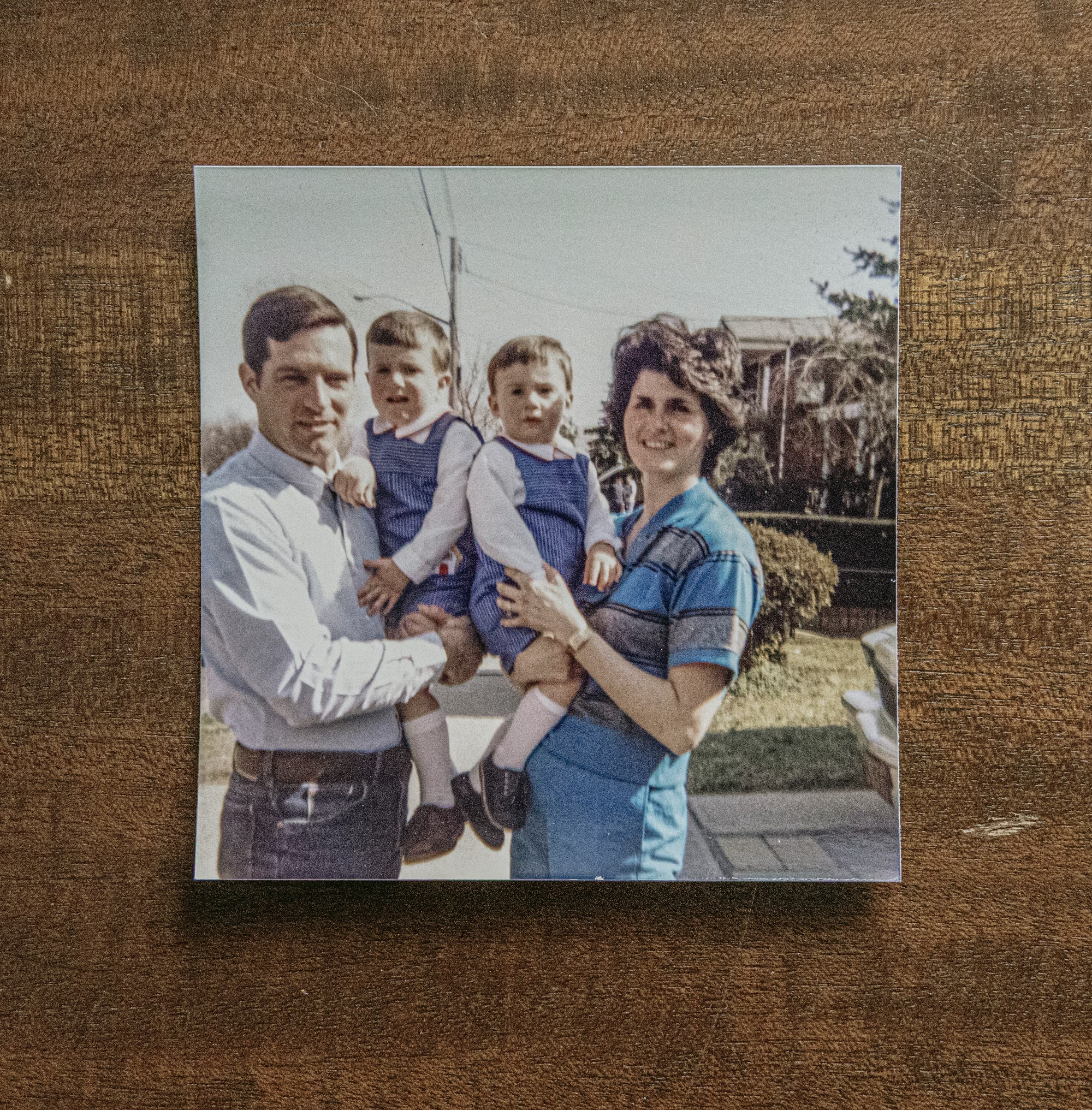
RoseEllen had Patrick on Easter Sunday 1983. When they brought the baby home and relatives crowded to hold him, Kevin refused to let go. “Nobody’s touching him,” he joked. The Dowdells moved to the Rockaways, known as the “Irish Riviera” for its enclaves of firefighters and cops, where the neighbors might swap shifts so you could spend time with your kids. Kevin found a small bungalow that wasn’t winterized and renovated it with his own two hands. They were so poor that they couldn’t afford a stove at first; instead, they cooked on a hot plate. When James came 17 months after Patrick, they put a second crib in the tiny nursery. “You had to, like, slide between them” turned sideways, RoseEllen said.
Kevin often worked seven days a week. When he was off duty, he laid hardwood floors and tile to make extra money. If he got home from work and found the boys in bed, sometimes he’d wake them up just to spend a little time with them. “Come on. Let’s take a walk.” They’d stroll down Rockaway Beach to look for old glass bottles, then get an ice cream. He taught them to surf and how to handle the large waves. “Dive to the bottom and grab a fistful of sand. By that time, the wave will have passed over. Trust me.” They did.
On Sunday mornings, RoseEllen would simmer red sauce on the stove while she took the boys to Mass, then jar it for the rest of the week’s dinners. One of their few indulgences was Friday dinner in Greenwich Village, usually at a favorite Italian spot at the corner of Carmine and Bleecker Streets called Trattoria Spaghetto. “Put on something nice,” Kevin would tell the boys. “Dress like your father has a job.” He would order the veal parmigiana and a glass of red wine, look around the table at his family, and say, “This is what I work all week for.”
The boys spent so much time at the firehouse that they learned the meaning of the crackling radio talk. A “10‑75” was a structure fire in progress, and “K” meant the end of a transmission. The boys would yell, “Rescue 2 to Queens 10‑75 K!” They did drills with Kevin and his team. The big men would strap 10-year-old James into a harness and hoist him over the second-floor firehouse roof. When a call came in, the boys would ride on the front bench seat of the truck, between the men in their bulky turnout coats. They’d get to press the foot pedal that sounded the horn. Kevin showed them how to release it in short blasts. “You have to tap it.” He’d pat James on the knee—the signal for another horn blare. At the site of the fire, the boys would watch through the windshield as the men dismounted in their cumbrous gear and walked through smoking doorways. “The bigger the fire,” James told me, “the bigger the smiles when they came out.”
The city had five rescue units, one per borough, and their members were drawn from among the most capable firefighters in the FDNY. Kevin trained for the worst emergencies: tunnel fires, structural collapses, aviation crashes, train derailments. He carried specialized tools and was a skilled black-water diver, for when cars went into rivers. As Rescue 4’s lieutenant, he organized logistics and made swift, expert judgments about risk factors. A manhole cover weighed 300 pounds but could blow six stories into the air. Hidden fuel could be anywhere. An apartment lobby might have an adjacent dry cleaner; grocery stores had stock closets with flammable ingredients. Smoke and heat moved one way in hallways and another in vertical shafts. In a single day, Kevin and his men might pluck a stranded window washer off a building, deal with a transformer fire down a manhole, and fish passengers from the Hudson after their helicopter went down. In 2000, the unit responded to 2,524 calls. But primarily, Rescue 4 went to fires. Sometimes there were half a dozen in a shift.
The bigger the fire, the calmer Kevin acted. “He could pull up to the building and tell you right away where the people are gonna be trapped and which way the fire’s gonna spread,” Liam Flaherty, a colleague in Rescue 4, told me. “I think his heart rate actually went down the worse the fire got.” Often Kevin’s men could feel the fire but not see it. “When you’re in this dark environment that’s hot, it’s like being locked in a room with a tiger,” Billy Murphy, another colleague, told me. “You’re like, ‘Where is it?’ ” Flaherty would peer through his breathing mask at an acrid black veil, trying to find his way around a burning apartment. Then he would hear Kevin’s cool voice. “Hey, Li, how we making out over there?”
Over the years, Kevin worked so many “good” fires that he became something of a legend in the FDNY, according to Flaherty. In 1991, Kevin helped keep flames at bay on the 12th floor of a Seventh Avenue building to aid a stunning rope rescue of two men from window ledges. In 1993, he was among the first responders to the terrorist bombing of the World Trade Center, which left a crater several stories deep and required him to comb through hazardous rubble, still glowing orange, while gas tanks exploded in the underground parking garages. In 1994, a gas leak blew up a diner in Long Island City, dropping the ground floor into the basement and pinning a waitress under slabs of concrete. Kevin and his partners crawled into the wreckage and worked for three hours to free her as piles of debris quaked over them. He took turns holding her hand and shielding her body with his own, in case the slabs caved. They got her out alive, and won medals for that job. In 1995, he was part of an elite FEMA squad deployed in the aftermath of the Oklahoma City bombing to search for survivors and recover bodies.
With his record, he could have risen higher in the department. But a captaincy would have required leaving Rescue 4 for another unit in the city, and he wanted to stay. “Better to be a happy lieutenant,” he told RoseEllen.

The unit had a strong sense of brotherhood; many of its members played together in the Emerald Society Pipes and Drums, an Irish group within the department that marched in civic events. Flaherty, a tousle-haired raconteur, was their drum major. Murphy, a tall Coast Guard veteran, played the bagpipes. Kevin loved the Pipes and Drums so much that he coaxed his sons to take Irish-music lessons—Patrick, the pipes; James, the snare drum—so they could march in the St. Patrick’s Day parade, alongside Kevin himself on the bass drum. “I work with the best guys in the world,” he would tell his sons.
As with every FDNY unit, the heart of Rescue 4 was the firehouse kitchen, where the men ate together, and drank coffee, and debriefed after every incident. It was also the scene of geyser-like laughter, juvenile and often at someone’s expense. If Kevin corrected the pronunciation of his name (it was Dowdell ), they’d call him “Diddle.” A shift was up to 24 hours, and between alarms they had time for pranks. Once, an officer made the mistake of complaining that he didn’t like hot dogs. For the next month, all the unit served for dinner was hot dogs. Hot dogs in barbecue sauce. Hot dogs in pasta. Hot dogs, grilled and boiled. The officer grimly waited it out. At the end of the month, a large meat loaf landed in the center of the table. Then they cut him a slice. The meat loaf was stuffed with hot dogs.
Rescue 4 gave Kevin a sense of home, and a feeling that he was personally protecting his beloved Rockaways. He didn’t just respond to trouble in the area—he sought it out. After a boy in their neighborhood fell into a septic tank, Kevin installed a scanner on his dashboard; he believed he could have helped if he’d heard the call. He’d listen to emergency dispatches while driving home from Little League and say, “We’re close by. Let’s just go check it out.” Kevin would pull over if he saw a car accident and extricate someone from the wreck before EMS arrived. He’d tell his sons not to be bystanders. “Don’t sit on the sidelines. Make things happen. Do things.” Once, when Kevin saw smoke coming from a building in their neighborhood, he told the boys to call the fire department and then ran off, grabbed a garden hose, and climbed through a back window to start putting the blaze out himself.
He was strict and exacting with his sons. For every minute they were late to something, Kevin docked them half an hour of free time. When they were old enough, he enlisted them in construction work, and didn’t pay them until they could lift heavy loads. “You work like a man, you get paid like a man.” He once called James home from a friend’s house because he hadn’t cleaned his room. He marched James into the doorway and said, “Look at that.” There was a pair of socks on the floor.
Patrick was growing into a burly achiever who aspired to West Point. James was slighter, milder, but with a distance runner’s stamina. During long car rides in New York gridlock, Kevin would ask the boys what they intended to do with their lives. Their grandfather was a butcher. Their father was a fireman. “I want you to be the next step up from that,” Kevin told them. “I want you to do something better than me.”
By late summer 2001, Kevin had earned 20 citations for outstanding performance. He was beginning to think about retirement, and he dreamed of traveling—to Iceland in particular, with its volcanic landscape forged in fire. And the boys were nearly men. Patrick was 18 and had just started at Iona University, in New Rochelle, having been wait-listed at West Point. James was turning 17 and starting his senior year at Xavier High School in Manhattan. He wanted to be a firefighter. “You’re going to college,” Kevin insisted, but he took James on a scuba-training run under the Throgs Neck Bridge. James donned an FDNY dry suit and plunged into the dark, roiling East River while his father supervised from the boat. After the dive, someone took a picture of the two: Kevin’s hand is clapped on his son’s shoulder, and James, shrugging off the suit, is grinning widely.
On Sunday, September 9, the family celebrated James’s birthday. Kevin had the day off and Patrick came down from Iona, and they barbecued and ate cake. Kevin and Patrick cloistered themselves in the den to work on his reapplication to West Point. Then Kevin drove Patrick back to school and kissed him on the cheek. “Love you. See you soon. I’ll talk to you next week.”
Kevin reported to Rescue 4 at 6 p.m. on the evening of September 10 for a 24-hour shift. Liam Flaherty went off duty and headed to band practice at the Elks Lodge. Billy Murphy was on vacation. The kitchen was quiet.
At 8:46 the next morning, American Airlines Flight 11 made a terrifying yeering sound as it accelerated into the North Tower of the World Trade Center. Rescue 4’s summons came at 8:55. Seven men hopped on the rig with Kevin: Terrence Farrell, William Mahoney, Peter Nelson, Durrell Pearsall, Peter Brennan, Allan Tarasiewicz, and a potential recruit named Michael Cawley. The ride probably took about 20 minutes. As they barreled toward Lower Manhattan, an unnerving alert came over the dispatch radio: “Be advised we have jumpers.” From a distance, Rescue 4 would have seen the smoke surging from floors 93 to 99 of the North Tower, the tallest building in New York. About seven minutes into their drive, they might have seen the blooming explosion of the second jet, United Airlines Flight 175, as it tilted into the South Tower between floors 77 and 85.
Rescue 4 arrived at a scene that was too much for the senses. A torrent of debris fell from the buildings—shredded metal and insulation, chunks of concrete, shivering glass shards—amid an earsplitting clamor of sirens and screaming. Torsos, luggage, and aluminum scraps of 767s were strewn on the sidewalks. What looked like splashes of red paint on the plazas were the remains of jumpers who had pinwheeled from the upper floors of the North Tower. Kevin ran into a stunned fellow lieutenant named Robert LaRocco, from Ladder 9, who had seen a severed forearm with a perfectly manicured hand. LaRocco managed to get a call through to his wife. He told her, “It’s raining people.”
Kevin reported to a command post across the street from the North Tower, where the FDNY’s chief of special operations command, Ray Downey, was doling out orders. He assigned Rescue 4 to help with evacuations in the South Tower and, if possible, to get upstairs and beat back the fire. Kevin was seen lining up his men and talking to them intently. He then led them single file toward the South Tower, hugging the sides of buildings.
A rescue squad would have had its hands full in the lobby alone. Elevators were broken, stairwells smoked, and radios were unreliable. People were streaming down, badly burned or bloody, and some had to be carried. One elevator had stopped just short of the ground floor with people trapped inside. Firefighters pried open the outer doors and could see their legs, but couldn’t find a way to lower the car enough to free them. Flaming jet fuel cascaded down the shaft as the crews worked.
At 9:52 a.m., about half an hour after Kevin had arrived, a battalion chief named Orio Palmer reached the South Tower’s 78th floor, where the jet’s wing had inflicted mass casualties. “We’re going to need two engines up here,” Palmer radioed down.
Wherever Kevin was—trying to force open elevators, or starting the slow ascent to 78—the elements of the fire were taking over. The second plane had struck the South Tower at more than 500 miles an hour, stripping the fireproofing from steel trusses and columns. The inferno fed on carpets, curtains, chairs, desks, computers. Plumes of soot trapped the heat. The temperature hit 1,800 degrees Fahrenheit, softening the bones of the building. At 9:59 a.m., the top of the South Tower sagged. Then it began to collapse. Beams and struts slammed into one another. As each floor failed, the falling mass increased, picking up velocity. About 500,000 tons of concrete and steel sped to the earth, reaching an estimated 124 miles an hour.
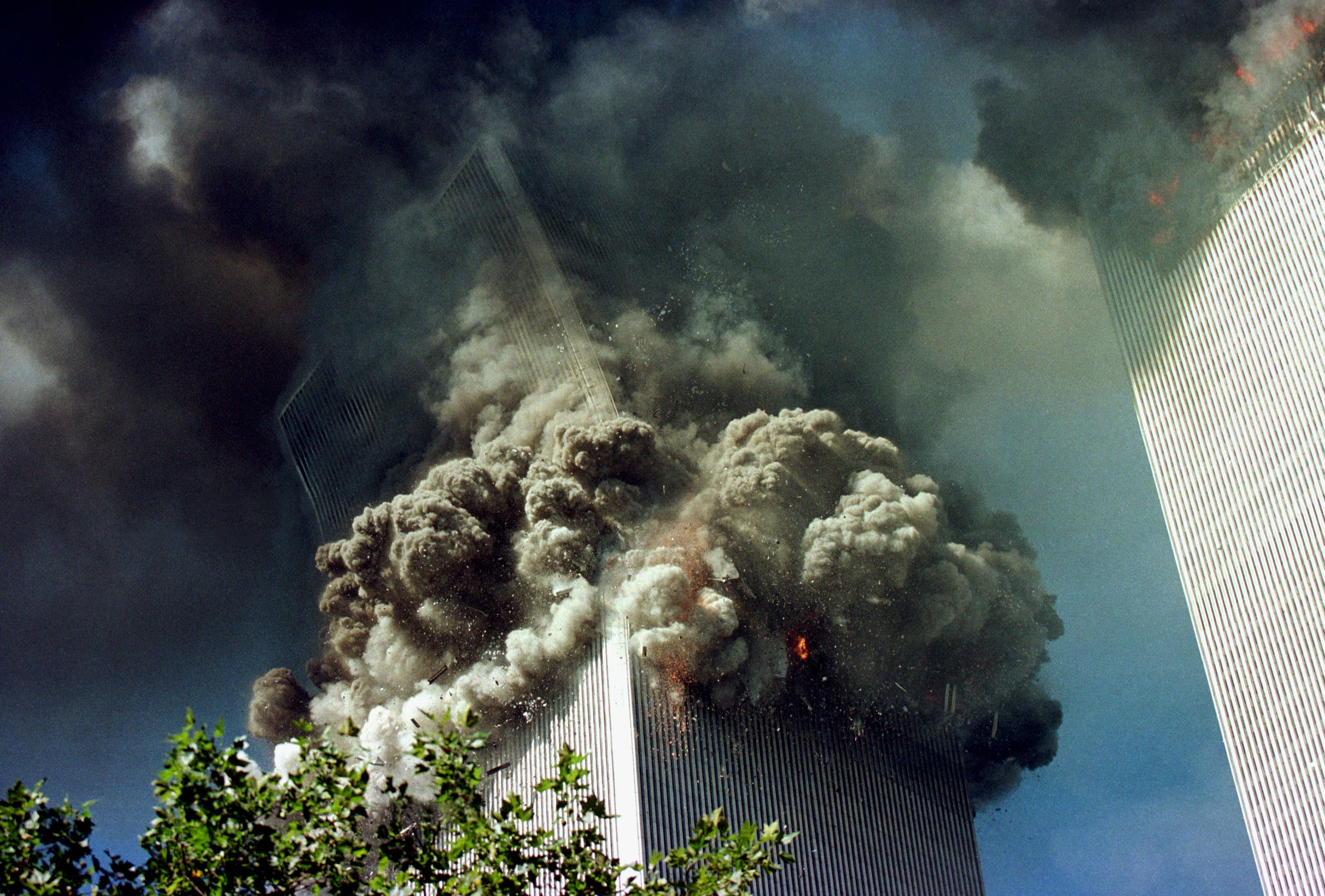
Lieutenant LaRocco of Ladder 9 had just put his foot on a stalled escalator on the north end of the South Tower’s mezzanine when he felt something like a wave in the floor. He heard a mounting roar, like a space shuttle taking off. The light in the windows vanished, as if someone had yanked a giant shade down.
Kevin would have had little time to think about the sound above him. It took just 10 seconds for the tower to fall. As the mass neared the ground, it generated a huge blast of compressed air and seismic waves equal to those produced by a 2.1-magnitude earthquake.
Paperwork from the towers drifted miles away, littering the beaches of the Rockaways. For most of that day, RoseEllen had been at P.S. 312, preoccupied with getting her third graders back to their parents. Now, at home, she waited for Kevin to call. He always did, leaving a message when she didn’t answer. “Hey, it’s me. If you see anything on the news, don’t worry about it. I’m okay.” But 6 p.m. came and went without any word. At 12:30 a.m., Special Operations Command called and told RoseEllen that Kevin was listed among the missing; all of the guys on Rescue 4’s rig were unaccounted for, as was their captain, Brian Hickey, who had been working with Rescue 3 that day.
RoseEllen stayed up all night, her eyes darting between the television news and the front door. Around sunrise, RoseEllen went onto the porch and stared down the street. “At that point, I knew,” she would say, years later. “In my head, I knew.”
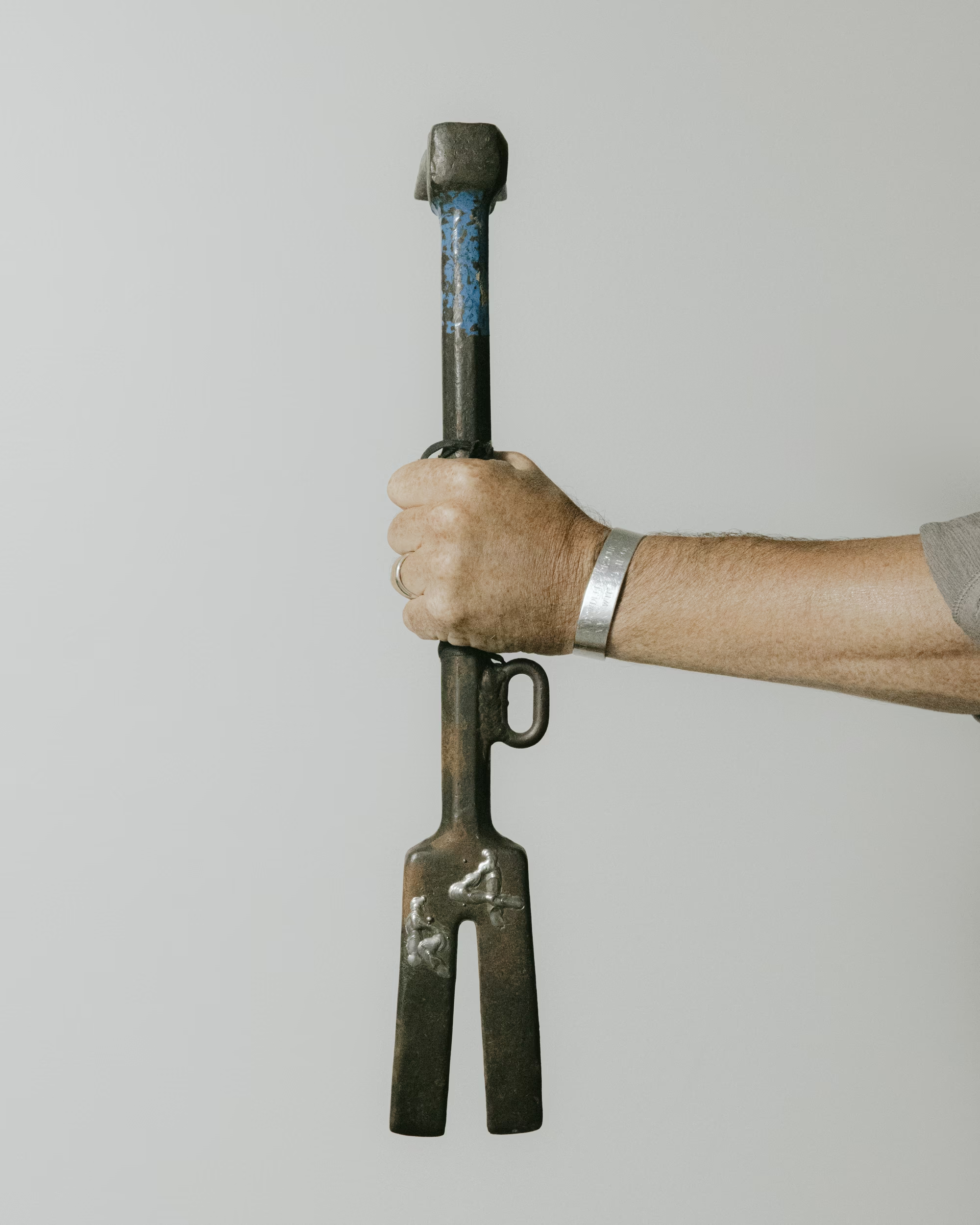
After a week, one of the crews digging through the pulverized wreckage at Ground Zero came across a Halligan bar, which might have been used to claw at an elevator door. It was marked with KD and R4. Kevin Dowdell, Rescue 4. The tool had been blown out of the lobby. But there was no other sign of Kevin.
The remaining men of Rescue 4 set up a war room in the firehouse, manned round-the-clock shifts to dig through the wreckage, and assigned a firefighter to liaise with each family who was missing someone. “Did we find him today?” RoseEllen would ask. No, Billy Murphy would say, day after day.
Whenever the door to the Dowdell house opened, three faces would swivel toward it with hope. “We were like, ‘If anyone got out of there or could get out of there, it’s him,’ ” Patrick recalled, but it was always a relative or neighbor. Two weeks after the attacks, RoseEllen decided that sitting around the house in their grief was not doing them any good. “Listen,” she said to the boys. “You’re going back to school, and I’m going back to work.” On the drive to Iona, she persuaded Patrick to finish his reapplication to West Point. “You will not—we will not—use anything as an excuse in your life,” she said.
Xavier High School was steeped in mourning; 60 alumni and close relatives of students and staff were lost. Counselors and priests watched James for signs of depression, but when RoseEllen pushed him to see a therapist, he protested. “All I do is talk to people,” he told her. He would channel his emotions into running, sometimes 12 miles at a time.
Back at Iona, Patrick couldn’t concentrate. He called James and suggested that they go to Ground Zero to search for their father’s remains. “If we find him, I want to be there,” Patrick told James. “I want to see him. I want to help carry him out.”
James heard his father’s voice in his head. Don’t sit on the sidelines. Make things happen. Do things.
“I’ll meet you there,” James told his brother.
Rescue 4 held a meeting about whether to allow them to join the search. They took a vote, and the boys won. Murphy and Flaherty geared them up with fire boots, gloves, Carhartt suits, helmets, and tools. The guys worried about giving the boys nightmares. Murphy warned them: “If we come across somebody, I’ll ask you to step away until we find out who it is.”
The pile, as it was called, was eight stories of contorted metal, sticking up like giant fork tines, spread over 16 smoldering acres. The burning electrical smell was sickening. As Patrick and James clambered through it, they could feel heat in their boot soles. Grapplers lifted steel from the smoking heaps, and the diggers showed the boys what to look for underneath: a boot, a piece of helmet, the reflective tape from a turnout coat. But the main sign of human remains was the odor of decay. As soon as the diggers smelled it, they would wave at the machines to stop.
The first time the boys were present for a recovery, the crew cast sidelong looks at James and Patrick. The men and boys removed their helmets. A chaplain was called. They stood at attention as the remains were carried away on a flag-draped stretcher.
“You good?” Murphy asked Patrick.
“Yeah, I’m good,” Patrick said.
For seven months, James and Patrick worked at Ground Zero as much as they could. “Being away from it became harder than being there,” Patrick recalled. When his classes at Iona were done for the day, he’d find a ride to the city and dig half the night, then return to campus at 3 or 4 a.m. slit-eyed from ash and lack of sleep, stowing his dusty gear in a garbage bag in his dorm. James kept his Carhartts and tools in his Xavier locker. He would shed his school uniform—blue oxford shirt, necktie, insignia-patched sweater—and tromp out the schoolhouse door, transformed, in coveralls and boots.
The crew found parts of helmets, and parts of people. They found impaled bodies that had to be cut away from the steel with torches. They found intact bodies in strange voids; how long had some people survived under the wreckage? Sometimes the boys just put bone fragments in buckets.
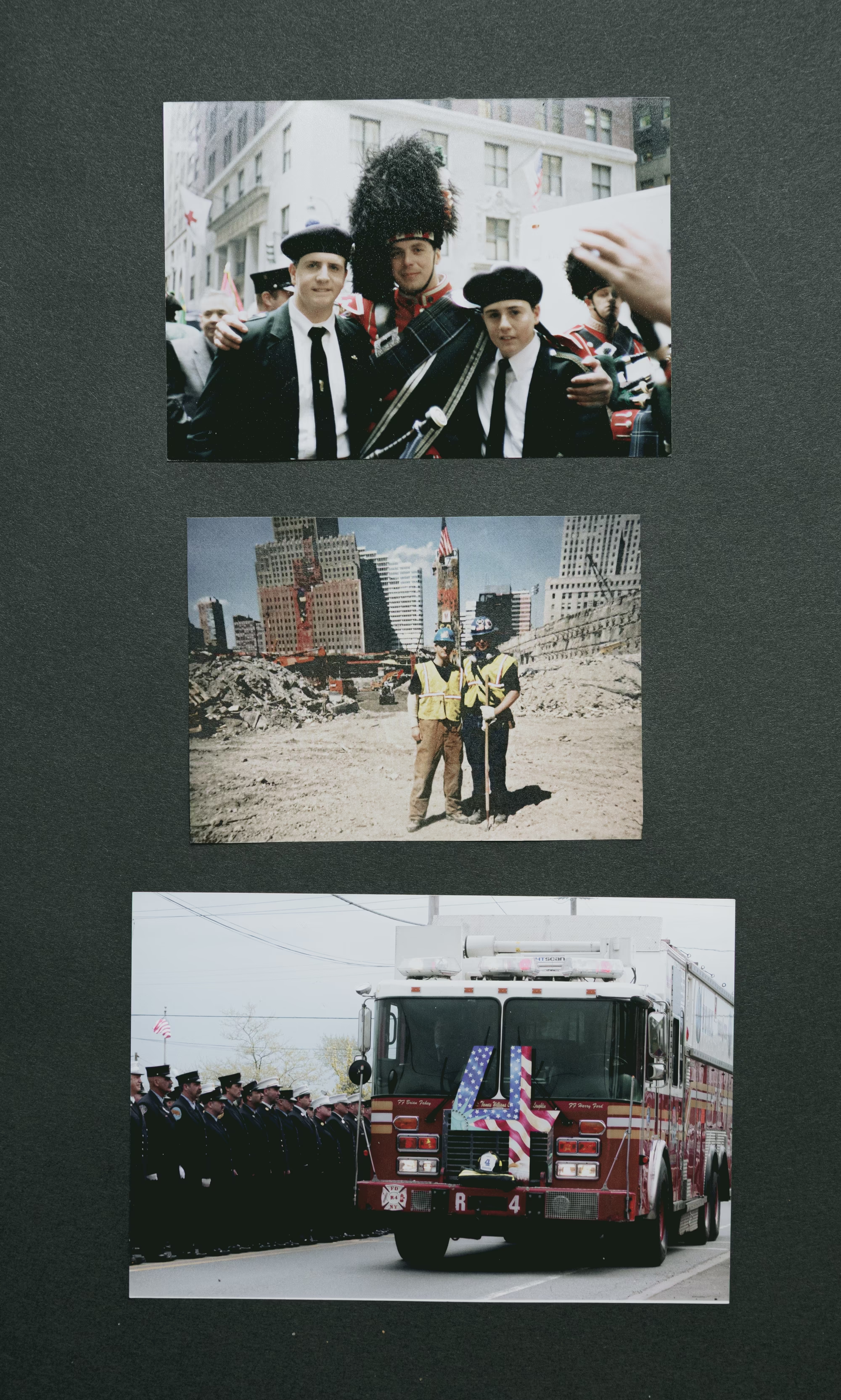
At the firehouse, Patrick and James sat around the kitchen table debriefing like members of the company. They listened to the men of Rescue 4 wrestle with survivor’s guilt. If they had been on duty, they’d have been in the South Tower at 9:59 a.m. Survival was a matter of lefts and rights, as Flaherty said. They posed terrible “What if?” questions. Should the fire commanders have foreseen the towers’ collapse? If so, should they have kept men from going up?
“Well, what was the alternative?” Flaherty argued at the table. “There’s people trapped upstairs. We have to go get them.” Could you imagine, he said, if the FDNY had just given up on the towers? “That would have been the worst day in the history of the fire department the other way.”
The kitchen conversations were a kind of counseling for the boys. “We had our people, and we just talked amongst ourselves, and that was enough,” Patrick remembered. So were the funerals for firefighters they played at with the Emerald Society Pipes and Drums. They stood by graves in kilts and red tunics that Flaherty had given them, and performed “Amazing Grace” and “Going Home.” Many children of the dead were preschoolers or grade-schoolers.
RoseEllen saw that the firefighters were helping to steady her sons. “Is school good?” Flaherty and others would ask the boys while they dug through the pile. “If your grades aren’t good, you can’t be here.”
As a picture of Kevin’s movements with Rescue 4 emerged from survivor accounts, the recovery concentrated on a spot near the South Tower elevator shafts. In late October, on a day the boys were not working, a crew found the remains of four men from Rescue 4. But not Kevin’s. A few feet away was a large, burned-out space where fires had raged below the tonnage for weeks.
“You recover two guys that were kind of close by to each other in the rubble, and then you don’t get anybody else,” Patrick said. “It’s really hard. You don’t know how that happens, but that’s how it happens.”
On the morning of November 12, 2001, when an American Airlines plane accidentally crashed into the Rockaways shortly after takeoff, RoseEllen could see the smoke from the porch. “You are not going over there,” she told James. When Rescue 4 pulled up to the crash site, James was already there in his gear, hosing down a burning house. “You’re one of us now,” a firefighter told him. James, though just 17, took the FDNY entrance exam and passed.
By spring, the pile had become a pit, with almost 1.8 million tons of debris removed. The site was practically broom-clean. The recovery process was down to DNA testing of the smallest fragments. Even then, no Kevin.
“There’s nothing there,” Murphy told RoseEllen. “It’s over.”
“Nothing?” she asked.
“Nothing,” he said.
They held Kevin’s memorial service on April 20, 2002. His casket was filled with dust from the spot where they believed he had died, and mementos of him: his extra turnout gear, a pair of fire boots, a copy of the Irish Voice newspaper, travel brochures for Iceland. Letters from his sons and siblings. Hundreds of people attended, including the mayor. Patrick played a bagpipe solo of “Amazing Grace” as the casket was carried into the church. “He was a teacher, mentor, tradesman, listener, and my best friend,” Patrick said during his eulogy, concluding with an Irish blessing that Kevin had recited to him: “May the best days of your past be the worst of your future.”
The memorial service marked an abrupt end to months of mission. “It was so consuming from September to April that after it was all said and done, there was a sense of ‘Now what do we do?’ ” James recalled.
Kevin was irrecoverable. But they had his voice. Don’t sit on the sidelines.
Patrick had just been accepted to West Point, and in June he entered “Beast Barracks,” the academy’s rigorous six-week cadet-induction program. It made the news: 9/11 firefighter’s kid joins the War on Terror. Overnight, he went from friends consoling him to officers barking orders. He marched to breakfast, marched to lunch, and spent nights shining his shoes.
What if he couldn’t cut it? He feared letting his father down. He refused to buy his mother a West Point sweatshirt. “I didn’t want it to be a constant reminder of my failure if I didn’t make it through,” Patrick said. The combination of mourning, loneliness, and self-doubt made him mutinous. He racked up punishment tours for lateness and absences, and was made to march in circles carrying a rifle for five hours at a time. He would sneak out to bars to meet old friends from the Rockaways. He felt like he was trying to break free from prison. He considered quitting, to escape the pressure.
RoseEllen felt powerless and wished for her husband. Patrick had relied on Kevin. “I didn’t know anything about the Army,” she said. “I couldn’t help him.”
Flaherty stepped in. “Bro, failure is not an option,” he told Patrick. “You cannot—you cannot—drop out.” He warned him that quitting would alter the trajectory of his life. Patrick rallied, though not before he missed a 9/11 anniversary ceremony because he was walking another punishment tour. This time, it was about a girl: He’d met Katie Neudeck at a party in Rockaway Beach at the end of summer break. He was supposed to report back to West Point that day, and his lateness cost him 20 hours of walking. She was motivation to graduate; so were the pictures of his father taped to his dorm-room wall, and a steel bracelet on his wrist etched with LT. KEVIN DOWDELL 9-11-01.
[From the September 2021 issue: Jennifer Senior on what Bobby McIlvaine left behind]
James couldn’t formally enter the FDNY until he was 21, and at one point talked about joining the Marines. “No, you will not,” his mother said. Instead he enrolled at Iona. RoseEllen was alone in the house, but had two sons she still needed to get to the finish line of manhood. Patrick and James were strapping—bigger than their father, all bone and muscle and hard-charging. They had chosen dangerous futures, and there was little she could do about it. “That’s what they knew,” she said.
In 2006, when James turned 21, he dropped out of his final semester at Iona to enter the FDNY academy; he then joined Ladder 174, in Flatbush. (He finished college the following year.) That same spring, Patrick graduated from West Point and prepared for deployment to Iraq. “I want to kill terrorists,” he declared to the Associated Press. By 2008, he was a platoon leader on combat patrols in Baghdad.
With Patrick skirting roadside bombs and James running into fires, RoseEllen could only pray. Her faith told her that Kevin was still on watch. “I just said, in my head, He’s protecting them,” she recalled.
This is what Kevin Dowdell worked all week for: Patrick would make captain in the Army, and James would take his old man’s badge number and carry his Halligan tool. And RoseEllen— who never allowed pain, hers or theirs, to be an excuse—would see them through.
While Patrick was serving abroad, James was earning a medal. At 4:30 one morning in March 2010, Ladder 174 responded to a heavy fire in a two-story building. James and another firefighter battled their way to the second floor with a fire extinguisher and, working in high heat and zero visibility, forced open the door of a rear apartment. In the smoke, James found an unconscious nine-month-old on a bed. Their team got four people out of the building alive, including the infant.
James joined Rescue 2. He would be working with some of Kevin’s former colleagues, and would be expected not to drag the anchor chain, as they said in the department about slackers. In 2017, while working under Flaherty, James set the unofficial FDNY record for a rope rescue when he descended 200 feet down an unlit Con Edison shaft to help workers trapped in an underground elevator. “I was just the dope on the rope,” he said, crediting his partners who’d made the rig. Early last year, he was promoted to lieutenant—his father’s rank. He’s now studying for the captain’s exam.
After Patrick left the Army as an assistant operations officer for an artillery battalion, he thought about joining the FDNY. He scored first on the entrance test, out of about 45,000 applicants, but again heard his father’s voice: I want you to do something better than me. Patrick didn’t think there was any vocation greater than firefighter, but he opted for a career in business. He works in cybersecurity in Manhattan, and his home is on the bayside of Rockaway Beach, where he can look directly at One World Trade Center and the twin light towers that shine every September 11.
Each year on the anniversary, RoseEllen and her sons return to Rescue 4’s firehouse for a memorial ceremony. Firefighters gather in their dress uniforms. They bow their heads for a moment of silence in front of a plaque bearing the names of the dead. Invariably a pedestrian will pause in the firehouse driveway and say, casually, “What’s going on? Is there a parade or something?”
James or Patrick will raise his head and say, “It’s September 11.”
“Ohhh,” comes the reply.
After the memorials, the Dowdells return to the Rockaways for a family dinner. They leave the seat at the head of the table open, with a glass of red wine in front of it. At the end of their meal, they pass around the glass, and each person tells a story about Kevin. Among those seated at the family table is a retired firefighter named Tom O’Day, whom RoseEllen began seeing in 2010 (“He understood everything,” she said). When Hurricane Sandy hit the Rockaways, RoseEllen evacuated but Tom stayed to save her possessions; he carried every memento of Kevin he could find above the flood line. In 2019, Tom and RoseEllen went to Iceland, where she buried a Mass card from Kevin’s memorial service on a remote beach, placed a rock over it, and noted the coordinates.
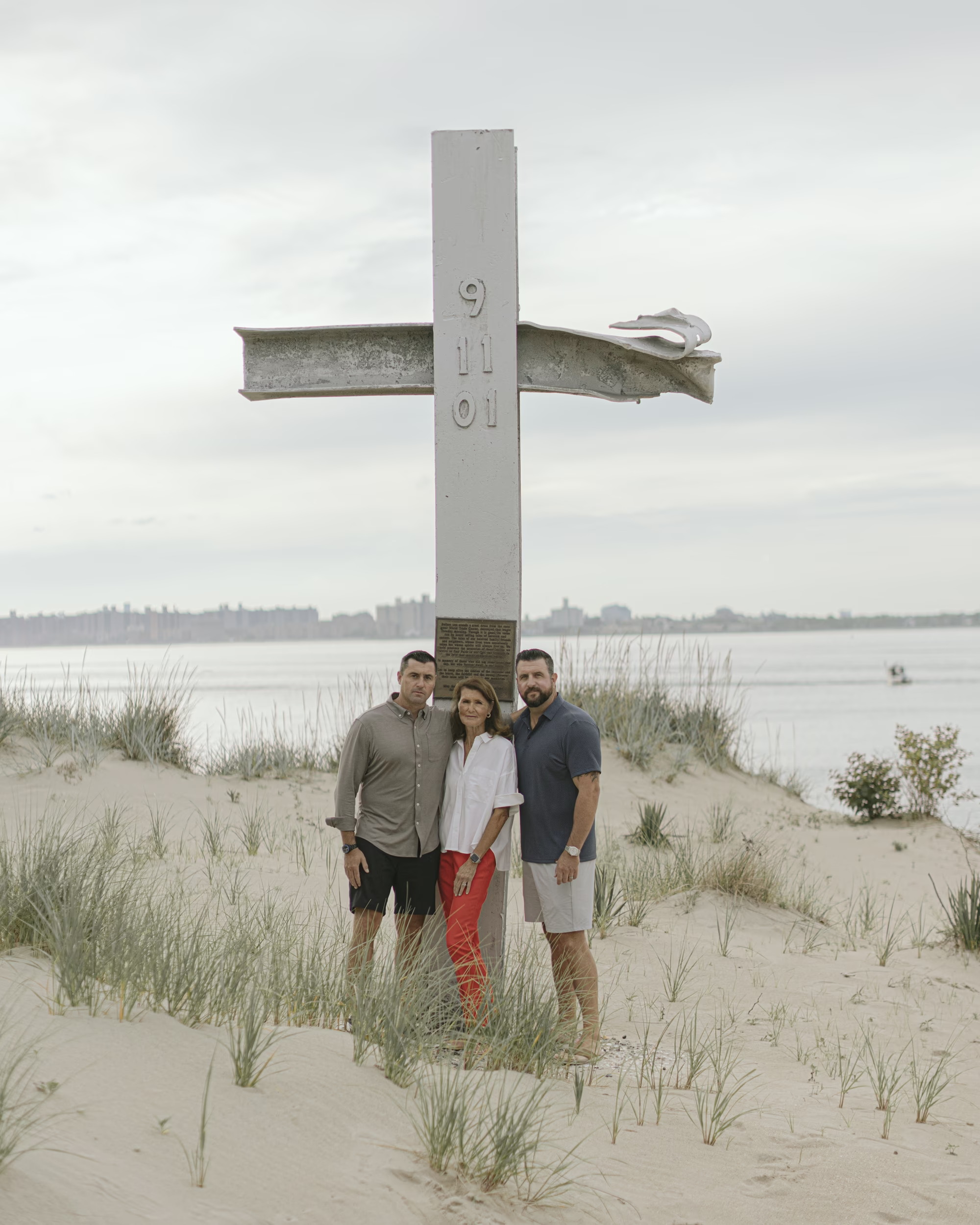
Five grandchildren, ages 5 through 13, are also at the family table, as are Patrick’s and James’s wives, Katie and Chrissy. They all live within walking distance of RoseEllen and the old home, where an oil portrait of Kevin hangs in the front hall. The grandchildren have been going to firehouses since they were born. As they run around, climbing and sliding down the fire pole, they talk about Grandpa Kevin as if they knew him. Recently the youngest grandchild, Carly, sat with RoseEllen, looking across Jamaica Bay. “I see Grandpa Kevin’s building,” she said. “What happened to him?” RoseEllen explained again about the bad guys who flew planes into the buildings and made them fall.
[Read: Making 9/11 relevant to young learners]
That day, reflexive acts of duty turned a terrible event into a survivable one for many people. In the aftermath, firehouses cared for the families of the fallen with something beyond duty.
Beyond duty: two grieving boys hunting for their lost father and instead recovering other people’s fathers, and playing hymns for them. A firehouse full of rowdy, imperfect men finishing the job of raising them, and giving them the balm of purpose.
The FDNY lost 343 men on September 11; 65 of their sons and daughters now serve in the department.
Twenty-five years later, Kevin is still missing. James’s promotion to lieutenant fell on what would have been his 70th birthday. “Never Forget” is no slogan to the Dowdells. “We live it, and we live with it,” Patrick said. Living without Kevin is a form of bravery, of course—a fire all its own. Living his example is how they find their way out of the smoke.
This article appears in the September 2026 print edition with the headline “Kevin Dowdell’s Boys.”
The post Kevin Dowdell’s Last Fire appeared first on The Atlantic.