A total solar eclipse will cast a shadow across several European countries on Wednesday. But in Iceland, where eclipse chasers were hoping for one of the best possible views, the unpredictable weather may prove to be a spoiler.
So many Icelanders — and some intrepid visitors — plan to make a game-day decision about where to go to watch the spectacle.
“It’s the worst country to watch an eclipse,” said Margret Brynjolfsdottir, who lives in Iceland’s remote northwest, part of the narrow band of the globe where the moon will completely block out the sun.
As of Tuesday, forecasters were predicting overcast skies and rain across most of Iceland. Ms. Brynjolfsdottir, a physical therapist, planned to watch the eclipse from home, no matter how the sky looks. But Icelanders are used to fickle weather, and many are likely to check the forecast on Wednesday morning and hit the road to find the clearest skies they can.
In short, no one really knows where anyone is going to go.
“We are as prepared as we can be,” said Birna Mjoll Atladottir, who runs the westernmost hotel in Iceland, Hotel Breidavik. The period when the moon completely eclipses the sun — known as totality — will last an impressive two minutes and 10 seconds at her hotel. (Just up the road, on the cliffs at the edge of the country, it will stretch on for another three seconds.)
Ms. Atladottir has cleared two fields around her hotel, erected 10 new portable toilets and ordered a month’s worth of food.
If the weather cooperates, she could get flooded with campers. But if not, all that expensive preparation could be for naught.
“We don’t know anything,” she said, sighing.
Here Come the Umbraphiles
This will be Europe’s first total solar eclipse since 1999. On most of the continent, the moon will obscure only a portion of the sun, but parts of Russia, Greenland, Spain and Portugal as well as Iceland are in the path of the total eclipse. (People in Spain will be trying to stay safe in extreme heat.)
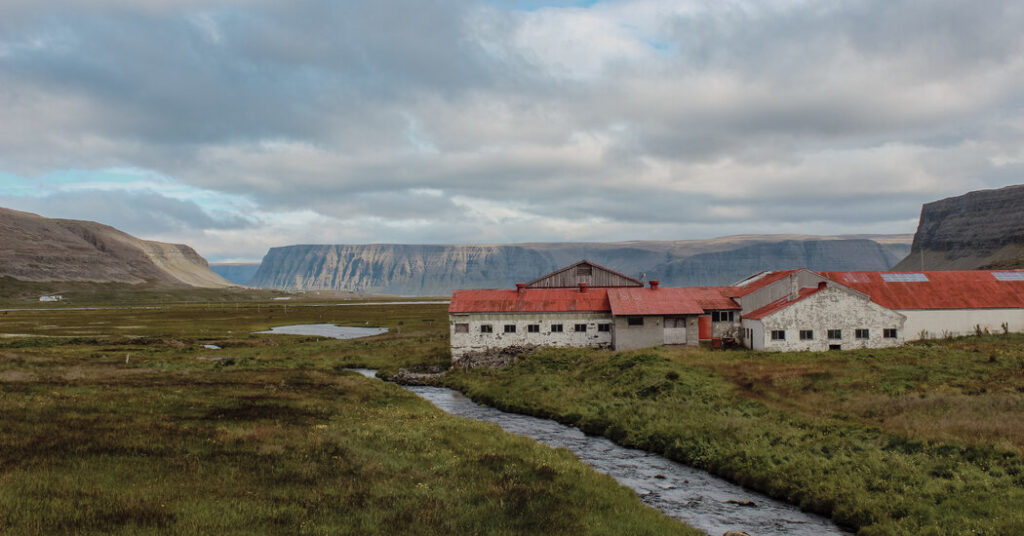
That rare moment of darkness will last longer here in the Westfjords, a remote region of northwestern Iceland, than almost anywhere else, excluding the oceans. The Westfjords, which are not on Iceland’s main tourist route, has been gearing up to host the eclipse enthusiasts (also known as umbraphiles, or people who love the shadows).
Visitors began making reservations years ago. Some Airbnb hosts and hotel owners have jacked up their prices; some rooms that usually cost a few hundred dollars are going for thousands.
“Iceland is pretty much sold out,” said Saevar Helgi Bragason, a science communicator who has become the country’s unofficial eclipse czar.
And in recent months, harried officials in the Westfjords and elsewhere have been scrambling to fix roads, boost mobile coverage and reserve the country’s relatively few portable toilets.
Foreign tourists aren’t the main concern, officials said. That’s because most of the roughly 75,000 foreigners set to be in Iceland that day have probably committed to a fixed plan.
Instead, it’s the Icelanders, who are used to spending their summers chasing the sun. Any number of the island’s 400,000 residents — about a third of whom will not be able to see a total eclipse from their homes — could set out to find the best possible view. That could result in gridlock on unpaved, less-traveled rural roads.
“The Icelandic weather doesn’t really allow you to make plans ahead of time,” said Diego Ragnar Angemi, an amateur astronomer who lives in the northwestern corner of the Westfjords, where totality is set to last for some 90 seconds.
Conditions can differ from fjord to fjord, Mr. Angemi said, so even a short drive can change the view completely. “I am going to stay home only if I see that it’s cloudy from here to Reykjavik,” he said.
If there’s sunshine anywhere nearby, he said, “I will take the chance — of course.”
‘It’s Never Been Like This’
The Westfjords have mostly been spared Iceland’s crush of tourists in megabuses, who come to gaze at the northern lights, soak in hot tubs and pose with hot dogs.
This is the rare unbeaten path. And it shows.
Green hills, unmarked by houses, slope up from the fjords. Phone calls drop as you drive around bends. Big grocery stores are hours away. The biggest village in the southern Westfjords, Patreksfjordur, has about 700 residents, four restaurants, a gas station and a liquor store.
Driving here can be, at best, bumpy. Many roads that lace across fjords are unpaved, pitted with potholes deep enough to chatter even a clenched jaw.
On a normal day, that wouldn’t be a major problem. These aren’t busy roads — a quarter of an hour can pass without another car being seen. Most people know to take it slow.
“But it’s not a normal day,” said Johann B. Skulason, a national police official who is helping to coordinate the work of different agencies as Iceland prepares for the eclipse. He spoke from a command center in Reykjavik that would normally be used for a crisis like a volcanic eruption.
Road crews in the Westfjords have been leveling gravel roads, like the one that stretches out past Hotel Breidavik — Ms. Atladottir’s hotel — toward the western Latrabjarg cliffs, where puffins roost and thousands of eclipse chasers could soon gather.
The crews were cutting it close. On Saturday evening, hours after the first people arrived to pitch a tent outside Hotel Breidavik, workers were laying new gravel.
A nearby hospital and fire department have been staffing up and preparing to send emergency crews out to the cliffs. Telecom companies have been strengthening networks for months. And there may never be a better day for Iceland’s waste management industry.
Jon Thorir Frantzson, the chief executive of the Icelandic Container Association, a private company, said all of his portable toilets — he has about 250 — have been rented for months. “It’s never been like this,” he said.
“It’s crazy to have them there, in the middle of nowhere,” he added. “Dragging them all to the Westfjords? That has never happened.”
‘A Reservation for the 12th?’
Ms. Atladottir got her first booking for this Wednesday 14 years ago. She first thought it was a joke. Who makes a booking so far in advance?
Now, it’s all too real. Her rooms have long been booked, but there was still plenty of space for campers. On Saturday, her phone kept ringing.
“I would like to know if we can make a reservation for the 12th?” a caller asked, the second inquiry in under an hour.
Ms. Atladottir calmly explained that no, they were not taking bookings for campsites, but yes, they had more than enough space.
The caller thanked her, and hung up.
“How are we going to be prepared?” Ms. Atladottir said, laughing. “Are we going to expect 100 people — or 1,000 people — or what?”
By Monday, more than a dozen people had already set up their tents in the field outside her hotel. Whatever happens, it’ll be magical, there on her remote stretch of beach, looking up as the sky darkens briefly into night.
Egill Bjarnason contributed reporting from Husavik, in northern Iceland.
The post The Eclipse Is Coming, and Iceland Is … Mostly Ready appeared first on New York Times.