In May 2025, scholars were puzzled when a symposium named “Color Lines Across the United States and Mexico” announced a sudden move from the National Gallery of Art in Washington to a smaller institution several miles away.
The symposium, designed to address issues of race in American and Mexican art, had been planned by the museum’s prestigious Center for Advanced Study in Visual Arts.
Why had the institution canceled virtual attendance, taken the program off its website and switched it to Dumbarton Oaks, a museum and research center affiliated with Harvard?
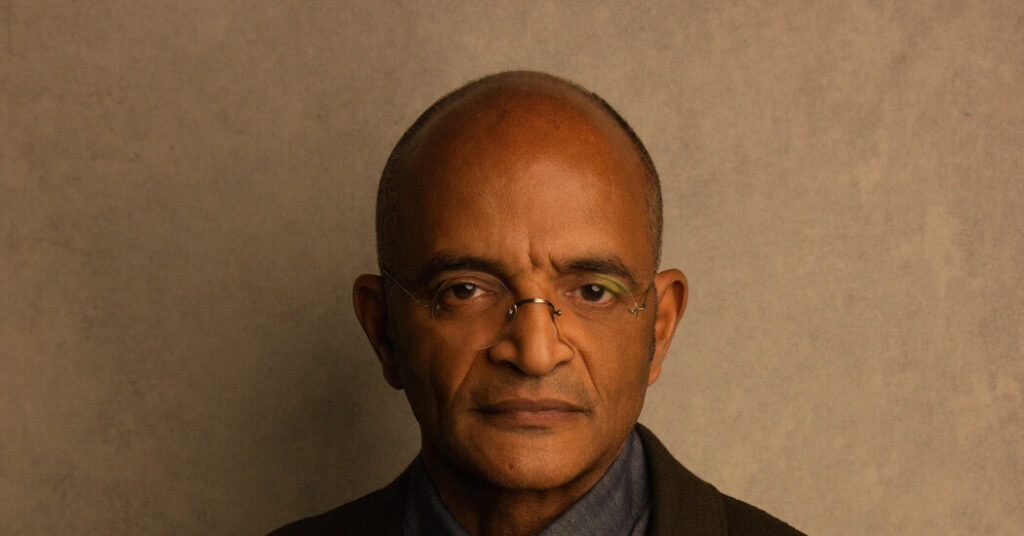
Last week, a former senior museum executive, Steven Nelson, who led the center that had planned the conference, addressed those questions in an essay that accused the National Gallery of “soft censorship” after its leaders met with representatives from Elon Musk’s Department of Government Efficiency.
Nelson said the changes were made to avoid provoking the White House after President Trump announced a ban on diversity initiatives at federally funded organizations. DOGE was reviewing the gallery because 80 percent of its $235 million operating budget is supplied by the federal government.
“It is clear that the National Gallery interpreted ‘Color Lines’ as a problem to be solved rather than as an important academic conference,” Nelson wrote in his essay, which was published in October, a quarterly academic journal on art history.
The National Gallery did not respond to requests for comment.
Nelson acknowledged that the gallery leaders’ intentions in moving the symposium, which had been inspired by its exhibition on the Black artist Elizabeth Catlett, were in some respects an effort to save it. But he worried that the institution had restricted free speech by limiting access to the event at a time when the Trump administration was looking to reframe American history.
The auditorium at the National Gallery that was slated to host the symposium holds 400 people, he said, while the meeting room at Dumbarton Oaks holds 80.
The White House did not directly address whether the administration would have viewed such a symposium being held at the museum as objectionable. But a spokesman, Davis Ingle, said in a statement that “the Trump administration appreciates any efforts by museums and other institutions that accurately and fairly portray American history through an unbiased lens.”
Nelson left two months after the decision to move the symposium, releasing a short goodbye message that did not detail his reasons for leaving but said, “I will cherish this experience always.”
In an interview, he said his decision to retire was, in part, because of the museum’s decision to move “Color Lines.”
Kaywin Feldman, the National Gallery’s director, has been a vocal supporter of building equitable museums. But the gallery, like the Smithsonian, closed its office that supervised diversity initiatives after the ban put forth by an executive order in January 2025.
In his essay, Nelson described incidents of what he characterized as “soft censorship” at other institutions, including Amy Sherald’s decision to cancel her show at the National Portrait Gallery last year because she understood that her painting of a transgender Statue of Liberty would be replaced by a video. A Smithsonian spokesman later said the video was intended to accompany the painting as a way to contextualize the piece, not to replace it.
The National Gallery has not been the target of sustained criticism by the White House, unlike the Smithsonian.
The administration has accused a handful of Smithsonian museums of displaying offensive or unpatriotic materials. Last year, Mr. Trump announced he was firing the National Portrait Gallery’s director, Kim Sajet, which prompted her resignation. He recently singled out the National Museum of American History with an executive order requiring signs be placed outside the museum to encourage visitors to go elsewhere for “accurate information regarding America’s history.” The signs have yet to be installed.
Nelson said in a statement to The New York Times that he wrote about the “Color Lines” symposium because he worried about preserving Black history and academic freedom.
“Institutions navigating these attacks by the administration think that they’re doing the right thing,” he said. “They are often playing into Trump’s hands through resorting to soft censorship.”
The post National Gallery Accused of ‘Soft Censorship’ to Avoid Provoking Trump appeared first on New York Times.