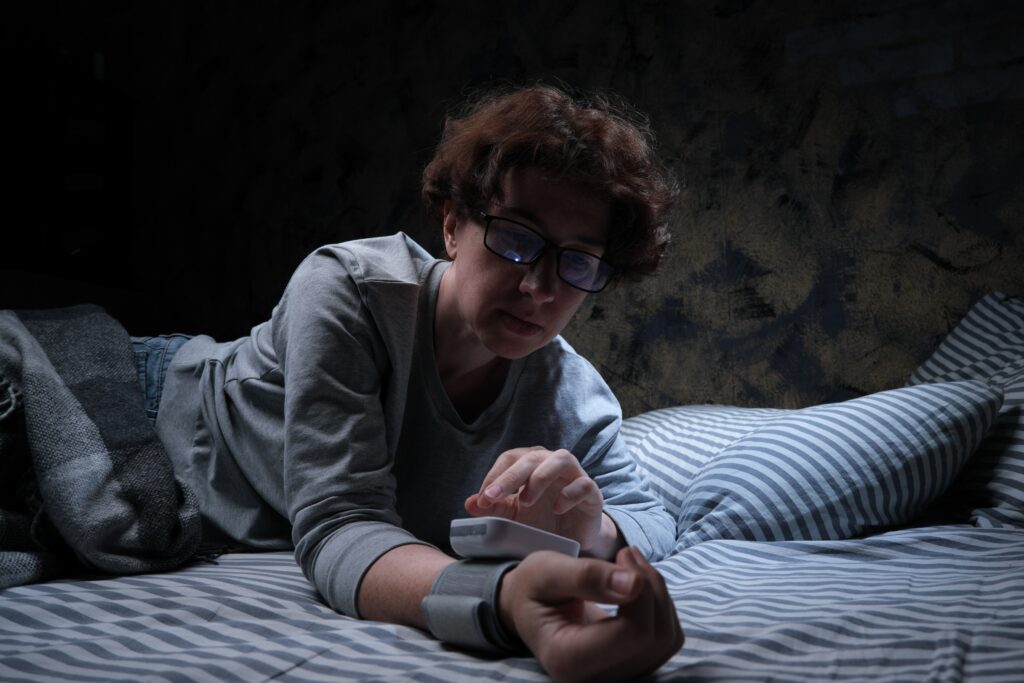
Not all hypertension is created equal. While any form of high blood pressure can damage blood vessels and raise the risk of heart attack and stroke, high blood pressure while you sleep can be an even stronger predictor of these negative outcomes than a high daytime reading.
Hypertension often flies under the radar because it doesn’t usually cause symptoms. While nearly half of adults in the United States have it, one estimate suggests roughly 42 percent of cases go undiagnosed and therefore untreated. High overnight blood pressure, called nocturnal hypertension, can be even sneakier. Though it commonly coincides with daytime hypertension, one study found around 20 percent of Americans have nocturnal hypertension without a high reading during the day.
These cases would be detected only with overnight monitoring. This kind of testing can be a hassle: It requires ambulatory blood pressure monitoring (ABPM), which generally must be prescribed by a clinician and involves wearing an arm cuff attached to a device that’s strapped to a waistband for a 24- or 48-hour period. The cuff inflates at regular intervals throughout the day and night to track blood pressure over time, said Joseph Ebinger, a noninvasive cardiologist and associate professor of medicine at the Smidt Heart Institute at Cedars-Sinai. It’s not a necessary test for everyone — but for people who may be at higher risk for hidden hypertension, it’s essential for determining if a high nighttime reading could be in play.
We asked experts to break down why nighttime blood pressure can be an important measure in and of itself, what can drive this reading up and when overnight monitoring makes sense.
How blood pressure changes at night — and why nocturnal numbers matter
Blood pressure naturally fluctuates with your circadian rhythm, dropping as you sleep. “A normal dipping pattern is about a 10 to 20 percent reduction in blood pressure overnight” compared with daytime values, said Jessica Ann Regan, a general cardiologist at Duke Health and assistant professor of medicine at Duke University School of Medicine. This happens because, during sleep, the sympathetic nervous system (a.k.a. fight-or-flight response) quiets down, lowering heart rate.
For that reason, the cutoff for nocturnal hypertension is a bit lower than the one for a typical reading. Clinicians generally use 120 systolic and 70 diastolic, or 120/70 mmHg, as a threshold, meaning anything lower than that would be considered normal overnight blood pressure, Ebinger said. (Certain guidelines set that threshold even lower, at 110/65.) Whereas, daytime hypertension starts at 130/80 mmHg (with values between 120 and 129 deemed “elevated”).
People whose blood pressure does not fall by at least 10 percent during sleep are called “non-dippers,” Regan said. These people’s nighttime numbers also tend to meet the criteria for nocturnal hypertension, though if you started with a normal or lower daytime value, failure to dip might not leave you with a nighttime number above the hypertension cutoff, Ebinger said. Conversely, some people may experience the normal drop in blood pressure as they sleep but still end up with nocturnal hypertension if their starting daytime value was high, he explained.
All of these scenarios — a lack of dipping, a too-high overnight value or both — are tied to greater risk of cardiovascular events such as heart attack, stroke and heart failure, and possibly higher risk of cognitive impairment and dementia. A couple studies have also shown that those with a reverse dipper pattern, which occurs when blood pressure goes up overnight, may be at even greater risk of adverse heart-related events than non-dippers.
The theory behind why comes back to circadian rhythm. “Things ebb and flow throughout the day, and when we are asleep, that’s the time for the cardiovascular system to rest and recover,” Ebinger said. If blood pressure is too high during this time, the cardiovascular system may not be able to recover as well, he explained.
Risk factors for high nighttime blood pressure
In many people, the same factors that drive up daytime blood pressure can bump up nighttime numbers, too, Ebinger said, which helps explain why it’s common for people with one to have the other.
Older age, family history of hypertension or heart disease, and lifestyle factors — such as diet, exercise and salt intake — can play a role in hypertension around the clock, Regan said.
There are also certain medical conditions that can make you more susceptible to both daytime and nighttime hypertension, as well as abnormal patterns in blood pressure (such as non-dipping or reverse dipping at night), including thyroid disorders, chronic kidney disease, and Type 1 and Type 2 diabetes.
Even in those with normal daytime readings, frequent or significant disruptions in sleep — for instance, by a partner or kid, or because you need to run to the bathroom — may drive nighttime blood pressure up, Ebinger said, by causing a shift in nervous system activity.
Obstructive sleep apnea, a condition that causes brief pauses in breathing during sleep, can have a similar effect. In this case, the body has a “mini awakening” to restore breathing each time it gets interrupted, Ebinger explained. This can disrupt sleep and strain the heart even if you don’t recall these wake-ups the next morning.
When to ask your doctor about overnight blood pressure monitoring
It’s sensible to start with the low-hanging fruit and get a sense of your daytime number first.
Your doctor will check it during routine physicals, but experts also recommend doing regular at-home checks because it’s common for in-office readings to be inaccurate. Your numbers could spike if you’re nervous (known as “white coat syndrome”) or drop if you feel calmer than usual. Variables such as how you’re positioned and the size of the cuff used can also make readings inaccurate.
To get a reliable reading at home, Ebinger recommended purchasing a validated at-home device (validatebp.org has a list). Make sure you wait at least 30 minutes after consuming caffeine and empty your bladder before you take a reading, he said, and do so while seated with your back supported and feet resting on the ground.
If your numbers are consistently high, you may not need to learn your nighttime blood pressure, as the treatment plan tends to be similar. The “backbone for all of our patients is the lifestyle piece: eating a Mediterranean-style diet, limiting salt intake and exercising regularly,” Regan said. Your physician may also prescribe a medication to lower blood pressure, such as an ACE (angiotensin-converting enzyme) inhibitor or calcium channel blocker.
Assessing nighttime blood pressure is most relevant in those with signs of possible missed hypertension, Ebinger said, which could include people with borderline or elevated readings and evidence of impaired kidney function in routine bloodwork; and those with resistant hypertension, or daytime numbers that stay high despite intervention.
“We want patients to be advocates for themselves,” Ebinger said, and push to investigate further if their numbers are on the edge. He also encouraged anyone with symptoms of sleep apnea — excess daytime sleepiness and morning headaches — to ask about overnight monitoring. (Your doctor will need to demonstrate medical necessity to secure insurance coverage of the device.)
High nighttime numbers, particularly absent a high daytime reading, warrant searching for an underlying driver, Ebinger said. Recent research has shown that just addressing nighttime hypertension, for instance by taking blood-pressure medications in the evening, doesn’t provide notable cardiovascular benefits, which suggests that it’s more important to address the root cause. Your clinician might order or refer you for additional testing, such as a screening for sleep apnea and bloodwork to check for metabolic and kidney conditions.
Ultimately, the more you can stay on top of your blood pressure — possibly including overnight monitoring, if you fall into one of the above categories — the better.
“It continues to be a main driver of cardiovascular disease and is undertreated in many, many patients,” Regan said.
The post How nocturnal hypertension can have a sneaky impact on your heart appeared first on Washington Post.