Albert R. Ramdin is the secretary general of the Organization of American States.
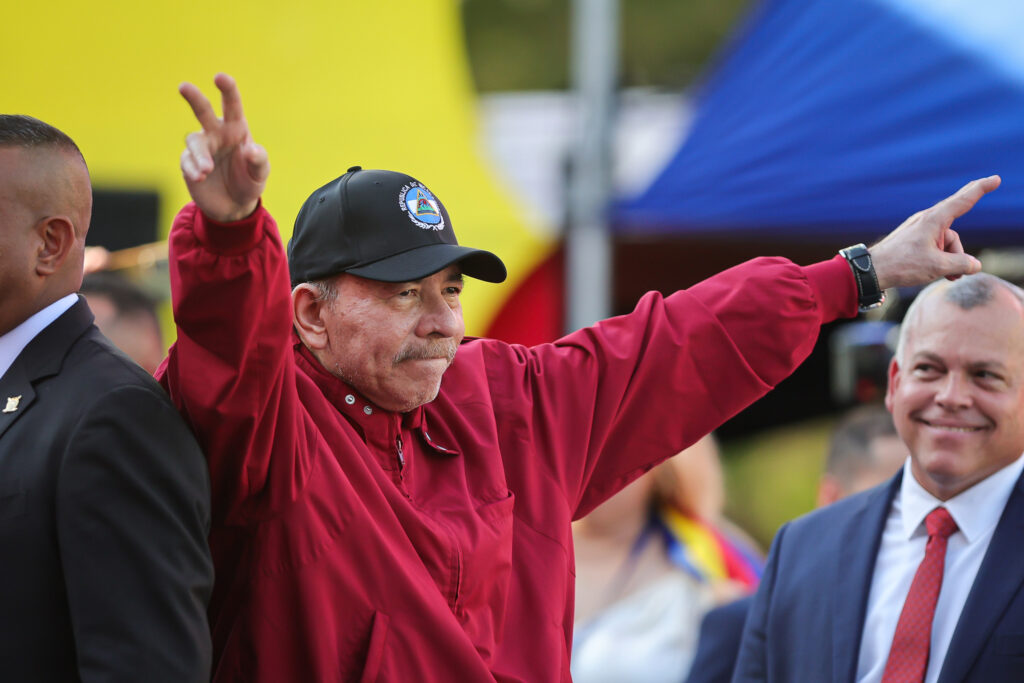
“There won’t be any more elections,” Nicaraguan President Daniel Ortega announced in a July 19 speech in Managua. “Never, never, never.” Thus did Ortega attack a fundamental right of a people to choose their own government — a right affirmed by the charter of the Organization of American States, of which I am the secretary general. Nicaragua withdrew from the OAS three years ago, but it did not cease to be part of the Americas, nor did the Nicaraguan people lose their intrinsic democratic rights, even if the Ortega regime has quashed them for now.
Across the region, democratic values and principles must be defended and expanded. There is much work to be done. In Cuba, Venezuela and Nicaragua, the institutions that ensure citizens can choose their leaders, speak freely and hold power accountable do not exist.
Nicaragua’s case I know well. The OAS helped demobilize combatants in the 1980s when Nicaragua emerged from armed conflict between the Ortega-led Sandinista regime and the Contra revolt. The OAS’s electoral observation missions lent credibility to processes that badly needed it, including the seminal 1990 election that ousted Ortega’s Sandinista National Liberation Front and brought democracy back to the country. But as authoritarianism tightened its grip, especially after Ortega’s return to power in 2006, that democratic space closed. Nicaragua’s isolation from the inter-American community of democracies increased, culminating in its OAS withdrawal in 2023.
National authorities may decide to walk out of a room, but they cannot pack a suitcase and move their country out of this hemisphere. Geography does not negotiate. Even as Nicaragua undermines regional stability, it remains part of the inter-American community whether its government recognizes that or not.
The facts are stark. Nicaragua’s last presidential election, in 2021, took place with seven potential opposition candidates in jail. Democratic legitimacy comes only through free and competitive elections, and Nicaragua has had none since. The regime has stripped citizenship from journalists and critics, leaving them stateless, while bishops have been exiled, priests detained and congregations banned. The Indigenous leader Brooklyn Rivera died in custody despite protective measures ordered by the Inter-American Court of Human Rights, which the Ortega regime simply ignored.
Now, Ortega has gone even further, saying Nicaraguans will have no chance to vote in elections, flawed or otherwise. Weeks before the announcement, the OAS General Assembly in Panama adopted a declaration on Nicaragua, condemning violations that, prima facie, could constitute crimes against humanity. Ortega’s election ban, coming soon after the declaration, demonstrated the regime’s disregard for the principles on which the inter-American system was built. The antidemocratic message is surely being watched closely by other authoritarian-leaning governments.
To those countries that have made peaceful transitions to democracy and recovered from crises, I say: Your example proves democracy can be built and sustained in the Americas, and that is why it is worth defending it firmly in Nicaragua too. And to those who believe canceling elections is merely an internal issue, I say it is not.
When repression crosses borders, as seen with Nicaraguans targeted by the regime even after fleeing, it becomes a hemispheric responsibility. That is the deep reform I am pursuing: moving from the force of words to the force of action and compliance. Achieving that transformation will not be easy, but compliance must be exercised in a spirit of cooperation and as part of a community of states committed to democracy and the protection of citizens’ rights.
Nicaragua’s government may believe it can insulate itself from the region by leaving the OAS. History suggests otherwise — geography, migration and the aspirations of Nicaraguan citizens for a democratic future tie that country to the rest of the Americas, whether its authorities accept it or not. The OAS will keep the door open, and we will keep doing what is necessary to defend the just cause of a democratic Nicaragua, until its citizens can once again choose their own future.
The post Ortega’s Nicaraguan election ban deserves regional pushback appeared first on Washington Post.