Alexander Wooley, a former British Royal Navy officer, is the author of “Battleship Yamato: The Ship, The Myth, The Legend.”
Aug. 6 is typically a solemn day in Japan, the day the atomic bomb was dropped on Hiroshima in 1945. A record 121 nations and regions were represented at the city’s anniversary ceremony this year. That’s of a piece with increased tourism elsewhere in Hiroshima: The local memorial museum in the Naka Ward welcomed 2,580,926 visitors in fiscal 2025, about a third of whom reportedly came from overseas.
World War II remains a difficult, politicized topic in Japan. One consequence is that its museums frequently insert “peace” into their names. The word has thus become a bland passe-partout that few can quibble with and under whose banner a broad array of things can be described. Such institutions largely succeed in avoiding controversy domestically — as well as with neighbors like China and South Korea — but ultimately communicate little. A passerby, for instance, couldn’t obviously tell that the Chiran and Hiroshima peace museums are about kamikaze pilots and the atomic bomb, respectively.
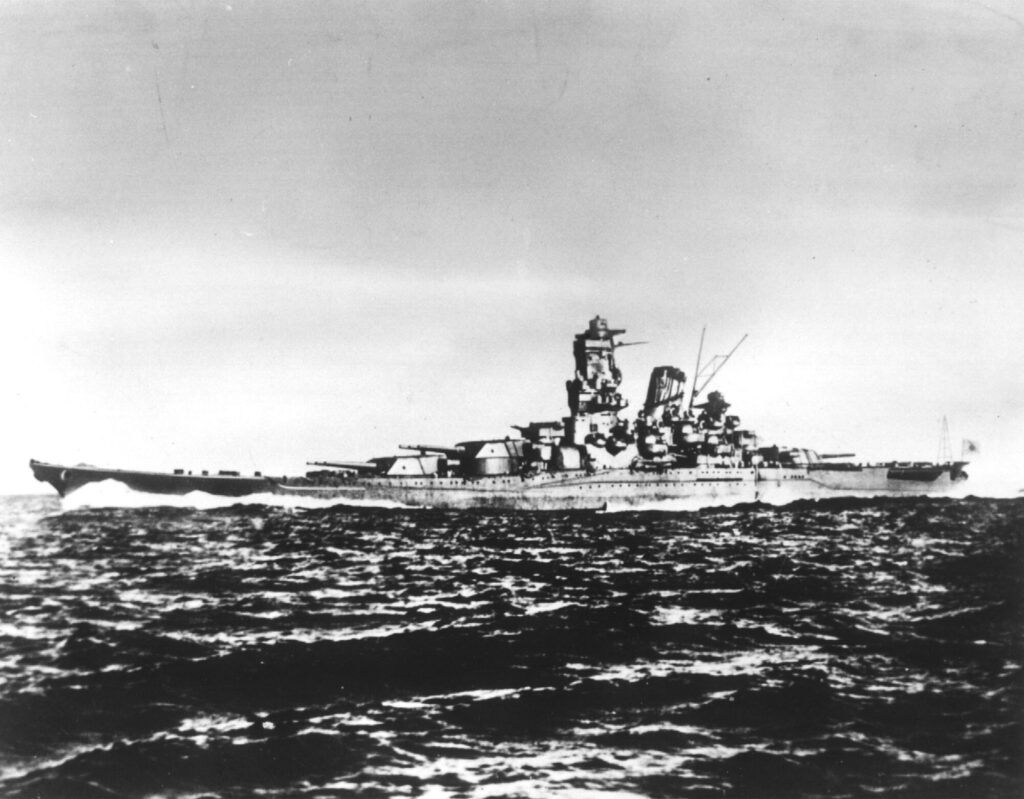
Yet there is an exception. A short train ride from Hiroshima is the port city of Kure, home to one of Japan’s most popular museums, which reopened in April after a lengthy renovation. There is no ostentatious signage marking the large $65 million harborside glass-and-redbrick facility that celebrates the life of the largest, most powerful battleship ever built: the Imperial Japanese Navy’s Yamato. The vessel was sunk by the United States while on a kamikaze mission to Okinawa in April 1945, consumed in a mushroom cloud eerily similar to the fate that was to befall Hiroshima four months later.
The ship is a cultural icon across the archipelago. There have been high-grossing biopics made about it, as well as novels, artwork and a television anime that has been running for more than 50 years. The latter is called “Space Battleship Yamato,” and it features the ship rising from the depths of the sea to travel to faraway galaxies in order to save Earth from aliens and environmental disaster.
Takashi Yamazaki may be familiar to readers as the director of “Godzilla Minus One” (2023), a surprise global hit and Oscar-winner for best visual effects. But before he became a hot commodity in Hollywood, Yamazaki had already directed a live-action feature film version of “Space Battleship Yamato” (2010), as well as “The Great War of Archimedes” (2019), about the ship’s construction. “For the Japanese people, there is no greater icon of the Pacific War than Yamato,” he said several years ago, according to the Asahi Shimbun newspaper. “In ‘Space Battleship Yamato,’ there is a deep-seated grudge about IJN Yamato, and the desire for a dream that could not be fulfilled.”
In 2015, journalist Hiroyuki Ota wrote a serial called “Following Space Battleship Yamato,” in which he examined the unique cultural aspects of the anime. “We have not yet completely recovered from the pain,” he wrote of the 1945 sinking. “With ‘Space Battleship Yamato,’ there is an imaginative aspect that heals the pain by spinning the story of IJN Yamato’s loss.”
The Yamato Museum is very much Japanese. Its guides don’t routinely speak English, and only a few exhibition signs aren’t in the native language. In some ways, it is Hiroshima’s rebellious, iconoclastic twin sister. The academic Helen J.S. Lee sees it as upending what is otherwise a consistently morbid narrative in Japan. As she wrote in the journal Japanese Language and Literature: “Prior to the establishment of the Yamato Museum, historical relics in Kure were mostly connected to memorializing those who died during intensive air raids between March and July 1945.” The museum, she added, “interpolated an alternative narrative for relating to the past, one that does not dwell simply on bereavement, but on a rejuvenating rhetoric of courage and pride transcending sorrow and defeat.”
From Hiroshima, the Japan Rail line follows the coast, passing through towns hugging the shore, hemmed in by surrounding hills. Oyster farms ride gentle swells offshore, Inland Sea islands come in and out of view. It is compact scenery, a model diorama. The Australian novelist Shirley Hazzard arrived from the sea to a still-destroyed Kure in 1947, a teenage girl accompanying her parents. “It was just full of sunken ships, lopsided, capsized,” she observed. Met by an Australian army jeep, her family drove along an unrepaired road, “skirted large craters and dipped prudently into small ones.”
Modern Kure, with its bustling port, would probably be unrecognizable to Hazzard. Before and during the war, it was a major dockyard and naval base for the Imperial Navy. Now, the rail station serves as a commuter stop for those working in Hiroshima. As the scholar Luli van der Does has written: “Despite being only about 40 minutes apart by train, tourists rarely visit both cities, partly because their contrasting images of ‘military’ and ‘peace’ differentiate the motivations of tourists. This, however, gives a false impression of separation. Both communities were built around the military.”
A short walk from the train station is the Yamato Museum, opened in 2005, 60 years after the ship sank and over the protests of local peace groups. It is officially the Kure Maritime Museum, but most locals identify it by the ship’s name, considering the majority of the building is given to the battleship. Its centerpiece is a 1:10-scale model of the vessel, which dominates the large central atrium. Measuring 86 feet in length, the model is made of fiber-reinforced polymer and wood, presented as it appeared on its final mission. Visitors can observe it from several different levels, including beneath it. A newer exhibit offers a 1-millionth-scale model, 0.263 millimeter in length, created using submicron 3D printing. It is too small to be seen with the naked eye, so visitors are offered a magnifying glass.
The museum opened the same year as the blockbuster live-action film, “Men of Yamato.” The producers commissioned a massive replica of the ship, 600 feet in length, built at Onomichi, a port city roughly 50 miles east of Kure. The replica was made available to the public, and, in a testament to the hold Yamato has on many Japanese, 1,002,334 people visited it in the six months after filming ended.
For some, Yamato’s suicide mission is in keeping with ancient folk tales of the noble hero who dies young, denied reaching his full potential. Some Japanese take pride in the ship as a pure technological achievement — the view that its final mission was the launching pad to a prosperous postwar Japan. They recall that before and during the war, Westerners considered the archipelago to be racially, industrially and scientifically backward. And yet, the country was able to produce Yamato.
A short film in the museum explains how the advances in industrial technology used to build the ship later helped Japanese companies build cars, cameras, bullet trains, electric appliances and other items that were essential to the country’s rise as an economic superpower. The ship’s sinking was thus not entirely in vain. A placard next to the model reads: “The construction of Battleship Yamato was the crystallization of shipbuilding technology in prewar Japan and laid the foundation of postwar reconstruction.” The model, it adds, was “built to symbolize the feelings of all of those who made and boarded Yamato, and their families, as well as the important message of peace for the coming generations.”
For others, like historian Hiromi Mizuno, celebrating the technological achievements of Japan’s 20th-century military industrial base is problematic. “It depoliticizes not only the very technology … but also efforts that go into developing the technology,” she wrote in the journal Studies on Asia. “As a historian, I insist that we care about … the historical context of technological development in the past,” Mizuno added. “Romanticization of technology is problematic because it is how wartime technology have come to be celebrated in Japan.”
These competing views are one example of the elliptical ways in which many Japanese discuss the war. Conservatives acknowledge the tragedy but also point to the technological and economic benefits realized after the war. Liberals often don’t think the technological achievements should be celebrated at all — or, at least, not without appropriate context.
Navigating these treacherous shoals is the chameleon-like Yamato, embraced by both sides according to their versions of the historical narrative. The ship served for less than four years but has lived on in the popular imagination for another 80. The Yamato’s sinking marked the end of Japan’s totalitarian period. In the postwar era, the country turned on a dime, adroitly transitioning from feared hard power — of which the ship is held up within Japan as a prime example — to one of the world’s premier exporters of culture.
Foreign consumers and tourists can’t get enough of Japan. But the Yamato Museum’s reopening comes as many Japanese have to wrestle with the idea of becoming a hard power on the global stage again. For the first time since 1945, Japan is seriously rearming, with shipbuilding deals with Australia, weapons development plans with the U.S., the easing of self-imposed restrictions on military exports and the concession that the country might one day have to engage in offensive operations.
To some, Yamato was the culmination of the imperial period, which led directly to the suffering brought on at Hiroshima. Scholars generally agree that Japan has been less successful than Germany at acknowledging and atoning for its sins of aggression. Consider Yamato, then, a literal vessel for the unresolved and sometimes conflicting feelings that linger in the country’s consciousness, constantly being reinterpreted.
The post Japan’s guilty pleasure: A tribute to the largest battleship ever built appeared first on Washington Post.