While Iran and Oman appear to be nearing an agreement to manage traffic through the Strait of Hormuz, Iranian officials are now warning that the deal will not fully reopen the crucial waterway.
The news injected fresh uncertainty into negotiations that President Donald Trump previously described positively.
Oil prices jumped Thursday following Tehran’s comments. Brent crude, the international benchmark, rose about 4 percent to over $82 per barrel. Prices previously had fallen about 8 percent after the Trump administration expressed optimism over talks.
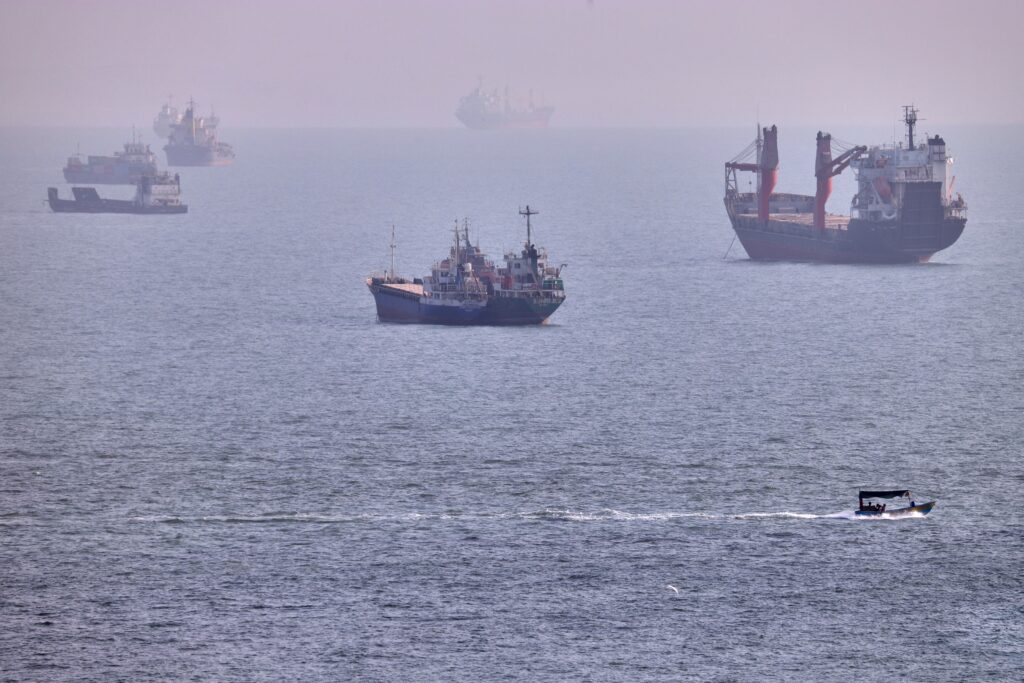
The status of the strait, through which a fifth of the world’s oil travels, has emerged as one of the most contentious issues between Iran and the United States. Iran effectively closed the waterway, which connects the Persian Gulf to the Indian Ocean and the wider world, days after the United States and Israel launched their war in February.
Now, as the Trump administration pushes Iran to allow traffic through the choke point to return to prewar levels, Tehran is using its hold to extract further concessions. When Iran and the United States agreed in June to halt fighting and begin peace talks, it was the deal’s vague language regarding the strait that caused it to collapse.
Iran and Oman, a U.S. ally, have agreed that incoming ships will enter through Iranian territorial waters and outgoing ships will exit through Omani waters, Tehran has said.
Such an arrangement would formalize Iranian control of the waterway. It’s unclear whether the Trump administration would accept it.
“Any temporary routes will be without any impediments — meaning no approvals or permissions and no tolls or charges,” a U.S. official told The Washington Post. “The Strait of Hormuz is an international waterway, and no party controls the lanes or the ability to transit through them.” The official spoke on the condition of anonymity under rules set by the administration.
Trump threatened Tehran Sunday with “the biggest attack since World War II” but said the following day he had decided to give diplomacy more time.
On Monday, Trump said the talks were Iran’s “last chance” at a deal; on Tuesday, he said “a lot of progress has been made.”
Iran has denied being in direct talks with the United States. The negotiations with Oman, Tehran says, are independent of Washington.
The discussions were “approaching the final stage,” Iranian Deputy Foreign Minister Kazem Gharibabadi said Wednesday, but he cautioned that Tehran still has outstanding demands.
The United States must end its blockade of Iran’s ports, address sanctions it imposed on Tehran after the truce collapsed, resume talks over Iran’s frozen assets and address continued violence in Lebanon, where Hezbollah, a Tehran proxy, is fighting with Israel, Gharibabadi said, according to Iran’s state-run Islamic Republic News Agency.
“This understanding does not mean the complete opening of the Strait of Hormuz, but rather a new and different model,” Gharibabadi said. Under the new setup, he said, “a significant part” of ship traffic would pass through Iranian waters.
Iran and Oman also discussed “the establishment of a joint coordination center between Iran and Oman to direct maritime traffic,” Gharibabadi said, in which the neighbors would obtain “the necessary information from vessels that want to enter and exit.”
There was no mention of charging fees or tolls in the summary the IRNA published of Gharibabadi’s remarks. Maritime law forbids countries from imposing tolls for the use of a naturally occurring strait, but Iranian officials said during previous stages of the conflict that they would look to charge a service fee.
In the talks with Oman, Reuters reported Wednesday, Iran is seeking fees of between 5 and 7 percent of the price of a ship’s cargo.
If traffic returned to prewar levels, such a system could generate $52 million per day, or $19 billion in the first year, according to Gregory Brew, a senior analyst with the Eurasia Group.
Over time, Brew noted, traffic is expected to decline as more countries build out pipelines and other infrastructure that will allow them to bypass the strait.
Tehran and Washington are both under pressure to reach an agreement. The U.S. blockade of Iranian ports is delaying the country’s economic recovery. Iran is already displaying signs of growing economic pain that risks triggering social unrest.
The longer the strait is closed, meanwhile, the greater the risk of serious economic pain in the United States. After the most recent violence, gas prices rose to over $4 a gallon. Analysts warn of future larger spikes as markets run out of ways to adapt to diminished supply.
The post Iran says Hormuz deal with Oman won’t fully reopen strait appeared first on Washington Post.