The word in some places is that democratic socialists are winning over Black voters, most recently seen in the Democratic primary for mayor of the nation’s capital. Elsewhere, though, pundits contend that these voters are rejecting socialism and its candidates, as in last year’s party primary for New York City mayor, when then-candidate Zohran Mamdani lost Black communities by wide margins. Polls add no clarity, finding that most Black voters either have no opinion of democratic socialism or are unsure about it.
These competing realities are part of the current contest in the Democratic Party over its coalition and future. In a midterm election year, resolving the tension is especially pressing for an establishment hoping to harness — and, at times, contain — the growing wave of democratic socialist mayors and legislators. Black voters, given their numbers and influence, are almost always essential to the party’s chances in competitive general elections. But their role in shaping the party’s direction and determining which wing prevails in any given primary is as much a function of geography as of candidate or platform.
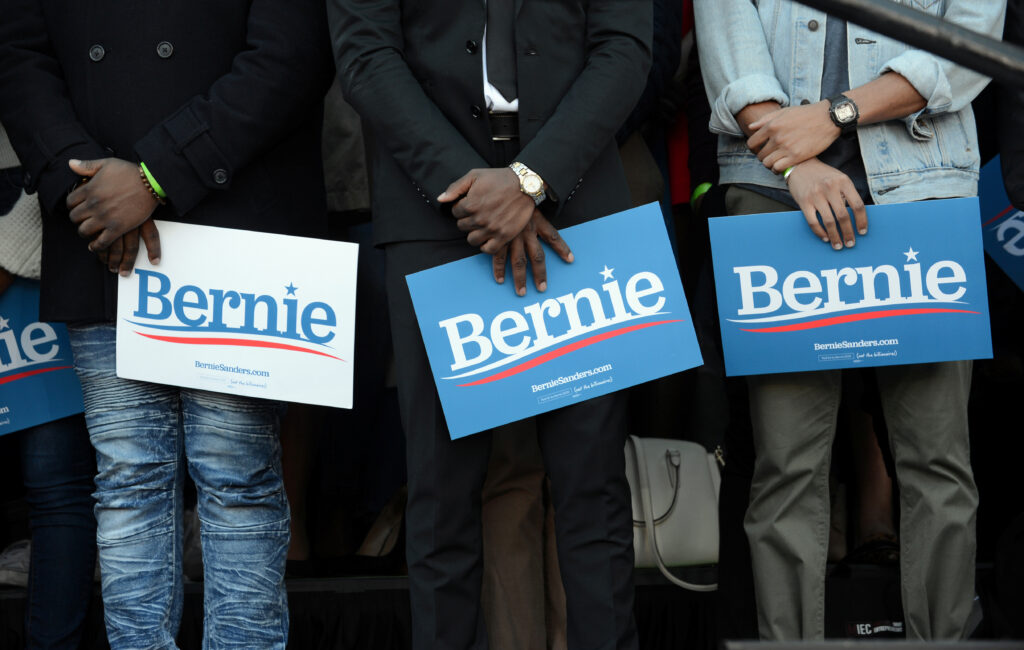
The most progressive areas in the country are concentrated in the Northeast, the West and parts of the Midwest. Aside from a few metro areas, the Black populations of these states are relatively low. In the 2016 Democratic primary, where Sen. Bernie Sanders (I-Vermont) was the democratic socialist alternative to establishment candidates, he drew his strongest Black support from states where the group made up less than a quarter of the primary electorate. He won at least 30 percent of Black primary voters in many of those states including Missouri, Wisconsin, Pennsylvania and Connecticut.
In the 2020 Democratic primary, these regional distinctions held up. For example, Sanders won 43 percent of the bloc in Minnesota and more than a third of Milwaukee County. By contrast, his weakest showings in both primaries occurred in states where Black voters made up more than half of the primary electorate.
While the ideological diversity and partisan solidarity of Black voters are well understood, these geographic differences are often overlooked. As with any group, they are shaped by local politics and culture, where distinct histories alter the way race factors into electoral choices. The result is progressive candidates pull higher Black support in places where they can already win, even when they lose the group overall. In other words, for democratic socialists, the road to the nomination doesn’t necessarily run through Black America, a luxury that establishment candidates do not enjoy.
In primaries this week, DSA member and former representative Cori Bush lost decisively to an establishment-backed incumbent in Missouri, while Michigan democratic socialist state Rep. Donavan McKinney seems to have split the Black vote with incumbent Rep. Shri Thanedar in defeating him. And in the week’s most-watched race, progressive candidate Abdul El-Sayed in Michigan’s senatorial primary eked out a victory over an establishment incumbent, Rep. Haley Stevens, despite losing the Tri-County region where most Black voters reside and pre-election state polls showing he was losing them by nearly 50 points.
For a party trying to regain control of Congress, these varied results hold clues about the appeal of democratic socialists to Black voters. It isn’t rooted in the DSA platform, which contains radical ideas such as establishing public ownership of large corporations and abolishing the Senate. Nor is it a product of this electorate moving leftward or embracing socialism — the majority of Black Americans do not identify even high-profile DSA members such as Mamdani and Rep. Alexandria Ocasio-Cortez (D-New York) as socialist.
Rather, to the degree that democratic socialists appeal to Black voters, it is a function of regional politics and culture, dissatisfaction with the Democratic Party, the chance to elect Black legislators at a time when many are exiting Congress, candidate charisma and character, and viability in the general election. In short, the electoral math, like the relationship between the party’s competing factions, is complicated.
The Democratic Party’s messaging is mixed, too. Recent party chairman Jaime Harrison admonished socialists competing to be its nominee, saying on social media, “Focus on building the party you actually support.” Yet, Sen. Chris Murphy (D-Connecticut) sees it differently — “I want us to be a big tent party,” he said, adding, “I think that it’s actually a sign of a party that is alive and growing when there’s a contest of ideas inside the party.”
But perhaps the most telling clue to the future of the party is its recently announced 2028 primary schedule. The first will be held in South Carolina, where a decisive majority of primary voters are Black and prefer establishment candidates to progressive ones. By opening its nominating calendar in the South, the party offers its most loyal voters the first word, ensuring that geography, as much as ideology, sets the boundaries of the Democratic coalition.
The post The complicated case of democratic socialists and the Black vote appeared first on Washington Post.