John Bolton was White House national security adviser from 2018 to 2019.
The Trump administration’s latest U-turn on Iran came not 36 hours after reports that major new strikes were imminent. Instead, the president stepped back, heralding “the perimeters of a deal” between Iran and the United States. Iranian sources promptly disputed that.
Saturday’s swerve showed that White House “strategy” on Iran had all but evaporated. Just last week, responding to Iranian strikes on U.S. bases in Jordan, Trump said, “We’re going to be hitting them very hard because it’s our turn to hit them.” This is not strategy; it barely qualifies as tactics.
While the U.S. flounders, some observers are scaremongering about a “wider war.” In the Middle East, Bahrain and Kuwait reportedly hit targets in Iran, joining Saudi Arabia and the United Arab Emirates in the U.S.-led coalition. For the first time, the Saudis and the U.S. together attacked Iraqi Shiite militias. On July 20, Yemen’s Houthis declared a blockade against Saudi commerce in the Red Sea, leading Riyadh to announce an international coalition to keep it open. With the Red Sea’s southern exit threatened, a July 29 drone attack on Damietta, an Egyptian port, endangered the Suez Canal’s northern terminus.
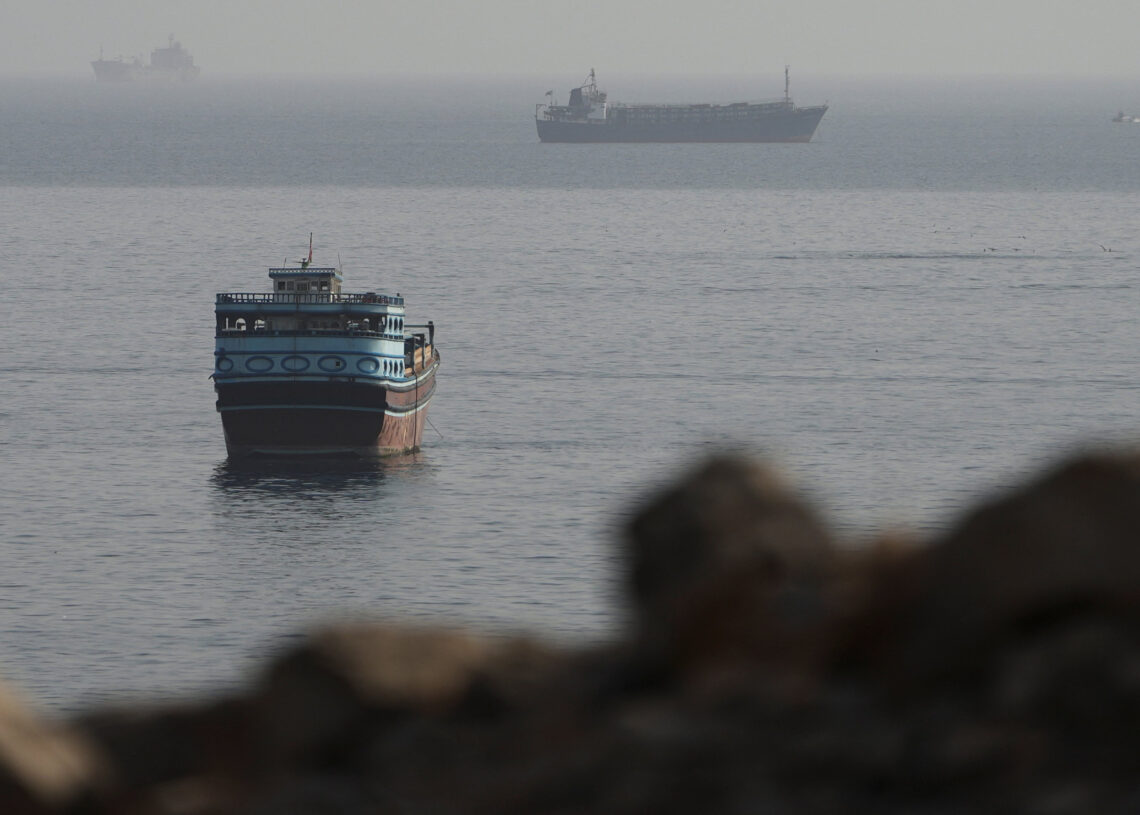
Just days before, in the Caspian Sea, Ukraine attacked an Iranian ship, believing it carried military equipment. Did this mean the Ukraine and Middle East wars were merging, producing possibly “cataclysmic … open warfare spanning Eurasia and the Middle East”?
No. But between tit-for-tat retaliation on one hand and cataclysm on the other, does Washington have alternatives? Yes, but only if it seriously engages in strategic analysis, hardly the Trump team’s métier. Nonetheless, fundamental international realities, particularly the emerging Beijing-Moscow axis — the Xi-Putin “partnership without limits” — are critical. Iran, Belarus and North Korea are axis outriders. In 1998, former national security adviser Zbigniew Brzezinski described a future China-Russia-Iran alliance as “potentially the most dangerous scenario.”
Unsurprisingly, therefore, the Ukraine and Iran conflicts were always intertwined, with complex linkages existing long before the past few weeks. Among many connections, Tehran has for years provided Moscow drones and other military capabilities. The Kremlin has reciprocated, including by supplying critical military intelligence against U.S. forces, as has China. North Korea provides Russia with troops and weapons.
Moreover, tensions in Asia, while short of open warfare, must also weigh heavily in American decisions regarding the two conflicts. Russia, remember, is an East Asia power. China poses several substantial threats: in the East China Sea against Taiwan and Japan (including the Senkaku/Diaoyu islands and others); in the South China Sea, which it has largely declared to be Chinese territorial waters; and in simmering animosities along land borders with India and Vietnam.
With all this in mind, the administration’s main strategic focus should be prioritizing U.S. national security interests and capabilities. That does not mean waging all-out war on all fronts. The White House must prioritize in ways the U.S. has been unwilling to do since Hamas attacked Israel on Oct. 7, 2023. Playing down the interconnections, a favorite Trump trope, doesn’t disappear them or lessen their materiality to U.S. strategy. America is more likely to succeed if it acknowledges that the “wider war” has long been underway and will be for the foreseeable future. It should also emphatically acknowledge that decades of underspending on defense since the Cold War’s end is what could be truly “cataclysmic.”
Abstract prioritizing is just an academic exercise, so take the Trump team as it is. It should focus on destroying (or at least paralyzing) Tehran’s regime; holding Russia in check in Ukraine; and sharply increasing deterrence against China. Iran’s government is fractured, as Trump recently admitted, distinguishing those who struck U.S. bases in Jordan from the regime’s impotent civilian negotiators: “There’s very little they can do about it. It was a different group than we’re dealing with.” If Trump fails to open the Strait of Hormuz, he will significantly compound his November election problems. He would be best advised to continue what he started in February.
In Ukraine, Washington should accelerate licensing Patriot missile-defense technology; squeeze Russia harder economically; and forgo any reduction in America’s NATO presence. Keeping all Russian oil off international markets should be the objective, which reinforces the urgency of increasing Gulf Arab oil exports to prewar levels, or close to them. Ukraine today is Europe’s greatest military power, facing little prospect Russia can achieve what more than four years of combat have failed to. Unfortunately, Trump is unlikely to provide what Ukraine needs to defeat Russia, so at least stabilize that front. For now.
The U.S. is racing against time on China’s Indo-Pacific periphery, particularly concerning Taiwan. The pending $14 billion in arms sales to Taipei is not a “bargaining chip,” and should be completed forthwith. Trump should enhance the Asian Quad (with India, Japan and Australia), and strongly support Japan’s efforts to enhance its conventional military forces, as Tokyo’s defense-spending increases foreshadow. Flattening Tehran’s regime would be the clearest signal to Beijing that it should not risk military adventurism.
The post John Bolton: Trump’s tit-for-tat with Iran ignores the larger reality appeared first on Washington Post.