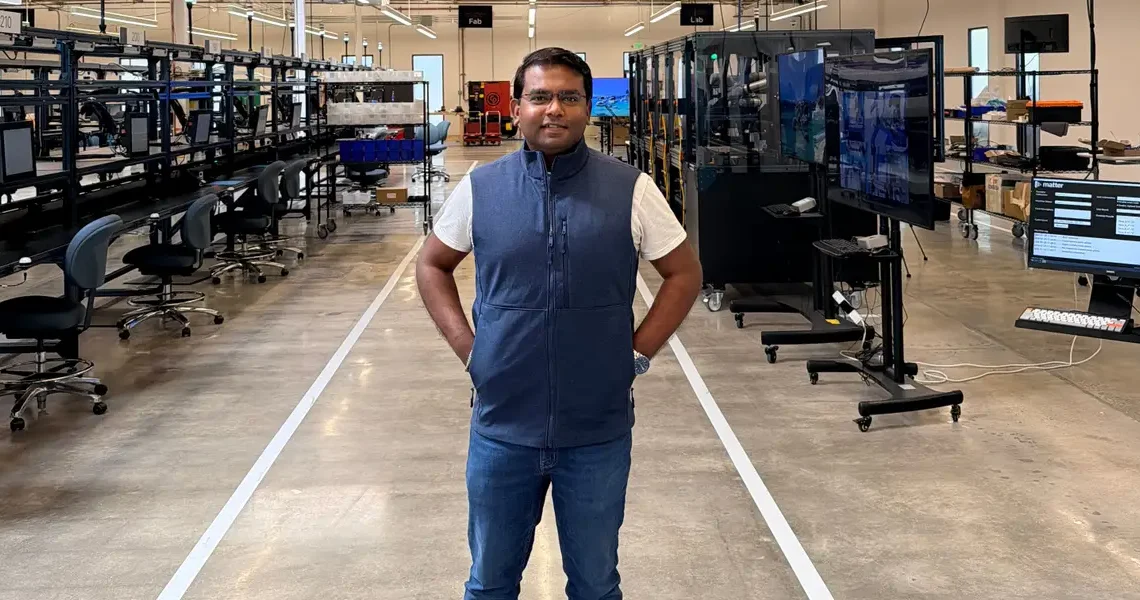
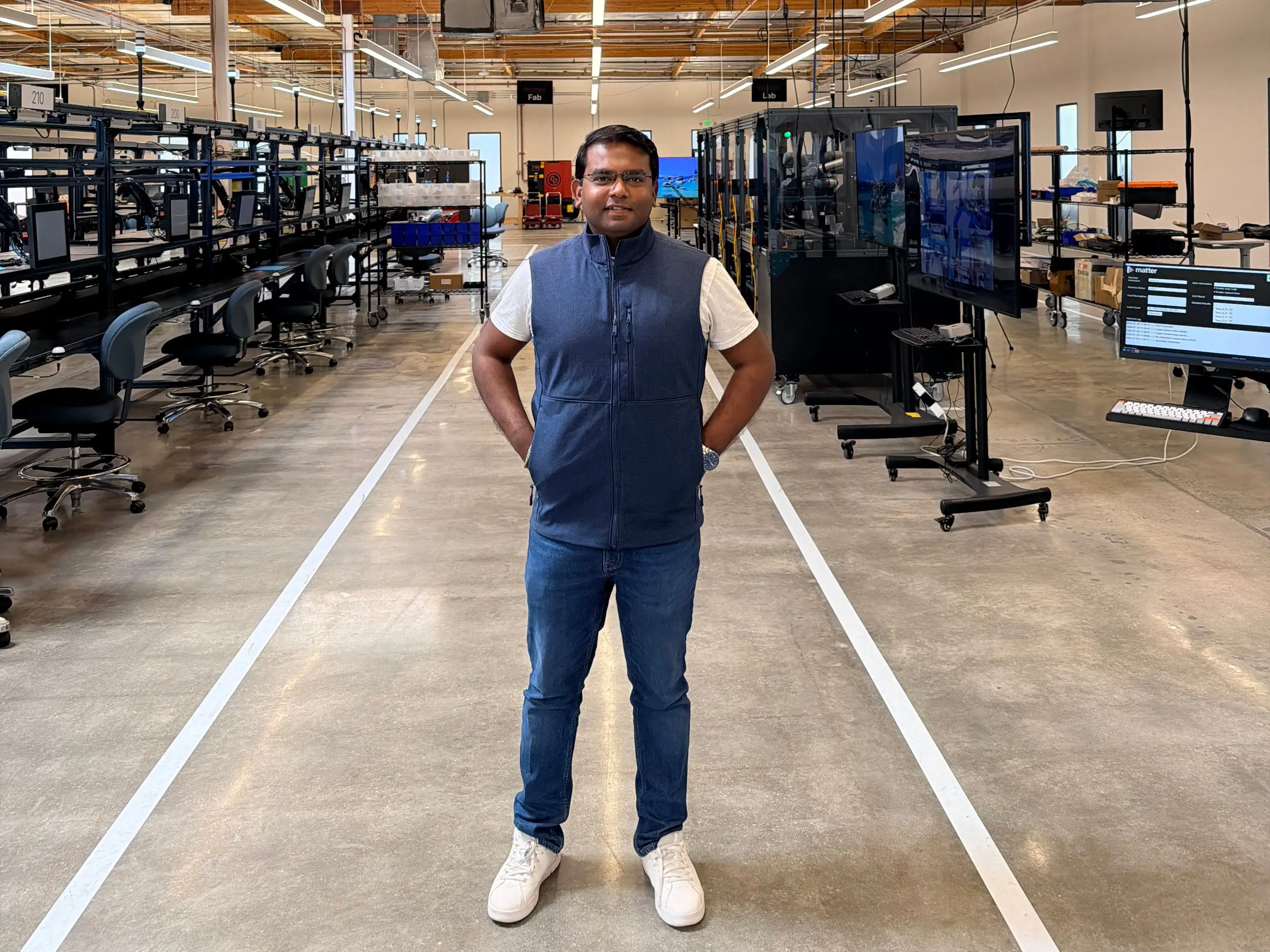
This as-told-to essay is based on a conversation with Adi Prasad, a 35-year-old cofounder and CEO of AI manufacturing startup Matter. It’s been edited for length and clarity.
When I graduated from MIT in 2015 with a master’s degree in mechanical engineering, one company stood out to me: Tesla.
I was fascinated by manufacturing, and Tesla was pushing the boundaries of what a factory could be. After joining in 2015, I was quickly thrown into helping scale production of the Falcon Wing doors, one of the company’s largest engineering challenges.
I had the opportunity to learn from and observe Elon Musk. His principles-first thinking shaped how I approach problems today. Later, I had the opportunity to work alongside former Uber CEO Travis Kalanick and learn from his approach to scaling a business.
But I didn’t join these companies because I wanted to spend my entire career there. They were the first step in a much bigger plan of entrepreneurship.
What I learned from Elon Musk
Because Tesla was much smaller then, I had a couple of opportunities to interact with Elon Musk and present in meetings. I’ve never seen anyone better at breaking down a complex problem live and getting to the root of it using first-principles thinking.
What made it so impressive was that he wasn’t always the obvious expert in the room. He might not have had a Ph.D. in a particular field, but by asking intelligent questions, he could quickly get to the heart of a problem.
Musk also challenged assumptions and refused to accept “that’s how it’s always been done” as an answer. I admired that he combined deep technical thinking with strong business instincts — a combination that’s surprisingly rare.
Nothing at Tesla felt like a science project. Everything was driven by an aggressive plan to push innovation forward. I think that’s a big part of what made Tesla what it is today.
What I learned from Travis Kalanick
A few years later, after spending a year working at Apple as a product quality manager, I learned about an opportunity to work with another visionary entrepreneur: Travis Kalanick. One of his new ventures was CloudKitchens, a company focused on delivery-only commercial kitchens. The appeal was that he was building something new, and I could be among the company’s first 100 employees.
While I was considering the opportunity, one of my mentors gave me some advice that stuck with me. He asked me to think of another entrepreneur besides Elon Musk and Travis Kalanick who had disrupted a complex global industry in such a short period of time. I couldn’t think of one. That conversation pushed me to join CloudKitchens.
Once I joined, I got to see Travis Kalanick almost every day. He might not have been the best technical person, but he was an incredibly savvy businessperson.
One of my biggest takeaways was how he approached scaling a business: focusing on priorities, using zero-based budgeting, and justifying everything from the ground up. He was relentlessly return-on-investment-focused, and that shaped how I run my own company.
Kalanick saw the digitization of the physical world before almost anyone and built his companies around it. He once said something that stayed with me: entrepreneurs fast-forward the future. The further out you go, the more different the future looks, and the harder the change is to pull off.
He had the ability, almost by brute force, to push through any challenge that came with disrupting a traditional industry.
I applied my lessons from Tesla and CloudKitchens to build my own business
After graduating with an MBA from Harvard Business School in 2025, I moved to the Bay Area right after and went all in on my business, Matter, with no backup plan.
My cofounder and I are building AI-native autonomous factories that assemble complex products like drones and robotic systems in the US. The goal is to rebuild American manufacturing as a software problem, not a labor problem.
Today, Matter has more than two dozen people working on the business, and our first factory is live in Sunnyvale, California: a 54,000 square foot facility.
The 2 biggest lessons I’ve learned
As I reflect on my own entrepreneurship journey so far, two lessons stand out.
First, you’ll never really feel ready to start a business. Sometimes you just have to take the leap and begin.
Second, AI is changing what skills matter most. These tools have made knowledge more accessible than ever. Deep expertise is still important, but I think what will matter even more is having a broad range of real-world experiences that help you make better decisions and solve problems in new ways.
Looking back, that’s exactly what I tried to do in my 20s. Every stop in my career taught me something different, and together those experiences gave me the confidence to start building my own company.
Do you have a story to share? Reach out to the reporter via email at [email protected], or via Signal at jzinkula.29.
Read the original article on Business Insider
The post I worked with Elon Musk and Travis Kalanick in my 20s. Here’s what I learned from them about building a company. appeared first on Business Insider.