
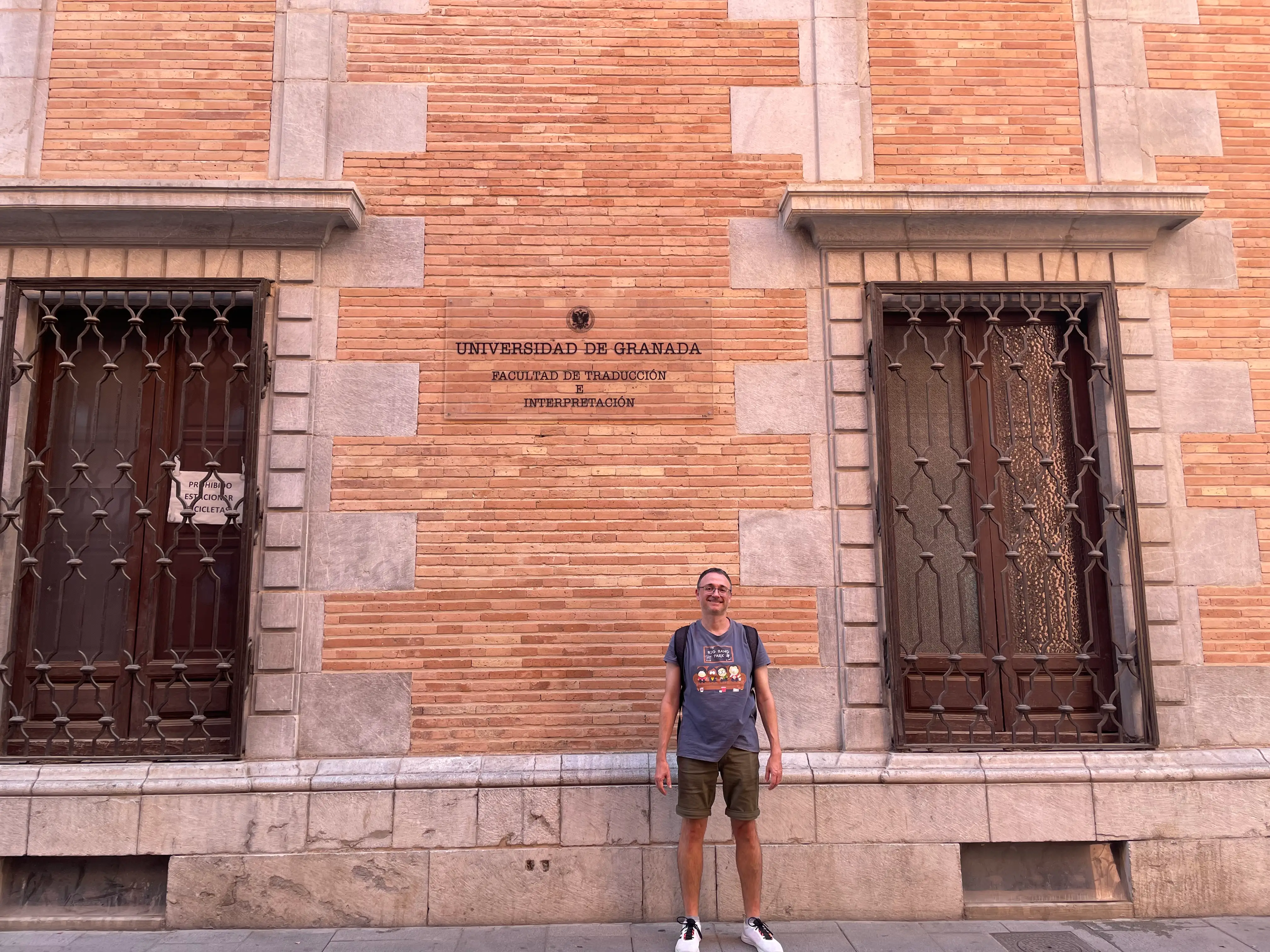
Moving abroad and investing consistently helped Miguel Marquez reach “Lean FI,” a variation of financial independence in which your investments can cover your basic necessities, but not much else.
Sometimes described as “the minimalist’s way to retire early,” Lean FI is often a stepping stone to traditional financial independence, when a portfolio can support both essential expenses and more discretionary spending.
Marquez, a 47-year-old university professor from Spain, struggled to build meaningful savings while completing his PhD and teaching in Bloomington, Indiana. His financial outlook changed completely after relocating first to Brazil in 2016 and later to China in 2022.
“I managed to save 10 or 12 times the amount that I was saving in the US,” he told Business Insider.
Marquez, who teaches French, Spanish, and personal finance at a university in Shenzhen, estimates that he takes home about $75,000 a year after taxes and spends between $21,000 and $22,000, putting his savings rate at roughly 70%.
Using the permanent portfolio strategy
A central part of Marquez’s investment strategy is the “permanent portfolio,” an approach that divides investments equally among four asset classes: 25% stocks, 25% bonds, 25% gold, and 25% cash.
He discovered the strategy while researching how Spanish investors were pursuing financial independence. Much of the advice he initially found was written for American investors, who had wider access to inexpensive index funds and retirement accounts.

The four assets are intended to respond differently as economic conditions change. Stocks may perform well during periods of growth, while bonds, gold, and cash may provide some stability during downturns, deflation, or inflation.
“The idea is that no matter what the market does, at least one or two of these four types of investments are going to perform well,” Marquez said.
For him, the permanent portfolio’s appeal is less about outperforming the market and more about limiting the swings in his account. It matches both his temperament and his broader definition of financial independence: having enough money to live comfortably without constantly worrying about what the market, or his career, might do next.
Putting his own spin on the permanent portfolio
Marquez doesn’t follow the traditional permanent portfolio exactly. Keeping 25% of a portfolio in cash is conservative, he said. Because he’s still working, he holds closer to 10% in cash.
“The cash is to feel at peace,” he said. “The idea is that if there is a recession, you have cash.”
That money provides a cushion and allows him to buy stocks, bonds, or gold during a downturn without having to sell other investments. He keeps most of it in a money-market fund, though if he lived in the US, he said he would also consider a high-yield savings account.
Marquez also owns some cryptocurrency but limits it to no more than 5% of his portfolio because of its volatility. He does not invest in real estate.
Buying property doesn’t fit his current lifestyle. He pays about $200 a month for partially subsidized university housing, relies on inexpensive public transportation, and remains open to living in different countries.
“I don’t have a house, and I don’t have a car,” he said. “But I have financial independence.”
Despite reaching Lean FI, he’s not planning on quitting anytime soon. He enjoys teaching and sees financial independence less as a retirement deadline than as the freedom to leave if his circumstances change.
Marquez said his progress accelerated once three elements came together: a solid income, a high savings rate, and an investment strategy he understood well enough to follow consistently.
“When you know what you’re doing, you have a plan and an investment strategy, and you have a decent job, everything goes much faster,” he said.
Read the original article on Business Insider
The post A professor who hit ‘Lean FI’ by moving abroad and saving 70% of his income explains why he prefers the ‘permanent portfolio’ investment strategy appeared first on Business Insider.