To the Editor:
Re “The Second Home Tax Is a Win for New York” (editorial, July 26):
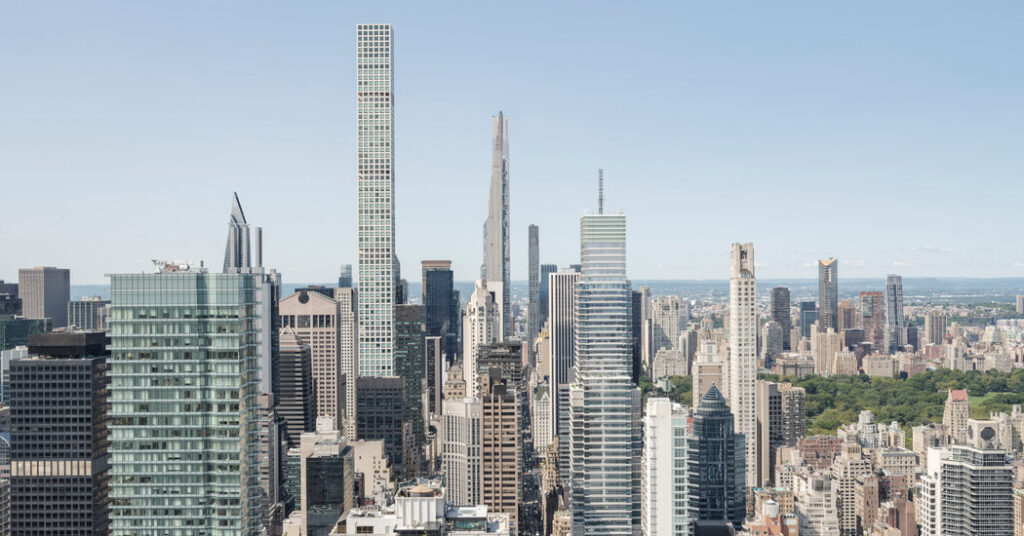
Rather than being simply a narrow tax on wealthy foreign tax avoiders, New York City’s second home tax will affect many New Yorkers who maintain a legitimate second residence in the city and already contribute significantly through property, sales and other local taxes.
The central question is not whether affluent individuals can afford to pay more. It is whether imposing a new tax on property ownership is sound policy for a city that depends on investment and economic growth. New York faces intense competition for residents, employers, capital and development. Policymakers should encourage investment, not drive it elsewhere.
The editorial dismisses concerns about economic impact because the tax applies to relatively few properties. But the significance of a tax is not measured solely by the number of taxpayers affected. Every additional tax sends a signal to investors, business leaders and property owners about New York’s long-term competitiveness.
Most important, the tax does nothing to address the city’s housing shortage or structural fiscal challenges. New Yorkers would be better served by policies that expand housing production and grow the tax base rather than relying on new taxes that may produce unintended consequences.
James Whelan New York The writer is the president of the Real Estate Board of New York.
To the Editor:
Your editorial notes that other places besides New York City — Paris and Singapore, and states like Montana and Rhode Island — have increased taxes on second homes. While that is true, the approaches in each place differ.
In New York the law is designed to tax expensive homes of the very wealthy valued at $5 million or more. In Montana, where I live, there is no threshold value. There is a large increase in property tax — an average projected hike of 68 percent — on all second homes regardless of their value. So the cabin valued at $50,000 is treated the same as the $10 million mansion.
Obviously, there are far fewer wealthy homeowners in Montana than in New York, but many Montanans have cabins that have been in the family for generations. They and their children are going to struggle to pay their increased property tax increase. Some will be forced to sell their property. Those properties will likely be snatched up by the billionaires who can easily absorb the tax burden.
In keeping with the mood of the country, the Montana law, while ostensibly designed to raise tax revenue, conveniently accommodates the avarice of the very wealthy by pricing out the locals.
William Leaphart Helena, Mont.
To the Editor:
I take issue with your premise that taxing the wealthy heavily is a sound strategy.
First, we all know that taxes that start out targeting the wealthy always wind up hitting the middle class. As much as you would like it to be so, there just aren’t enough wealthy people, so the money raised is never what was forecast. Second, why should we be unfair to wealthy people just because they are wealthy?
Your claim that “the tax addresses a pernicious form of tax avoidance” seems more like a swipe at part-time residents than reasoned analysis. What it addresses is not tax avoidance, but rather part of the law that recognizes the reality that part-time residents don’t use the city’s infrastructure or other benefits as much as full-time residents and that part-time residents pay taxes in other jurisdictions.
And if you don’t like the current residency requirement, then change it from 184 to 200 or even 250 days.
Michael Eckstut Bradenton, Fla.
Two Psychiatrists, on a Need to Mourn
To the Editor:
Re “What’s the Worst Thing Trump Can Do in the Midterms?,” by Jeffrey Toobin (Opinion guest essay, July 28):
In his excellent essay, Mr. Toobin quotes Representative Joe Morelle, the ranking member of the House Administration Committee, as saying: “The president simply can’t get over 2020, and he’s reliving it every day. I feel like it’s the girlfriend in high school that got away.”
Although we can’t comment on Mr. Trump directly, we find that a good way for people to get over past events is to mourn. We all have to mourn every day. We mourn lost opportunities, lost possibilities, lost time and lost people. To mourn, we recognize that we’ve lost something, name it and allow ourselves to feel sad about the loss.
If we can’t mourn, we become stagnant. We can’t grow. It takes courage to mourn, but it’s the only way to move forward. Politicians can think about how our country can grow again, but it has to come with mourning. It’s the only way. If a leader can’t mourn, we are all frozen in time.
Deborah L. Cabaniss Yael Holoshitz New York The writers are psychiatrists and psychoanalysts.
The post New York’s Tax on Second Homes appeared first on New York Times.