In the first-season finale of the HBO series “Succession,” Roman Roy, the youngest son of a right-wing media mogul, ducks into a bathroom to watch a satellite launch on his phone. His father has put him in charge of the launch, not because he has any particular expertise but in order to subtly manipulate interpersonal family dynamics. Roman has ignored technical concerns and insisted that the rocket go up on the day of his sister’s wedding.
The stream buffers for a minute, and then the rocket appears. A cloud of smoke gathers as the thrusters engage. Then, just like that, the screen shows only flames. Roman gulps and puts his phone back in his suit jacket. He washes his hands and goes back into the wedding reception, ready to pretend that nothing happened.
About a month ago, when I revisited the scene on YouTube, the top four comments read:
Here after Blue Origin exploded on launch
bezos rn
I come back here after another billionaire’s rocket explodes
Damn, this happened again today.
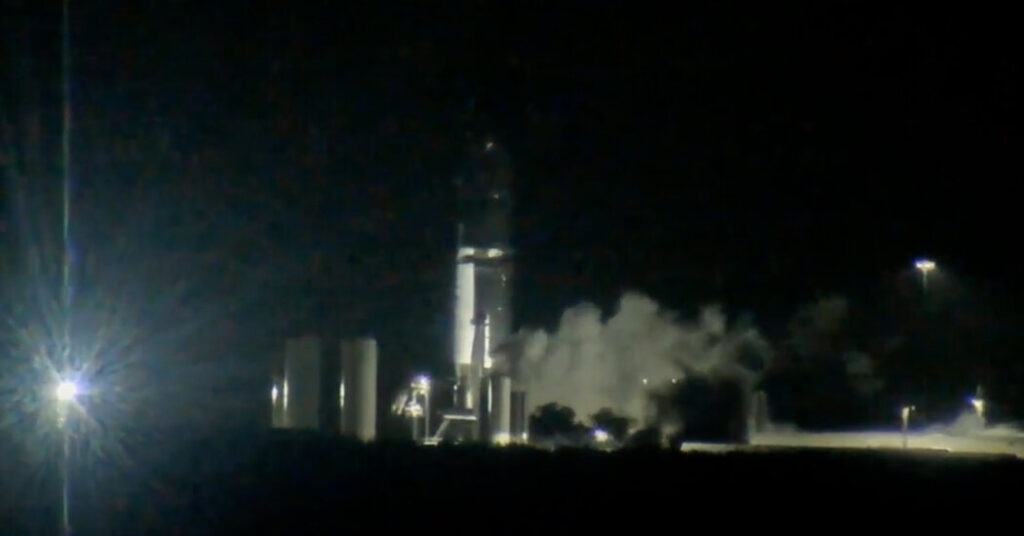
On May 28, a New Glenn rocket — a creation of Jeff Bezos’ company Blue Origin, meant to eventually carry a moon lander on future NASA Artemis missions — exploded during a test. The visuals were almost identical to Roman Roy’s impotent effort: the smoke, the series of miniature fireballs appearing before the big one spreads outward and consumes everything. Before long, the video was everywhere online, alongside not messages of disappointment or concern but jokes and captions conveying disgust.
“This is one of the greatest explosions I’ve ever seen,” one user wrote. “Michael Bay is somewhere saying, ‘Damn, not bad.’” Many people posted photos or gifs of Roman’s face. But one poster summed the prevailing feeling succinctly: “how have we gotten worse at this lmao.”
Space may still mostly be unsullied by the human touch, but the quest to get there seems increasingly V.I.P. — and increasingly ripe as a metaphor for class analysis from the online commentariat. The American efforts are captained not by anonymous scientists, but by two of the richest men on the planet. Their dominance has gained steam since the mid-aughts, when the government first invested in a start-up called SpaceX, which then tried to send a rocket into orbit three times and failed on each attempt. Nevertheless, NASA, aiming to outsource cargo delivery missions, gave the company a $1.6 billion contract, opening the space-exploration process to the private sector.
Elon Musk famously said he was interested in reaching or colonizing Mars, but his timeline for the project kept stretching. Now he says he’s prioritizing a moon colony, which will exist in “less than 10 years.” Still, he has succeeded at controlling the market. This June, SpaceX went public and — at one point — had a market capitalization of $2.77 trillion, making it the world’s fifth-largest company, just ahead of Amazon. Analysts thought the company was tremendously overvalued. (It seems, now, that they were right. The company’s share price is down almost 45 percent from its high point.)
It’s hardly surprising that the hyper-wealthy see the great beyond as another way to distance themselves from the rest of us. But no amount of money makes launches particularly easy. When Bezos’ rocket self-immolated, Musk, rather than celebrating his chief rival’s failure, decided to instead express condolences. “Most unfortunate,” he posted on X. “Rockets are hard.”
In the microgenre of explosion videos, there is never even a millisecond of triumph. The Blue Origin video and others like it never show a rocket doing what a rocket is supposed to do. They have an official feel to them, shot from far away by a stationary camera, as if they’re something meant to be watched by a technician. Liftoff is implied and anticipated. And then, instead, a flamboyant failure.
One of the earliest videos of this type appeared about a decade ago when SpaceX’s Falcon 9 rocket exploded — or, pardon, was destroyed by a “really fast fire,” according to a Musk tweet from the time — while trying to take an Israeli telecommunications satellite into orbit. These “fast fires” have since become regular occurrences. By this time last year, three different SpaceX Starships had exploded during their test flights. Failed tests are by no means novel — the early history of NASA launches is littered with explosions and disassemblies — but now the cameras are always running, perhaps in the hopes that success will be captured and produce a viral moment that doubles as an advertisement. Part of the humor comes from the fact that when the product doesn’t work, the virality of the video does.
The second-most-famous moment in the history of American space exploration, after the moon landing, is an explosion. In many ways, that moment was the inverse of our modern rocket failures. The failure of the Space Shuttle Challenger is a national trauma, primarily because it happened on a crewed mission and resulted in seven deaths. (This is a critical difference that makes mocking the SpaceX and Blue Origin explosion videos relatively uncomplicated — nobody has died in any of them.) It was a collective endeavor with a cost, and one witnessed by a nation, simultaneously, on television. Now, these videos are clipped, posted online and distributed as punchlines.
Spacecraft explosions used to dash dreams. But if all that space promises us now is another airport lounge with somebody checking your credit card at the door, no wonder we feel that the best thing a rocket can do when it tries to go there is explode.
Chris Almeida is a Brooklyn-based writer and editor whose work has appeared in The New Yorker, Bloomberg Businessweek and The Believer.
The post Rocket Explosions Used To Be Tragic. Now They’re Punchlines. appeared first on New York Times.