The way people treat my dog says more about how they see me than I ever imagined.
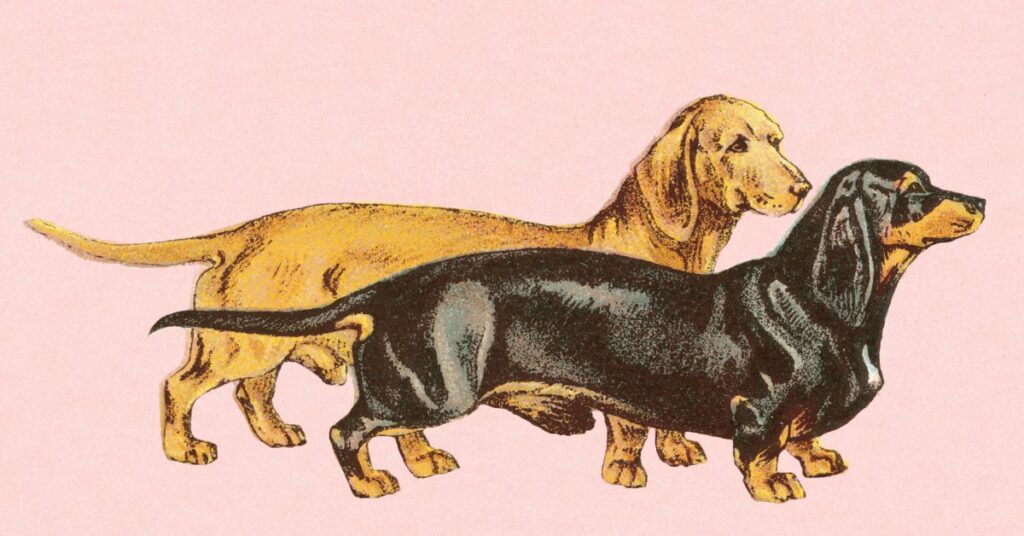
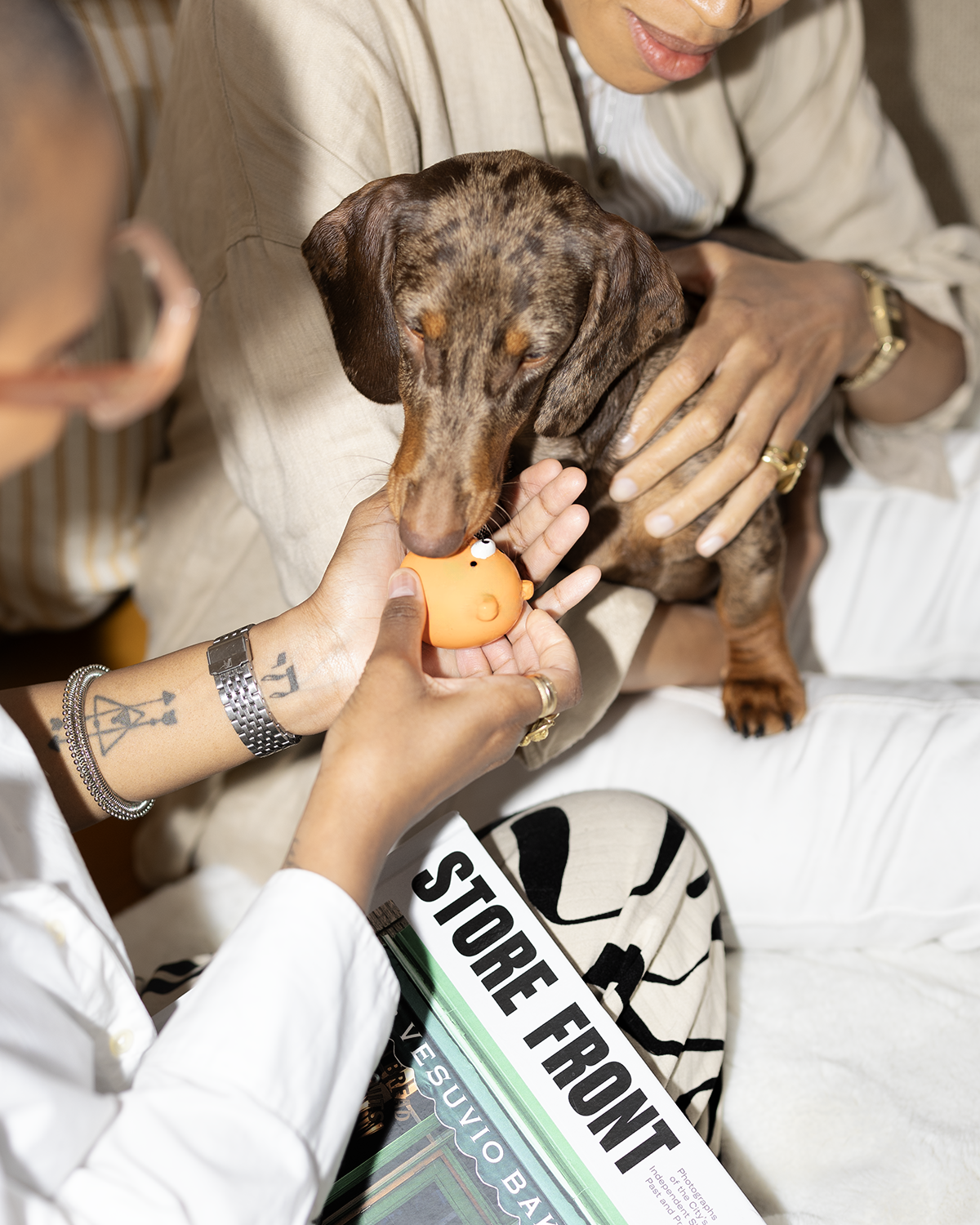
My fiancée and I bought our purebred sausage dog from a farm breeder in Normandie, France. She’s not your typical sausage dog; her official certification lists her as a Dachshund, a word I still struggle to spell, and more precisely, she’s what you call a Harlequin, or “Dapple” in English. She has light amber eyes, a speckled coat, and a sweetness that draws people to her instantly. Her name is Umutuzo, which means serenity in Kinyarwanda, the native language in Rwanda.
[time-brightcove not-tgx=”true”]
Umutuzo’s presence in our lives has not only made me a devoted dog mom, but also shed light on an unexpected observation: how race, class, and social status silently intertwine. Having a rare purebred dog changed how the world responded to me in her presence.
Without Umu, I experience predominantly white spaces by minding my own business, not really paying attention to who’s around me. But walking with her? That’s a different story. People melt at the sight of her. They squeal, coo, bend down to the ground just to greet her, practically laying flat to scratch the exact spot behind her ear that she loves most. Some have offered to buy her on the spot. Others ask for our breeder’s information. They rush to take their phones out to take pictures of her.
When they also have a Dachshund, they joke that maybe the dogs are distant cousins, pull out their phone to offer a playdate, and suggest we become friends. One little lady, after we shared conversations about our precious little puppies, suggested Umu and I follow her to her home for a snack and some tea. I was so high from this weirdly friendly situation that I obliged and sat in this stranger’s house for a couple of hours. Umu, still a little young, ran around acting like her puppy self, while the future Rwandan mother in me was petrified of the mess she was causing. I’d attempt to call her back and the lady would insist, “She’s just a puppy, let her be.”
Her charm is so potent that in moments when I thought people would look at me weird, like when she decides to poop in front of a busy café, instead of being grossed out, people will lock eyes with me as I bend down to pick it up and push out a noise of endearment as I clean.
At times it feels like performance art. She almost acts as a passport into an ease I rarely have. With her by my side, is this what it feels like to be white? I’ve wondered. Even my two Black brothers expressed experiencing the world differently when they had Umu with them. One of my brothers who’s living and studying in Paris said that when he’s with Umu, the old grumpy ladies become cuddly and super sweet with him. She gets the best out of people. He’s gotten to meet his neighborhood differently by walking around with her.
It’s as if Umu becomes a buffer, a cute, rare being that allows white strangers to bypass their unconscious biases, but only temporarily. People no longer see me when I’m with her. I became “Umu’s human.” They remember her name but never mine. They bend down to speak to her directly, sometimes holding entire conversations with my dog while avoiding eye contact with me, but expecting me to answer their questions to Umu.
In the informal social world of dog parks, full of cliques, rivalries, and unspoken rules, the absurdities continue. I love some good gossip, so I listen and observe. But people often mistake my fiancée for me. She has a huge afro. I’m bald. I’m also much darker skinned. And still, we’re often treated as interchangeable. “You two look like sisters,” a woman once said. We hear that one often, and every time I regret not kissing my fiancée right then and there just to make it weird enough for them too.
One day, a woman started chatting with me like we were old friends. I had never seen her before, but I knew she thought I was my partner. When she started talking about her son who works in cinema, like me, I finally said, “I’m her fiancée.”
She gasped, “Oh! You cut your hair!”
I replied, “No… I’m just not the same person.”
She giggled nervously, realizing the mistake, and then said it again: “You look so alike.”
I pressed a little further, pointing out that I’m visibly darker.
She stammered and muttered, “Oh, I don’t see that.” That being race, of course.
That discomfort, that quick withdrawal masked by forced politeness, told me more than she realized. But it also quietly amused me.
What’s fascinating, and even darkly funny, is how much having Umu has changed the way people respond to us. When she’s with us, we are “accepted.” When she’s not, we are invisible. People who gushed at us one day walked past us blankly the next. It became clear that Umu is not just a dog. She’s our democratizer. She’s our ticket to conditional politeness, to friendliness, to perceived safety.
People make assumptions based on her breed and rarity. They ask how much she cost, a not so subtle way of assessing our economic status.
Once, in the streets of Paris, a girl saw baby Umu and said she looked like the famous designer Jacquemus’ dog, which, respectfully, I’d have to disagree with, but that’s for another day. She asked if it was his dog. I said no, she’s mine. Without missing a beat, she assumed I was the dog sitter.
Owning Umu has highlighted how our presentation dramatically shapes how we’re received, especially in white spaces. In the eyes of many, our worth increases through her. We must be good, respectable people. Look at our dog.
What this reveals is not just unconscious bias, but a system of beliefs rooted in aesthetics, pedigree, and cultural familiarity. There’s an unspoken taxonomy: “Black people dogs,” “white people dogs,” and then the dogs, and people, that don’t fit any category and therefore confuse or unsettle others. These beliefs may seem shallow, but they carry weight. They shape who gets welcomed and who gets ignored. They decide whose presence is considered normal, and whose requires justification.
We all carry these preconceived ideas. But the way they influence who we see as human, or who we trust, is what fascinates me most.
Race dynamics are not always loud or hostile. More often, they’re stitched into small interactions, tiny exclusions, and fleeting assumptions. They live in who we greet. Whose dog we pet. Whose name we remember. And whose humanity we quietly overlook.
The post My Purebred Dachshund Is My White Privilege appeared first on TIME.