A divided House on Wednesday approved a $1.15 trillion defense policy bill as Republicans pressed ahead with a historic increase in military spending over the opposition of Democrats who voted against the plan in protest of the war in Iran.
Passage marked a victory for Republicans seeking to reshape the Department of Defense in line with President Trump’s aims, but the near party-line vote on what is normally a broadly bipartisan bill reflected major obstacles that could complicate its path to enactment.
In a 216-212 vote, all but a half-dozen Democrats opposed the measure, many saying that they could not in good conscience back a bill that ultimately would empower Mr. Trump to continue waging war against Iran without authorization or meaningful oversight by Congress.
Senate Democrats blocked that chamber’s version last week for the same reason, and G.O.P. leaders in the Senate lack the votes to overcome their opposition.
It sets up a clash over the annual defense policy bill, known as the National Defense Authorization Act or N.D.A.A., that will likely to require significant bipartisan revisions if Congress hopes to send the legislation to Mr. Trump before the end of the year.
The bill includes a pay raise for service members, increased funding for missile defense production and additional resources to boost strategic investments in critical minerals. The sprawling legislation also contains a range of provisions directly related to how the U.S. military integrates and regulates artificial intelligence across the department.
It also would officially rename the Department of Defense the Department of War, part of an effort by him and Defense Secretary Pete Hegseth to rebrand the military in a way they argue better projects American strength and reflects the department’s core mission.
The bill, which was supported by all but seven Republicans, would deliver the largest annual jump in military spending in modern history. It increases the national defense budget by more than $227 billion over the previous year, a boost Republicans say is needed to prepare the United States for a more dangerous world.
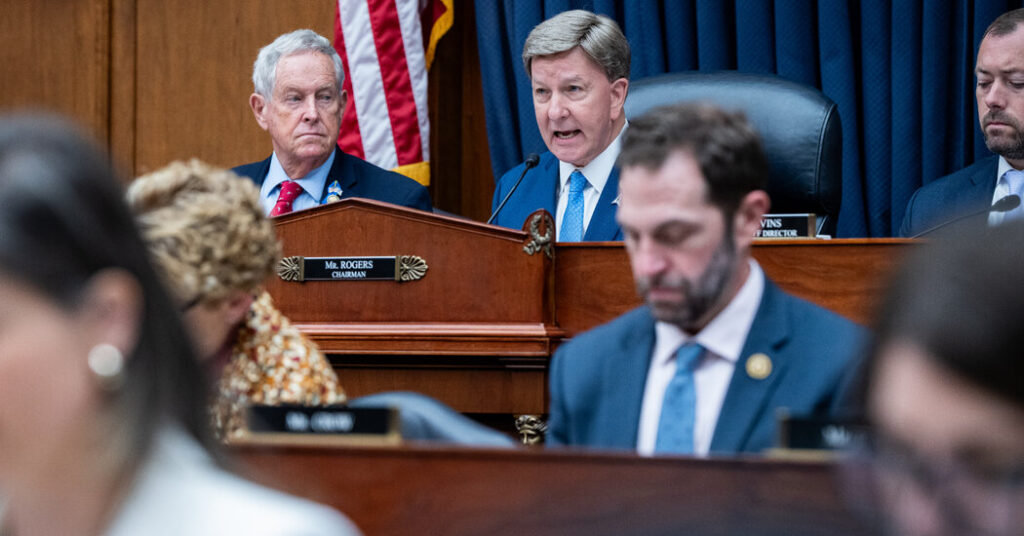
“For the first time in 40 years, we’ve been presented a budget that accounts for the true cost of American deterrence,” Representative Mike Rogers of Alabama, the chairman of the Armed Services Committee and the bill’s chief author, said.
He said that because of “decades of underinvestment in the U.S. military,” the United States no longer has the capacity to produce military equipment fast enough for a prolonged war, pointing to a shrinking defense industry and dwindling stockpiles of weapons.
Representative Adam Smith of Washington, the top Democrat on the Armed Services Committee who joined his party in opposing the measure, argued that Republicans had transformed a bipartisan bill into a divisive one.
“Whatever else may be said about the N.D.A.A. — there’s a lot of positive aspects to it — it will continue to support the Department of Defense the president is using to wage this war,” Mr. Smith said. “And that makes it very difficult to support this.”
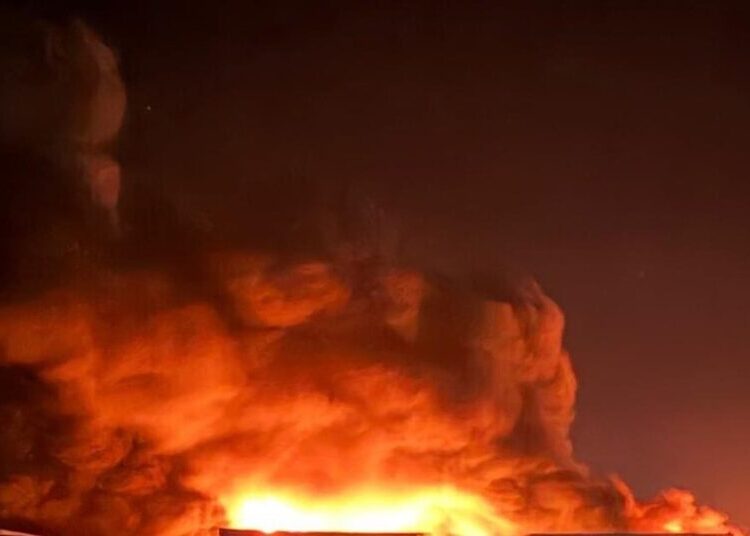
The debate came as Republicans had hoped the war in Iran was entering its final chapter after. Lawmakers had seen the signing of a memorandum of understanding and announced cease-fire last month as the pivot point necessary to allow them to spend their last days before a five-week summer recess highlighting domestic accomplishments and begin focusing on the midterm elections. Instead, the conflict has reasserted itself just as lawmakers prepare to leave Washington to campaign for re-election.
Mr. Smith said Republicans had blocked Democratic amendments and reshaped the legislation around the administration’s push to supercharge military spending at the expense of domestic programs that Americans depend on.
He argued that the administration’s broader goal of pushing military spending to above $1.5 trillion through three measures making their way through Congress — the defense bill, an emergency supplemental spending measure it has requested to pay for the war in Iran and a forthcoming reconciliation package that would include much of that money — was fiscally unsustainable.
“We’re making cuts to Medicaid and other health care programs in order to fund this,” he said. “The math just doesn’t add up.”
Mr. Smith faulted Republicans for continuing to fund an expanding war in Iran while declining to reassert Congress’s constitutional role in authorizing and overseeing the conflict, saying lawmakers were being asked to provide ever larger sums for military operations without meaningful debate over the strategy or its objectives.
The House measure is one piece of a broader effort by the Trump administration to bring military funding to unprecedented levels that proponents argue is necessary to rapidly expand the armed forces as the United States confronts simultaneous threats from China, Russia, Iran and other adversaries.
Appearing before the Senate Appropriations Committee this week, Mr. Hegseth described the strategy as a “generational investment” in the military, calling the emergency funding request an “urgent, necessary injection” amid a war that he said had so far cost $37.5 billion.
“Without these funds, we face critical shortfalls,” Mr. Hegseth testified.
In recent days, Mr. Trump has abandoned the more optimistic tone that a diplomatic resolution could be met to draw the war to a close and has instead issued increasingly forceful warnings to Iran’s leadership.
On Wednesday, Mr. Trump warned that Iranian strikes against vessels navigating through the Strait of Hormuz would be responded to with attacks on key infrastructure.
“From this point forward, any time the Islamic Republic of Iran shoots at a ship in the Strait of Hormuz, whether it be by Missile, Rocket, Drone, or any other device or weapon, the United States will bomb and destroy ONE BRIDGE OR POWER PLANT, including those located next to, or in, the Capital City of Tehran,” he wrote in a post to his social media site.
Moments later, as he was preparing to depart for the dignified transfer of four American service members killed in the conflict, Mr. Trump previewed more strikes telling reporters that Iran was “going to pay a big price.”
“They’re getting decimated,” he added.
The post House Passes Defense Bill Amid Iran War Divide appeared first on New York Times.