President Trump’s prime-time speech last Thursday was intended to shore up his tenacious lies that the 2020 election was stolen from him and leaned heavily on recycled claims that the Chinese government tried to tip the scales against him.
But a trove of intelligence documents that Mr. Trump declassified in hopes that they would bolster his assertions arguably made a stronger case that a different country — Russia — had meddled in the race.
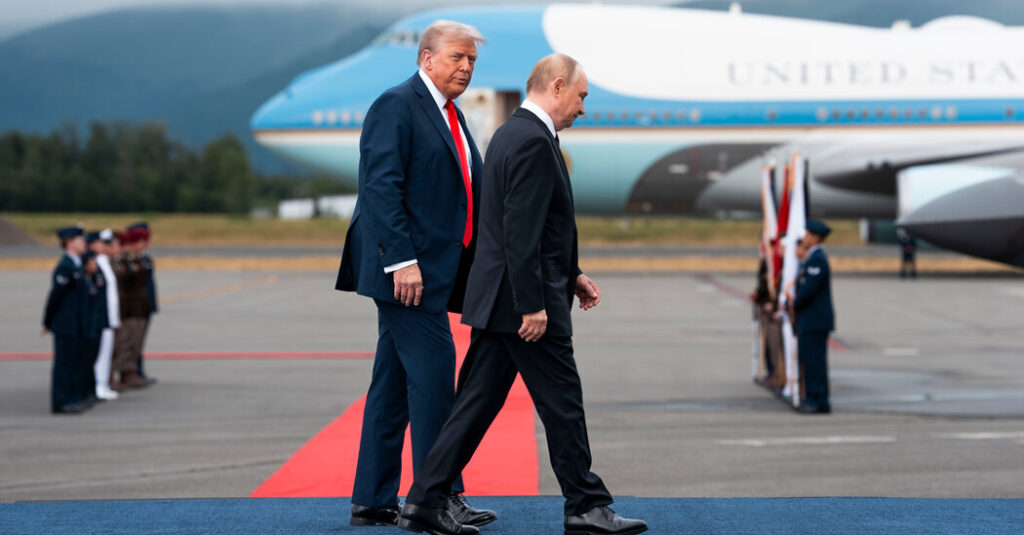
Mr. Trump, nonetheless, barely mentioned Russia during his 25-minute address, in keeping with his longstanding aversion to admitting what criminal and congressional investigators have said for years: Senior Russian officials, including Vladimir V. Putin, the country’s president, worked to undermine Mr. Trump’s opponents in both his 2016 and 2020 campaigns.
“He forgets or just omits that the biggest country that tries to influence on every election is Russia,” Senator Mark Warner, the top Democrat on the Senate Intelligence Committee, said on Sunday during an appearance on CBS’s “Face the Nation.” “We’ve documented that time and again.”
The prominence of Russia in the newly declassified documents — and Mr. Trump’s relative silence about the country during his address — was only the latest reminder of how the president has often sought to twist U.S. intelligence to support his falsehoods about elections he has run in. Those efforts have become more worrisome now that Mr. Trump has installed inexperienced loyalists and given them oversight of U.S. intelligence agencies. Bill Pulte, a housing official, is serving as the acting director of national intelligence until Jay Clayton, the U.S. attorney in Manhattan, is confirmed.
The documents that Mr. Trump declassified last week were not the first to highlight efforts by the Russians to influence American elections. In many cases, the new files reflect information that was made public five or six years ago, either in previous disclosures by U.S. intelligence agencies or public statements by senior officials in the first Trump administration.
Most of the allegations about Russian election meddling in the 2020 election were contained in an analysis by the National Intelligence Council dated Aug. 19 that year, less than three months before Mr. Trump lost to Joseph R. Biden Jr. in a defeat that even now he refuses to acknowledge.
The analysis maintained that Mr. Putin and senior officials in his government oversaw efforts to damage Mr. Biden’s campaign.
Moreover, it said, the Russians conspired with officials and “other prominent persons” in the United States to “orchestrate a high-profile corruption scandal” implicating Mr. Biden and the Democratic Party at the peak of the campaign. Republicans have accused Mr. Biden of being involved, while vice president, in corrupt business dealings with his son Hunter and the Ukrainian energy firm Burisma.
“Their aim is to defeat the former vice president” — Mr. Biden — “and ensure the president’s victory,” the intelligence council concluded, referring to Mr. Trump.
The same assessment also made clear that Iran had taken some clumsier but still fairly aggressive efforts to harm Mr. Trump’s electoral prospects, actions that Ayatollah Ali Khamenei, the supreme leader, had most likely ordered. But Mr. Trump had little to say on Thursday night about Iranian election meddling, even though the United States is still at war with Iran. He instead highlighted China’s relatively muted actions, which he asserted had been hidden from him and the American people.
The claims surrounding Burisma are among the longest-lasting efforts to smear Mr. Biden. They center on accusations that while serving in the White House under President Barack Obama, he used his power to derail a corruption inquiry into the company to protect Hunter Biden, who sat on its board of directors.
At one point, an F.B.I. informant, Alexander Smirnov, claimed that the oligarch owner of Burisma had paid $5 million to both Mr. Biden and his son. But Mr. Smirnov was ultimately charged with lying about the purported bribes and admitted that he had been fed information by Russian intelligence.
A U.S. intelligence community analysis from March 2021 found that proxies linked to Russian intelligence had promoted false stories about the Biden family “to U.S. media organizations, U.S. officials and prominent U.S. individuals, including some close to former President Trump and his administration.”
Federal prosecutors also undertook an expansive investigation into whether Ukrainian officials had helped orchestrate a plan to damage Mr. Biden’s 2020 campaign, including by using Rudolph W. Giuliani, Mr. Trump’s onetime personal lawyer, to help spread their misleading claims. Mr. Giuliani was never charged in the inquiry.
Russia’s disinformation campaigns, U.S. officials maintain, have included promoting accusations of corruption between the Biden family and Ukraine — as well as a conspiracy theory that Ukraine, not Russia, interfered in Mr. Trump’s 2016 campaign against Hillary Clinton.
Russia-aligned operatives met with people tied to the Trump administration to further seed these narratives. And that dynamic played a role in Mr. Trump’s first impeachment when he urged the newly elected Ukrainian president, Volodymyr Zelensky, to investigate the Bidens and then later withheld military funding the country needed in its ongoing conflict with Russian-backed separatists.
Even after Mr. Trump left office in 2021, his congressional allies continued examining the allegations about Mr. Biden and Ukraine but eventually came up empty. In 2023, House Republicans acknowledged that they had not uncovered incriminating material about Mr. Biden, despite their frequent insinuations that he and his family had been involved in criminal conduct and corruption.
Senator Angus King, the Maine independent, seemed to scratch his head about why Mr. Trump had given short shrift to Russian interference during his speech in an opinion article he wrote over the weekend.
“Amazingly,” Mr. King wrote, “Russia was barely mentioned in the speech, even though Russia has consistently been the most aggressive foreign meddler in our elections over the past decade.”
The post Trump Pushes Chinese Election Threat, but Files Show Russia’s Heavy Hand appeared first on New York Times.