

Tech is playing a bigger role in everyone’s lives, and the World Cup is no different.
At the 2026 edition of the tournament — which concludes on Sunday with the final between Argentina and Spain — referees are wearing more equipment than ever before: A camera, a microphone, and two watches. All 1,248 players were scanned in 3D, and the ball contains a microchip.
Ever since the laws were first codified for the beautiful game, players and fans have argued about referees’ decisions. Tech has helped prove incidents one way or another, so refs can make decisions without ambiguity.
Visualizations and new cameras also give fans more insight into games.
Here are four key technologies that have played a role in the biggest event in sports.
Referee View
A referee’s point-of-view camera lets fans get a closer look at the action on the pitch. From highlighting the difference between a clean tackle and a foul to replays of goals and impressive dribbles to a close-up of a player’s remonstrations.
The Bundesliga, Germany’s top league, introduced such a camera in 2024, and other European leagues followed suit — although most only broadcast the images after a game has finished.
For the World Cup, referees wear a headset with a small camera positioned over their ear. The images are shown during the game, with the help of Lenovo, whose AI tech stabilizes the image to reduce motion blur.
Semi-automated offside
Offside is one of the oldest rules in soccer, first codified in 1863, but it relies on fine margins that are hard to judge in real time.
The law essentially says that an attacker can’t be beyond the last defender when the ball is passed to them. It’s designed to prevent goalhanging, where a player would loiter near the opponent’s goal waiting for an easy chance to score.
Over the years, there have been too many incidents to name: Goals have been incorrectly disallowed, incorrectly given, or stirred up heated debate. However, there is no arguing with the technology.
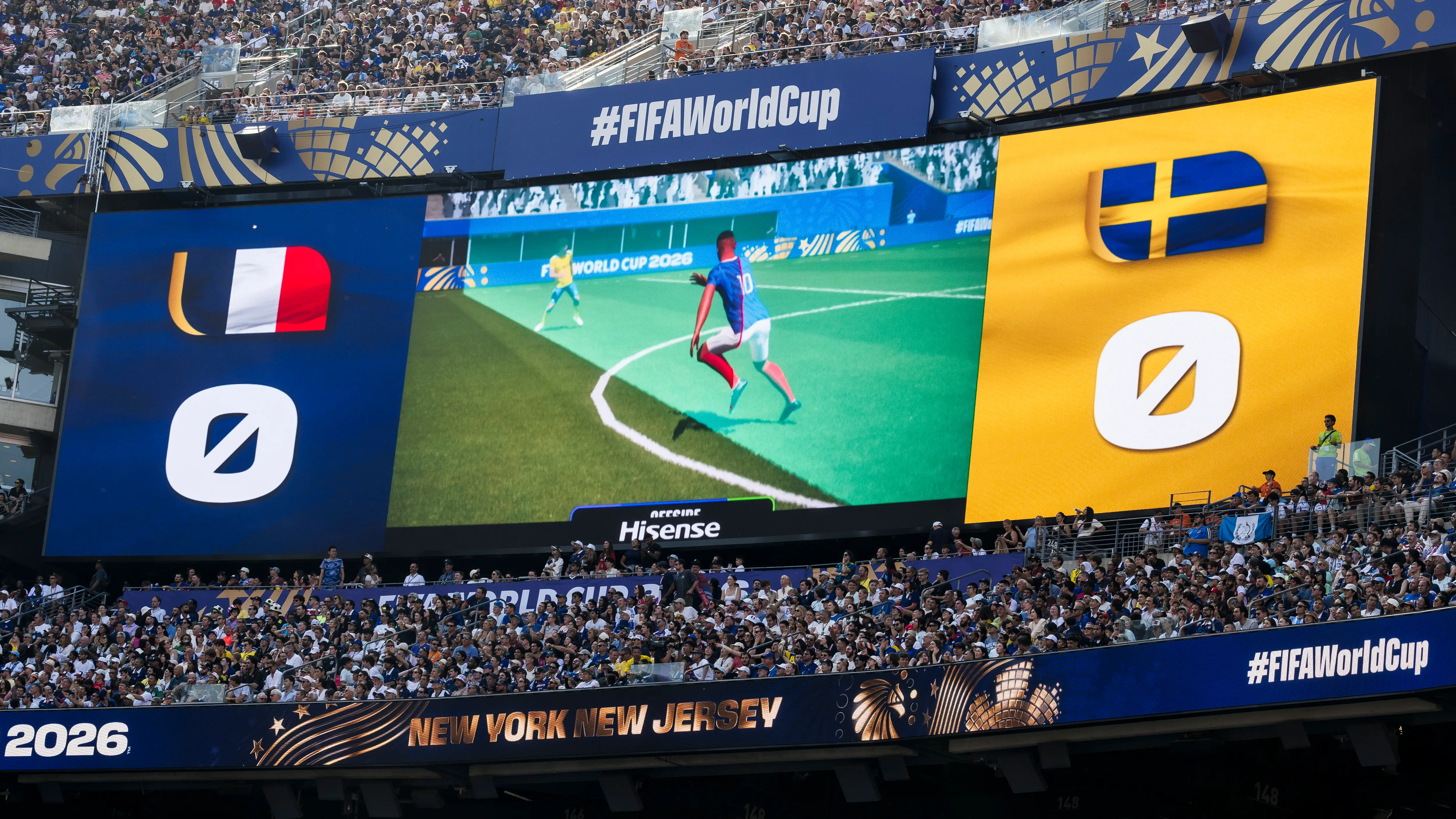
Semi-automated offside technology uses at least 10 cameras high up in the stadium to track players. AI processes different parts of their bodies and sends an alert if they are offside.
The World Cup ball also contains a sensor, so the AI knows exactly when the pass was played.
For this year’s tournament, all 1,248 players spent 30 seconds in a 3D scanner to create a unique model, aiding in more precise tracking. Plus, it helps construct a freeze-frame replay of the offside decision.
Snicko
The Snickometer, or Snicko, is used to determine whether the ball has made contact with another object or a person. It was first developed for cricket, using a sensitive microphone, but the World Cup uses the sensor in the ball.
Its most prominent use in the tournament was when Croatia’s Joško Gvardiol thought he had rescued a draw against Portugal in added time, but the goal was disallowed.
According to the data provided by Connected Ball Technology housed within the @adidasfootball Trionda, the official match ball of the @FIFAWorldCup, it was proven that contact was made by Croatia’s #20 Igor Matanović in the build up to the goal against Portugal, allowing the… pic.twitter.com/AyBz11N3wV
— FIFA Media (@fifamedia) July 3, 2026
At first glance, it looked like the ball was passed straight to a Croatian attacker. However, Snicko showed that another Croatian player headed the ball, at which point his teammate was offside.
On the other hand, when England equalized against Norway in the quarterfinals, some Norwegian players claimed that England only gained possession because the ball was obstructed by a Spidercam cable above the pitch. Indeed, some pundits questioned the odd trajectory of the kick, but FIFA released a video in which Snicko showed that the ball did not touch anything.
Goal-line technology
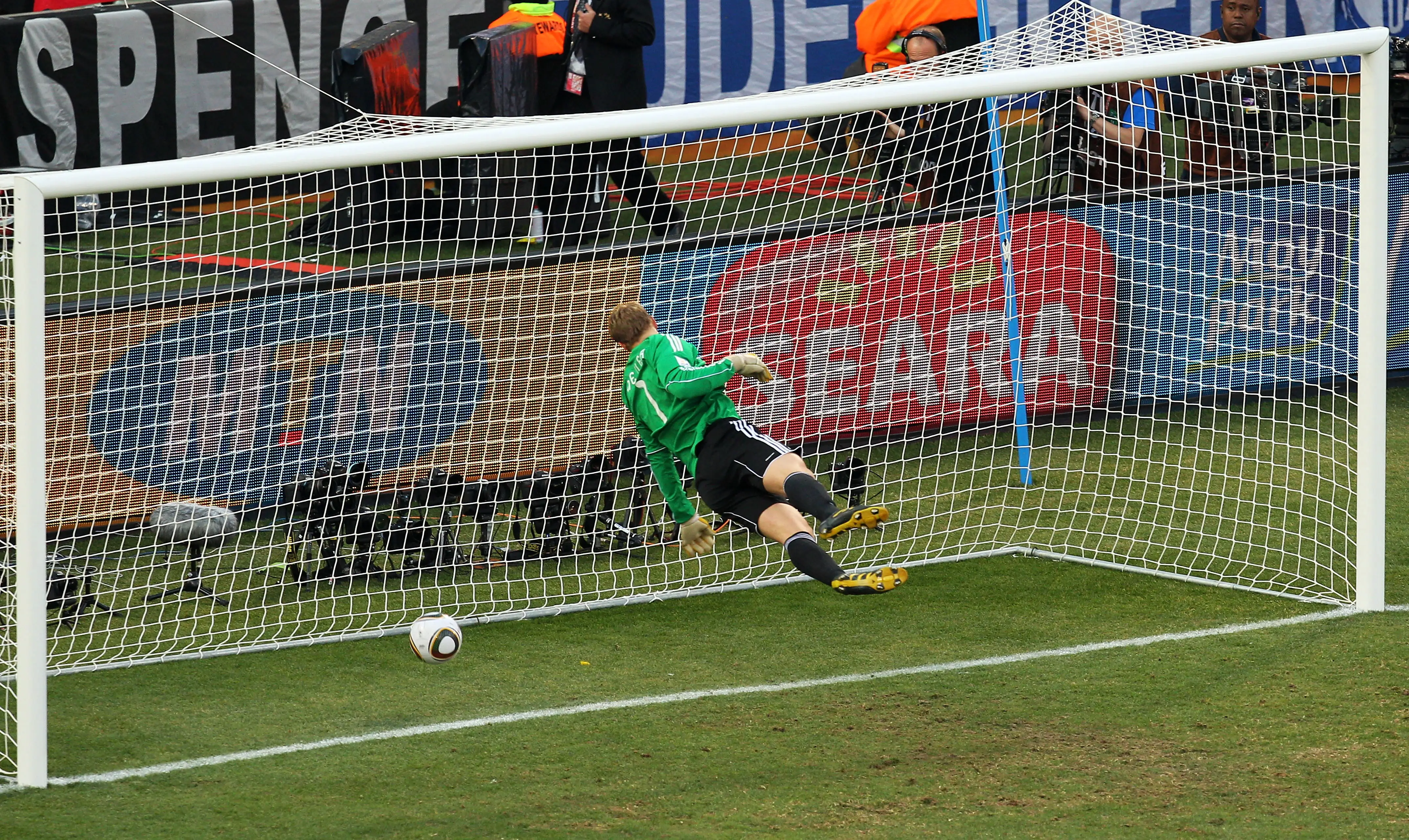
Seeing the ball ripple the back of the net is a great sight, but sometimes a goal is a scrappier affair. The whole ball has to cross the line to count as a goal, which can be hard for the referee or linesman to see.
Most infamously, England were knocked out of the 2010 World Cup after a long-range shot from Frank Lampard was incorrectly adjudged not to have crossed the line. The ball went past the German goalkeeper and bounced down off the crossbar into the goal, but the referee waved play on.
Cue angry headlines from the British press and renewed calls for tech to determine whether the ball has crossed the line.
Goal-line technology was officially approved in 2012, using a similar system to Hawk-Eye in Tennis. High-speed cameras, focused on the line, can determine whether the ball has crossed it.
The referee wears a watch that receives the signal within one second.
Read the original article on Business Insider
The post The tech-ification of the World Cup appeared first on Business Insider.