Wildfires can generate unhealthy levels of smoke in areas close to where blazes are burning.
Here’s how people can stay safe.
Check the air quality.
The New York Times publishes maps that track air quality and wildfire smoke nationwide. AirNow.Gov and Fire.AirNow.Gov also show the air quality index in a given area, which can help you determine if you should limit the amount of time you spend outdoors.
Air Quality Index values above 100 mean that outdoor air may be unsafe for people who are at higher risk of getting sick. (More on that below.) The Centers for Disease Control and Prevention has said that some people could experience health effects at levels between 151 and 200, and that these might be more serious for high-risk people. Levels over 200 are considered “very unhealthy” for anyone. An AQI between 301 and 500 means pollution levels are hazardous, and even more likely to cause health issues.
Understand your risk.
Smoke can exacerbate the symptoms of respiratory conditions like asthma and chronic obstructive pulmonary disease. If you have these conditions, you may want to be especially cautious when the air is smoky. People with other chronic conditions, like diabetes, chronic kidney disease and heart disease, also have a higher risk of getting sick from inhaling smoke, according to the C.D.C. Children and pregnant women may also be at risk, according to the agency.
But anyone can feel the effects of wildfire smoke. Inhaling it can immediately cause coughing and wheezing, a headache, stinging eyes, a scratchy throat, sinus irritation, chest pain, a rapid heartbeat and fatigue.
Consider wearing a mask.
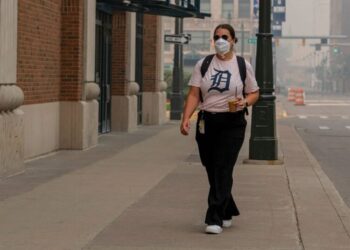
You should stay inside as much as possible, particularly if you are at higher risk of illness. If you need to go outside, wear a high-quality, tightfitting mask, like an N95. This can help filter out tiny particles from the smoke, said Laura Corlin, an associate professor of public health and community medicine at Tufts University School of Medicine.
Seal off your home.
If you’re able to stay inside, “you definitely want to try to make your indoor environment as smoke free as possible,” said Dr. Corlin. That means making sure windows are tightly shut. Run an air purifier if you have one. If you do not, turning on the air conditioning can help. But if you have a central air system that takes in air from outside, close the outside air damper, or switch the system to recirculate mode, so that you are not pulling air that is tainted with smoke into your home. While less effective than air conditioning, fans can also be useful in circulating air — turn them onto their highest setting.
Know the signs of heat-related illness.
Excessive heat could potentially worsen the effects of wildfire smoke in some high-risk individuals, and also carries its own health risks. It’s critical to stay hydrated, Dr. Corlin stressed. To cool down quickly, you can also apply some water to your wrists or the back of your neck. Watch out for signs of heat stroke, which include a body temperature of 103 degrees or higher, dizziness, headaches, nausea, confusion, fainting and red, dry or damp skin. If you or someone near you experiences those symptoms, seek medical attention immediately.
Monitor your health in the days after.
Some complications from wildfire smoke can take several days to emerge, Dr. Corlin said, including heart issues and strokes. Stay alert to possible problems for a week or so after you are exposed, paying particular attention to any symptoms like chest pain or an elevated heart rate.
The post How to Protect Yourself From Wildfire Smoke appeared first on New York Times.