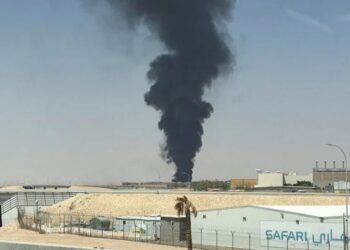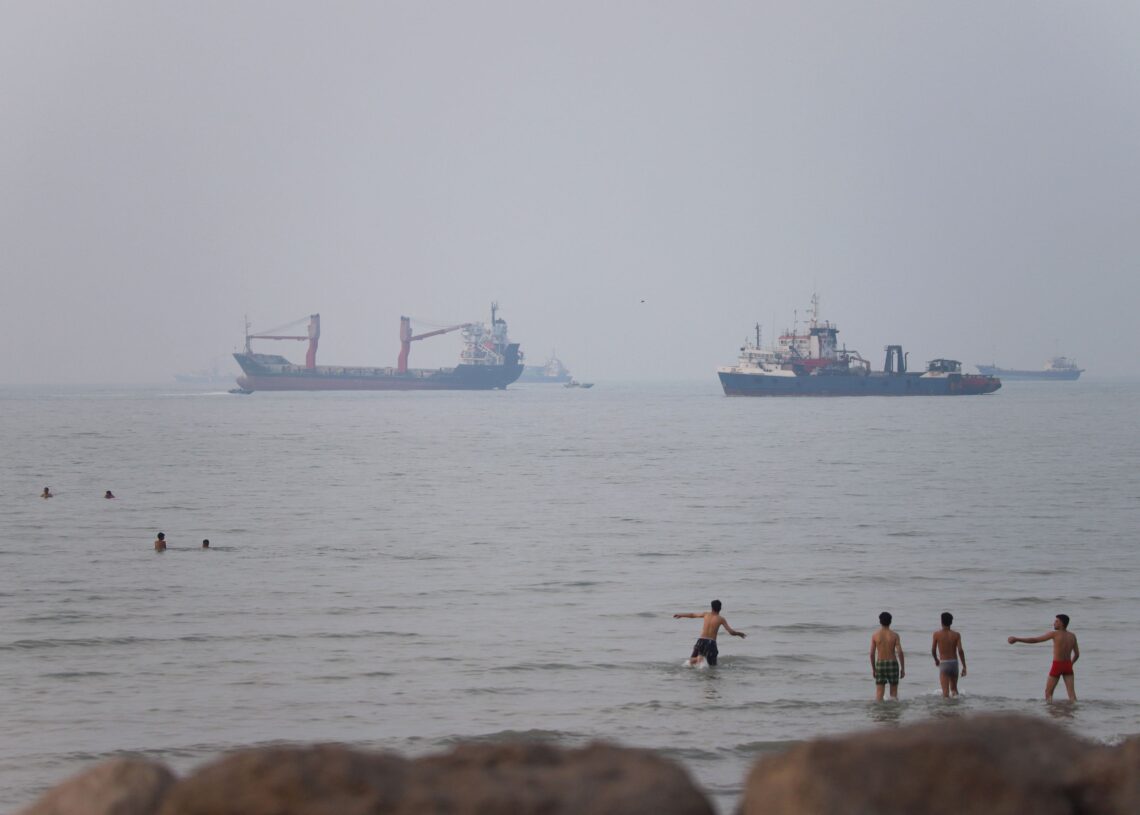
The United States and Iran traded military strikes overnight following attacks on commercial ships in the Strait of Hormuz, a fresh wave of clashes that marks the latest threat to the ceasefire agreement between the two countries signed last month.
Iran’s Islamic Revolutionary Guard Corps said it had targeted 85 U.S. military facilities including in Bahrain and Kuwait on Wednesday, according to semiofficial media outlet Fars.
In Bahrain, sirens sounded and authorities told citizens to head to a safe location. Kuwait’s military said its air defenses were facing “hostile missile and drone attacks.” The country’s Foreign Ministry condemned “Iranian aggressions” while “efforts aimed at de-escalation are underway.”
The U.S. did not immediately comment on the Iranian attacks, which came after strikes were detailed by U.S. Central Command, which oversees U.S. military operations in the Middle East. Late Tuesday, it said it had targeted more than 80 Iranian sites as “an immediate response to Iran’s latest attacks on commercial vessels transiting the Strait of Hormuz.” The vital waterway has been at the center of tensions between Washington and Tehran for months.
The U.S. strikes hit Iranian air defense systems, command-and-control networks, coastal radar sites, anti-ship missile weapons and more than 60 small boats associated with the IRGC, Iran’s paramilitary force, the U.S. statement said. The effort is meant to degrade Iran’s ability to continue attacking commercial shipping.
Both the U.S. and Iran accused each other of violating a ceasefire agreed to by U.S. and Iranian officials. Iran’s parliamentary Speaker Mohammad Bagher Ghalibaf said “the era of bullying and extortion is over,” in a post on X Tuesday. “It leads nowhere. We don’t fold,” he added.
In a previous statement, U.S. officials called the Iranian attacks on ships “unwarranted, dangerous, and a clear violation” of the ceasefire. The truce has been shaky from the start, with intermittent strikes launched by both sides.
The U.S. strikes were launched hours after the Trump administration revoked a waiver for Iranian oil sales that had been put in place as part of the 14-point agreement struck between the U.S. and Iran last month — the primary benefit to Iran of the ceasefire deal.
The reversal immediately pushed up the cost of Brent crude, the international benchmark for oil prices.
The waiver would have allowed Iran to produce, deliver and sell crude oil until Aug. 21 with the possibility to extend the agreement. Treasury allowed Iran a wind-down period of 10 days.
The agreement with Iran is “entirely performance-based” and Iran will only benefit from the agreement if “they exhibit good behavior,” a U.S. official said, adding that Iran’s actions in the strait were “unacceptable” and “will be met with consequences.
The official added that negotiators continue to work toward a final deal.
The U.S. action followed accusations from Qatari officials who said Iran had attacked a tanker ship transiting the Strait of Hormuz, and that it would hold Tehran responsible for “any resulting damages [and] consequences” from the incident.
In a Tuesday post on X, Qatari Foreign Ministry spokesperson Majed al-Ansari said the targeting of the Al-Rekayyat — a Qatari liquefied natural gas tanker — was a “grave & explicit violation” of international law.
“We demand that the Islamic Republic of Iran immediately cease all practices that undermine regional security or threaten the safety of international maritime navigation,” he wrote.
Iran has not claimed responsibility for the incident, which came as huge crowds attended a funeral procession for Iran’s slain leader, Ayatollah Ali Khamenei, who was killed in an airstrike in February. Iran’s state media reported earlier that a Qatari tanker was targeted after attempting to pass through the Omani side of the strait.
U.K. Maritime Trade Operations said in a post Monday on X that a tanker was hit by a projectile, causing a fire on board, while traveling south out of the narrow waterway off the coast of Limah in Oman. The monitoring agency, which is part of Britain’s Royal Navy, said no casualties or damage were reported and that authorities are investigating. It did not specify the name of the vessel or type of projectile that hit it.
Iran has repeatedly insisted it has the right to control the strait, and attacks on commercial ships have sparked some of the clashes between Iranian and U.S. forces in recent weeks.
Restoring the flow of traffic through the narrow strait, which once carried a fifth of the world’s oil and gas supplies, is a key element of the agreement. A 60-day negotiating period is in place to work out some of the thorniest issues in the conflict.
So far, the ceasefire deal had broadly held, with monitoring agencies reporting a tentative recovery in the number of ships traveling through the waterway. More than 200 ships passed through the strait in the week ending Sunday, according to maritime monitor Lloyd’s List Intelligence, with daily numbers higher than before the agreement was signed but still below the levels seen before the war began in late February. The UKMTO said the maritime security threat level remains “substantial.”
On Tuesday the vast funeral procession for Khamenei moved to Qom, after huge crowds filled the streets in Tehran to bid farewell to the ayatollah who ruled the country for 37 years before being killed in an airstrike on the opening day of the war.
Iranian Foreign Minister Abbas Araghchi said in a Tuesday post on X that neither Iranians who turned out to mourn nor the military are “moved by any threats.”
Lior Soroka, Suzan Haidamous and Riley Beggin contributed to this report.
The post U.S. and Iran launch fresh strikes following attacks on commercial ships appeared first on Washington Post.