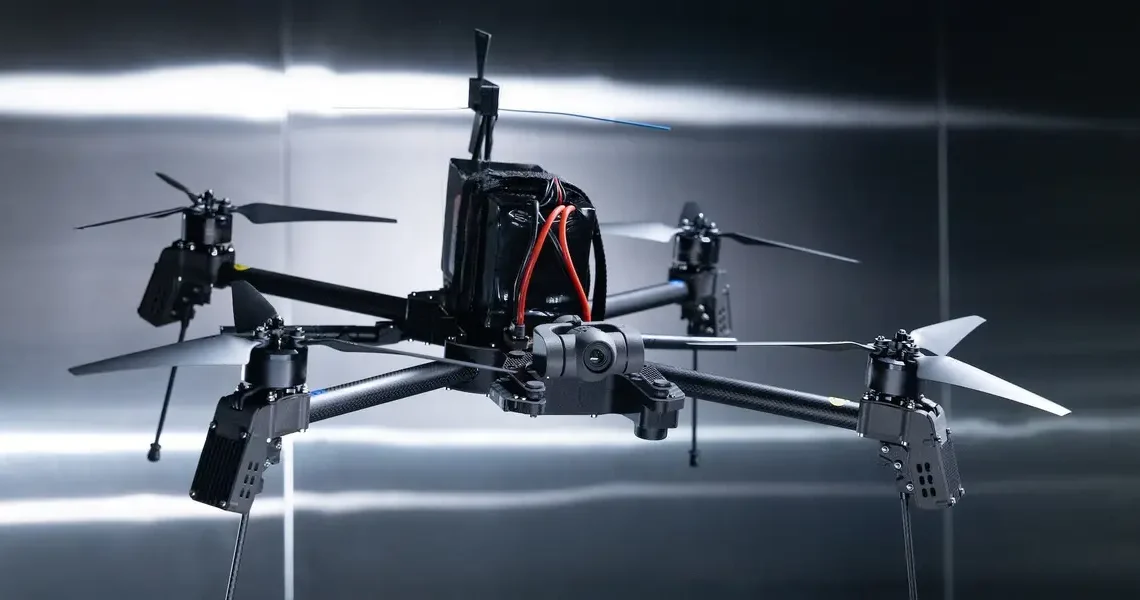
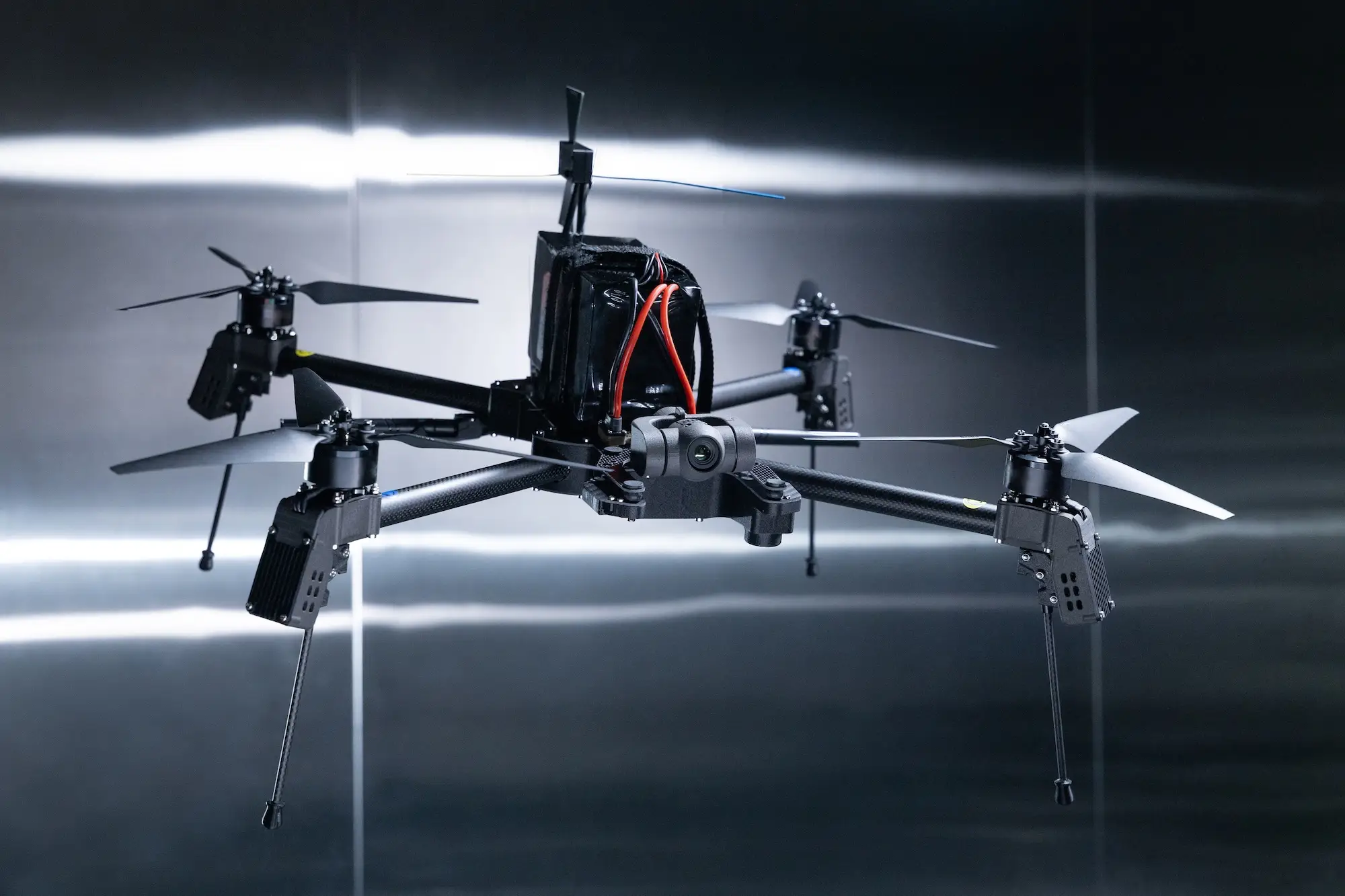
A Ukrainian drone maker said keeping up with the rapidly changing battlefield requires manual assembly for some of its work instead of relying only on big machines.
Ukraine needs large quantities of weaponry as quickly as possible, a demand that typically pushes companies toward automation. But Ukraine also needs those weapons to be up-to-date as the war changes, something that too much automation can make difficult.
Frontline Robotics, which makes drones and weaponry used by more than 60 Ukrainian units, has to make small changes to its products up to 20 times a month and make major updates around every six months to keep its edge.
Mykyta Rozhkov, the chief business development officer, told Business Insider that one of the keys to innovating at this pace is not relying too much on automated processes.
With the “amount of changes we are doing every month,” huge fixed processes don’t work. Instead, procedures need to be “lightweight, but still stable in order to sustain 20 changes per month.”
That includes some work without machines, which gives the company more built-in agility. “A big part of the assembly lines relies on manual assembly because manual assembly is the most flexible one,” Rozhkov said.
“Automation comes with the cost of freezing the product version,” he said. A fully automated production system means a company can efficiently produce large quantities, but then “what do you do if you have to change it a lot?”
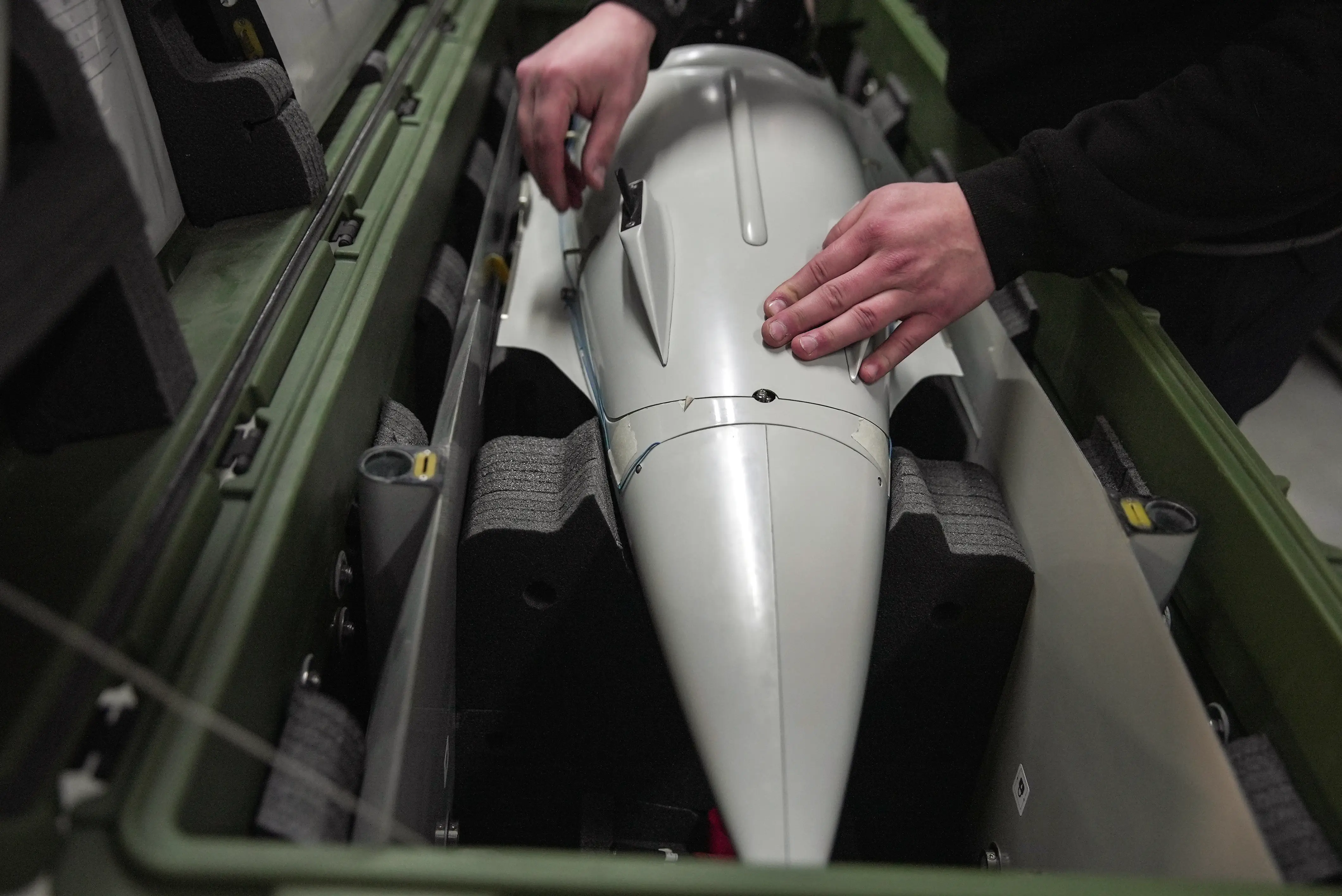
He said sustaining that rate of change is “not an easy task, to be honest,” because everything still needs to keep working at a high standard, from the supply chain to quality control.
“So it’s all constantly moving parts and holding it all together demands a new approach.”
“In our case, we found quite a good balance between automation and flexible manual assembly in order to deliver the upgraded product constantly every month,” Rozhkov said.
There’s another advantage, too. Ukraine’s arms makers work under the constant threat of attacks, and a big machine being destroyed would be devastating to production. “The big machinery, you can not rely on it if you can lose it anytime,” he said.
The battlefield in Ukraine changes so fast that soldiers and arms makers say weaponry can go out of date in weeks. Taras Berezovets, head of the military cooperation department of Ukraine’s Territorial Defense Forces, described it as a war in which “what seems to be cutting-edge technology will be completely outdated after one, maximum two, months.”
Frontline and other Ukrainian companies say that constant feedback from soldiers, including over FaceTime, helps them stay up to date.
Rozhkov said the company is in constant contact with the soldiers using its gear, such that “we don’t even have to ask them for feedback. It goes directly 24/7 into our inbox.”
The need to update products so quickly has pushed other companies working in Ukraine to find new processes too, including designing systems from the start so they can be upgraded quickly.
The rate of change on Ukraine’s battlefield is the kind of pace Western leaders worry future wars could have, and they want to learn from how quickly Ukraine is able to build and innovate.
Officials across NATO now see the speed at which they can build and buy weapons as essential, even at times over the quality of certain gear. Western militaries want masses of weaponry as quickly as possible and systems that let them upgrade those weapons more easily as conflicts develop.
Ukraine, Western leaders say, has the military and industry they need to learn speed from.
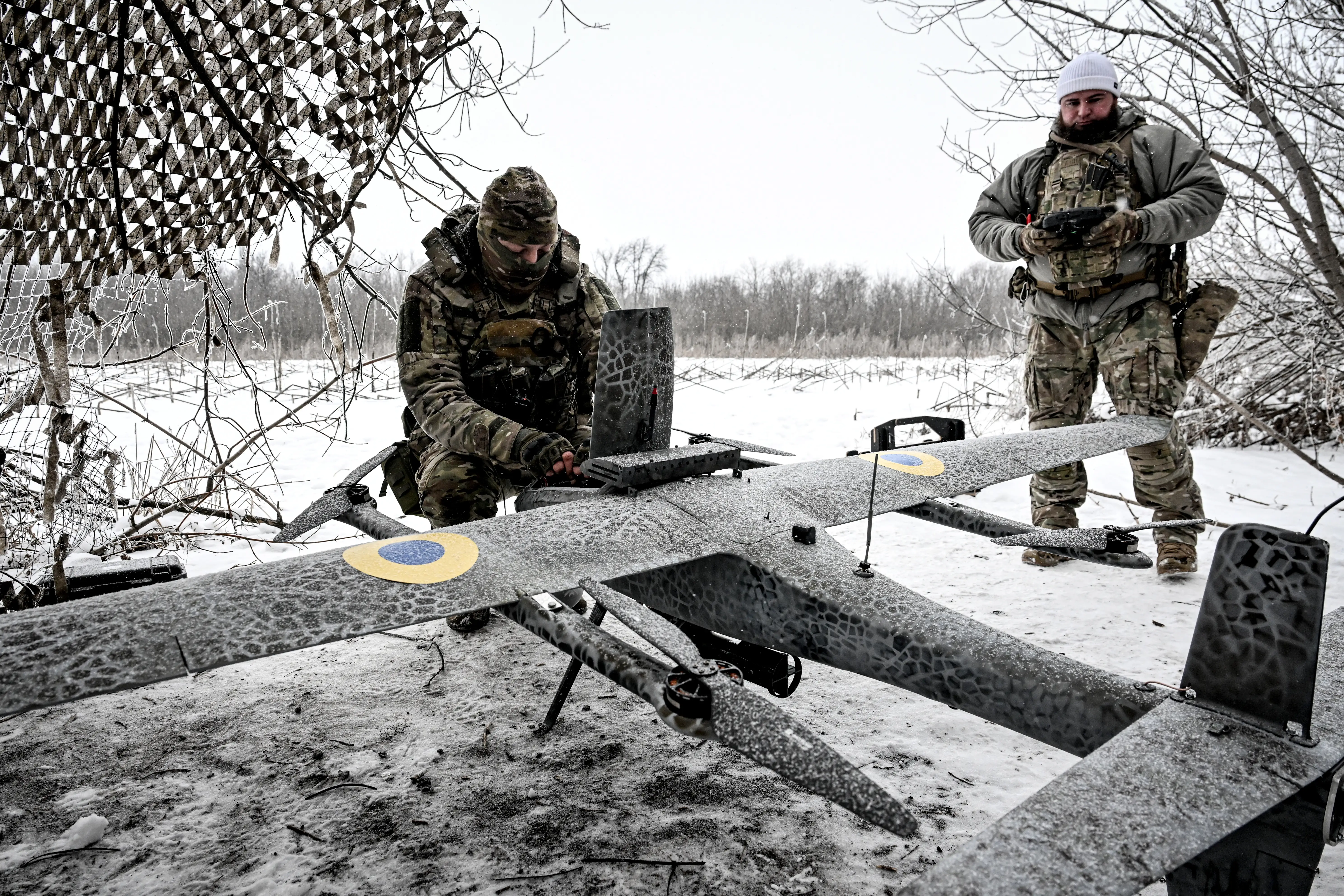
Tarja Jaakkola, NATO’s assistant secretary general for defense industry, innovation, and armaments, said recently that NATO is moving to learn as much as it can from the speed of Ukraine’s weapons development, including through Western companies working with Ukrainian counterparts. The goal is “understanding the Ukrainian industrial capacity, the technology they have, and also the innovation that is happening in Ukraine at the moment.”
“We are truly kind of thankful and grateful to Ukraine about how they also bring the knowledge they have gained during this awful war to the alliance,” she said, speaking at a drone summit in Latvia attended by Business Insider.
Sir John Stringer, NATO’s Deputy Supreme Allied Commander for Europe, said at the same event that the West needs to move much faster and get “comfortable with procurement cycles which are faster than what we have been brought up with.” Capability development needs to take place, as it does in Ukraine, “in weeks and months, not just years and decades.”
The West is now “in a race,” he said.
It means “the what, how, where, and when of production is going to change.”
Frontline still wants some automation, and wants that to work as efficiently as possible. It is now working with German unmanned aerial systems company Quantum Systems to manufacture Frontline’s Ukrainian-designed drones in Germany for Ukraine, combining Frontline’s battlefield experience with Quantum’s production expertise.
Rozhkov said that “the core idea is to make a mix of two production cultures in order to have the best out of both worlds.”
He described it as “a two-way road, to be honest. We are learning a lot from the German approaches to manufacturing,” including its expertise in automation.
He said both sides have a lot to teach each other, with Germany bringing decades of expertise and Ukraine bringing its new insight about moving quickly and at scale in wartime. “The European industrial complex industry is potent, is efficient, but with its own legacy. And in a way, in Ukraine, we have this also freedom to create it from scratch.”
Key for Frontline, he said, is “maintaining our core identity of having it as flexible as possible even in Germany.”
It’s one of many Ukrainian companies now working with Western counterparts, with both sides saying they have a lot to learn from each other, from processes to innovative technology. Other European countries, in particular, say they want their industry to learn through working directly with Ukrainian firms.
Read the original article on Business Insider
The post A Ukrainian drone maker says too much factory automation can be a weakness in a fast-changing war appeared first on Business Insider.