I grew up in the late 1900s, in a time when attitudes toward sunburns were extremely lax compared to today. Red, peeling skin was seen as a minor and temporary inconvenience and the natural outcome of an active childhood, not a reckless lifestyle choice with potentially deadly consequences.
There were little brown bottles of coconut-scented low-SPF “suntan oil” around, but no one took it very seriously. We were kings—buttered up in Hawaiian Tropic, Jams billowing in the breeze, sipping ice-cold Crystal Pepsi with candy cigarettes dangling from our lips. I’d typically burn and peel once in June, at which point my Italian blood would take over, and I would darken up for the rest of the summer. The next year, like the Beach Boys featuring John Stamos, we’d do it again.
Perhaps I’ve caved to cultural pressures, or perhaps my tolerance for mild discomfort has lessened with age, but I no longer like being sunburnt. Yet I also do not particularly like wearing sunscreen. It’s greasy, gross, and expensive. It smells medicinal. It’s always expiring. It stings your eyes when you sweat. I always miss some little spot that gets scorched to hell and bubbles up like an angry volcano.
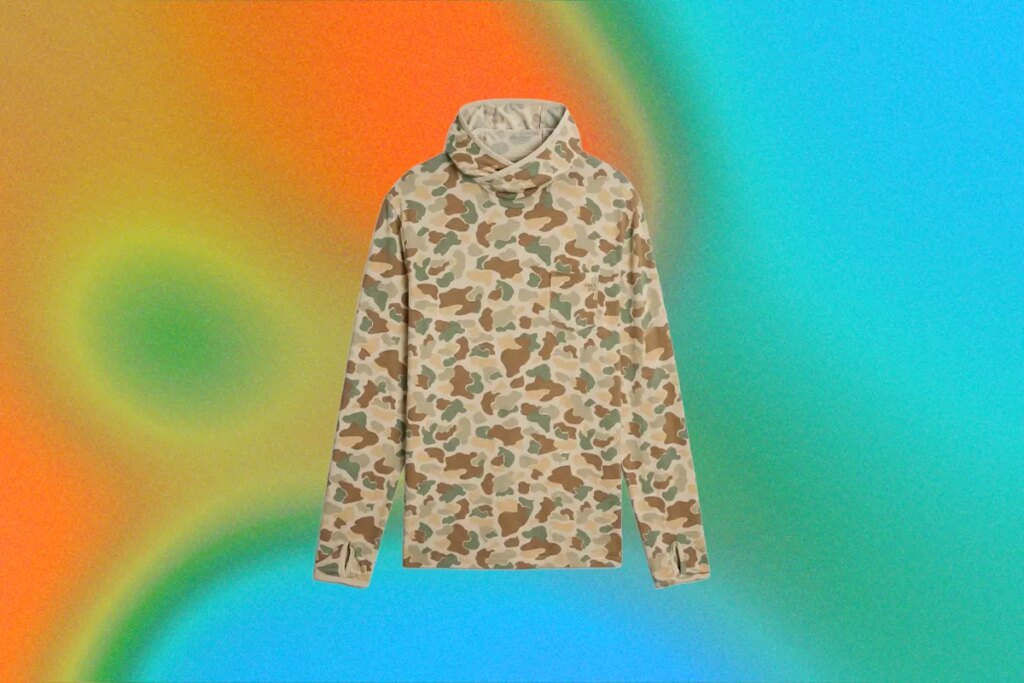
I am, therefore, very thankful for the rise of the sun hoodie. In the last few years, I’ve found myself acquiring more and more of them and wearing them on a near-daily basis in the summer months. They’ve become one of the most indispensable pieces of clothing in my closet. Do you need a sun hoodie? No, you need two or three sun hoodies.
Certified Hood Classic
You probably don’t mind slathering yourself in sunscreen before hitting the beach. Chances are, you’re not mad about applying sunscreen before lounging around the pool. Perhaps you’re even fine with rubbing on a layer two or three times at an afternoon baseball game. But what about when it comes time to do some gardening? Do you really want to spray yourself with Coppertone to pull weeds?
The sun hoodies I own and recommend below are all made from polyester and are lighter than a Pima cotton T-shirt. Yet while a typical cotton T-shirt only offers protection equivalent to SPF 5, meaning 20 percent of the sun’s UVB radiation is blocked, sun hoodies typically offer the equivalent of SPF 50, meaning 98 percent of harmful UV radiation is blocked. Some attain that result through the right weave of the right kind of polyester, others through treating the fabric with titanium dioxide. Titanium dioxide is the same compound found in many sunscreens, especially ones labeled for sensitive skin (Blue Lizard, CeraVe). The same compound can be embedded into the fibers of garments in a way that protects skin from UV radiation and resists washing out. It can be hard to get details on which brands use titanium dioxide in their shirts, but Patagonia is one brand that transparently promotes it.
Sun hoodies as they currently exist were invented in the early 2010s and first became popular through outdoor activities. Mountaineers were early adopters, as they’re pretty much indispensable for anyone who will be at high altitude on a clear day, doubly so if there’s snow around, reflecting the sun’s rays back onto your glacier glasses. I’m sure the first place I ever saw a sun hoodie was on a friend standing atop a mountain.
Because they dry fast, they’re also great for swimming. They’ve replaced traditional rash guards for a lot of people. I wear mine to the beach and into the pool. When I go on vacation, I take three or four sun hoodies with me and often end up doing laundry in town when I no longer have any sun hoodies that aren’t salty from sweat and/or the waves of the ocean in Maine.
On a hot, sunny day, they’re also often cooler than bare skin. Yes, long-sleeve sun hoodies do bundle you up, but because the fabric is so light and breathable—and I wear mine just a little baggy—they block sunlight and shed heat so well that I find them more comfortable than any other clothing or no clothing.
What to Wear
Here are four favorites from my sun hoodie collection—I have a few more that I wouldn’t recommend or that are now past season and out of production.
Heavy Rotation: The sun hoodie I wear the most is the EMS Sunguard Overhead Hoodie. It’s very soft and comfortable with a generous cut that wicks sweat away. I wear it in the city pool, and after a few minutes sitting back on the lounge chair, it’s dry enough to wear into a grocery store without it dripping everywhere.
Heavy Duty: The heaviest sun hoodie I have, and the one I’d wear up a mountain, is The North Face Summit Series Direct Sun Hoodie. This is a slightly thicker hoodie, though it’s still light and very breathable. Because it has a zipper, you can also get more ventilation if you need it, so the weight is never an issue. When zipped all the way up, the shirt also has a collar to protect your neck and jaw from wind or sun. There is a proprietary finish applied to the fabric of The North Face’s SPF-rated clothing, which varies by garment.
More Discreet: “Day-to-night” garments that transition seamlessly from the office to a casual dinner and a night out are something of a cliche in women’s fashion. But sometimes you really do want something that can pull double duty. When I’m going to be wearing a sun hoodie into a bar or restaurant, I reach for the Blackstrap Brackish Sun Hoodie, which looks more like a regular shirt than any other arrow in my quiver. I have it in the shark tooth jory, a red and black pattern that looks like something I’d wear even if I was not trying to keep the sun off my back. I also really like that it’s safe to wipe lenses off on—I’ve scratched up too many pairs of eyeglasses and am extremely careful about what I’ll wipe them with.
Totally Natural: I tested an earlier version of the Free Fly Bamboo Lightweight Performance Hoodie and really like it. Bamboo is supersoft and is naturally odor-resistant, though less than wool. This hoodie wears a little on the warmer side and only offers SPF 20 protection, but it dries relatively quickly, and the loose cut is excellent.
And What About Your Legs?
Hoodies with shorts are a little controversial in some quarters, but I am happy that our colleagues at GQ have blessed the look—repeatedly. The single best way to wear a sun hoodie is with swim trunks. You may think swim trunks are just for the pool or the beach, but I would submit that they have the potential to become the male equivalent of yoga pants, which you can wear everywhere in the summer (again, GQ agrees). Luckily, I’ve also been testing some of those.
Eye-Catching: These Minnow Boardies in a red-and-white striped pattern called Gondola have a Venetian flair. They’re on the short side (6-inch inseam) but are stretchy and soft. They’re advertised as comfortable enough for all-day wear, and I can confirm they are—into the pool, out of the pool, off to happy hour. They are showstoppers, but you’ll need a dark and neutral-colored sun hoodie to pair with them.
More subtle: The Performance Lined Swim Trunks from Huckberry’s house brand Proof are everything you want in a hyper-functional swim short you can wear into and out of the pool. They’re made with the type of extremely flexible four-way stretch fabric you find on backcountry ski pants, but have a supersoft liner. There’s a mesh pocket you can tuck a phone in, and hidden zippered compartments so you don’t have to worry about losing keys or cards when you’re moving around. These are swim trunks you can live in all summer, along with one of your three to seven sun hoodies.
The post Why Wear Anything Other Than a Sun Hoodie This Summer? Our Picks for the Best appeared first on Wired.