The morning after the devastating earthquake in Venezuela, Jesús Pacheco began seeing videos of collapsed buildings and pleas on social media for motorcyclists to help.
The roads into the hardest-hit areas were clogged, but motorcycles could reach places larger vehicles could not. So Mr. Pacheco, a 26-year-old electronics student, loaded a box of medical supplies onto his bike and set off on the five-hour ride from his city, Barquisimeto, to the capital, Caracas.
He stopped along the way to help unload a humanitarian aid truck that had broken down before moving on to the devastated coastal state of La Guaira.
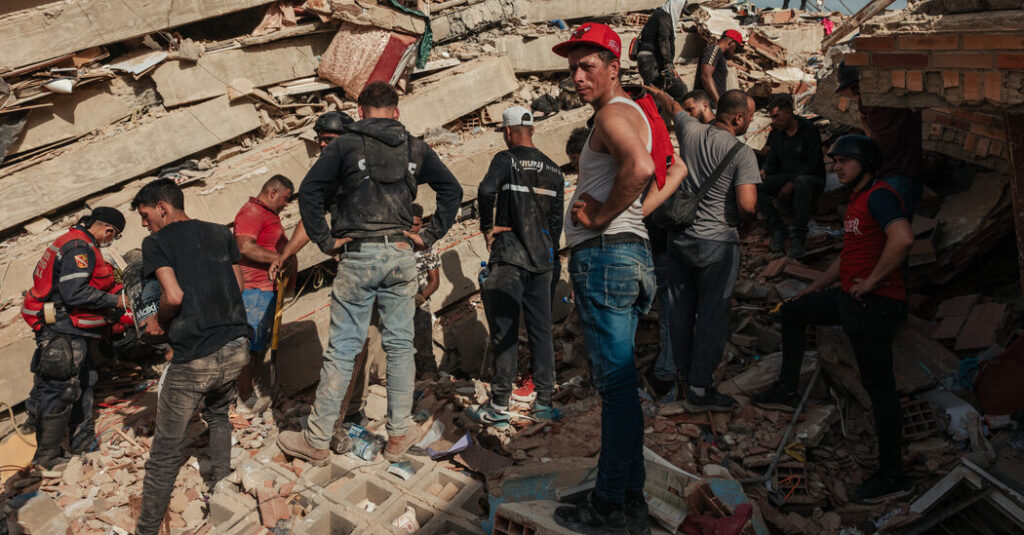
Mr. Pacheco was one of thousands of Venezuelans who rushed toward the destruction. Neighbors dug through rubble with shovels and their bare hands. Churches became donation centers. Volunteers loaded trucks with food, water and medicine.
“I thought, classes have been suspended, I don’t have anything to do right now. What can I do? Should I go? Should I take the risk?” Mr. Pacheco said. “I decided yes. I wanted to join the effort and contribute my little grain of sand, even if all I could do was deliver one small box.”
“My little grain of sand,” a common Spanish expression for a small contribution to a larger effort, has come up again and again in conversations with volunteers.
For many Venezuelans, the outpouring reflected something deeper than a spontaneous disaster response: a longstanding culture of solidarity that has helped fill gaps left by years of economic crises and weakened public institutions.
By midnight, Mr. Pacheco said, volunteers were still clearing rubble while others distributed food to rescuers. Convoys of trucks carrying water, medicine and clothing streamed toward the disaster zone.
Volunteering has long played an outsize role in Venezuela, said Josué Araque, a geographer at the University of the Andes who studies disaster risk.
“In our case, volunteering is something to be written in capital letters,” he said. “It’s truly, in its very essence, about giving everything we have with the sole premise of helping and contributing a grain of sand to help society.”
Mr. Araque said years of economic decline had weakened emergency response institutions through chronic shortages, the decrease in trained personnel and low salaries that force many public employees to work second jobs. Even so, he said, many continue to work as emergency responders out of commitment rather than compensation, often relying on their own equipment to do their duties.
“The staff at these institutions truly remain there out of pure dedication,” he said. “In Christian terms, you could almost call it a ministry, because, in terms of wages and salaries, there is no real compensation.”
Disaster tolls depend not only on government capacity but also on community resilience, said Daniel Aldrich, who studies disaster resilience at Northeastern University. In places where neighbors trust one another, he said, people are more likely to rescue victims, share resources and care for the injured before professional responders arrive.
“Most people aren’t saved by uniformed responders,” he said. “Most people are saved by neighbors who know where they slept in the rubble.”
In an interview, the highest-ranking U.N. official based in Venezuela, Gianluca Rampolla, praised the civilian response.
“That is Venezuela for you” he said. “Ultimately, the impact for the survivors is going to be mitigated by the solidarity and the sense of community.”
Still, volunteers cannot replace the state, said Janeth Márquez, director of Cáritas Venezuela, a Catholic aid organization that has been providing food, water, health care and shelter alongside other aid groups.
“The whole issue of rubble, rescue and victims in the initial moments falls on the state,” she said. Volunteer organizations “don’t have heavy machinery, they don’t have the technical support.”
The highway to La Guaira was congested on Friday with cars and motorcycles, carrying shovels, water and food. Some even expressed concerns that the traffic jam could slow access for trained rescue workers.
Natasha Villa, a communications and marketing professional in Caracas, said what began in the aftermath of the quakes as six friends cooking meals with their own money quickly transformed. She and her friends now run a volunteer relief hub that has raised about $40,000 from Venezuelans at home and abroad.
“After everything we’ve endured for so many years, it’s almost impossible not to contribute,” she said. “That’s simply part of our culture. It’s who we are.”
María Victoria Fermín and Tibisay Romero contributed reporting from Caracas. Julie Turkewitz contributed reporting from Bogotá.
The post In Venezuela’s Ruins, Civilians Fill the Gaps One ‘Grain of Sand’ at a Time appeared first on New York Times.