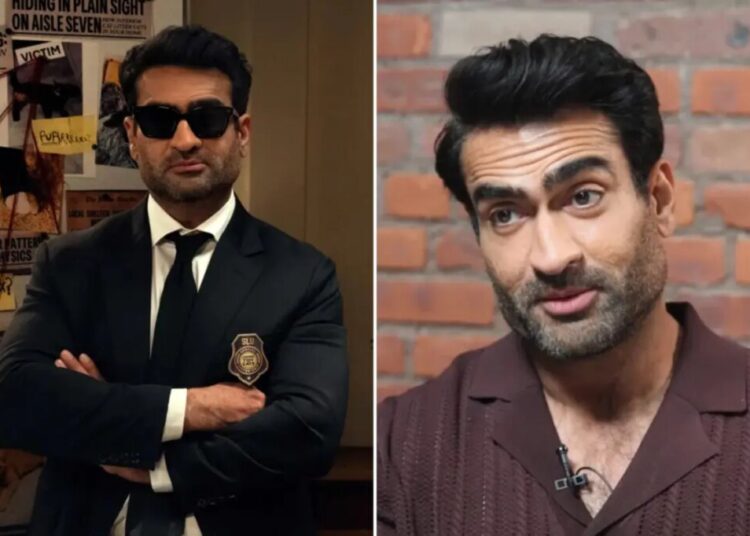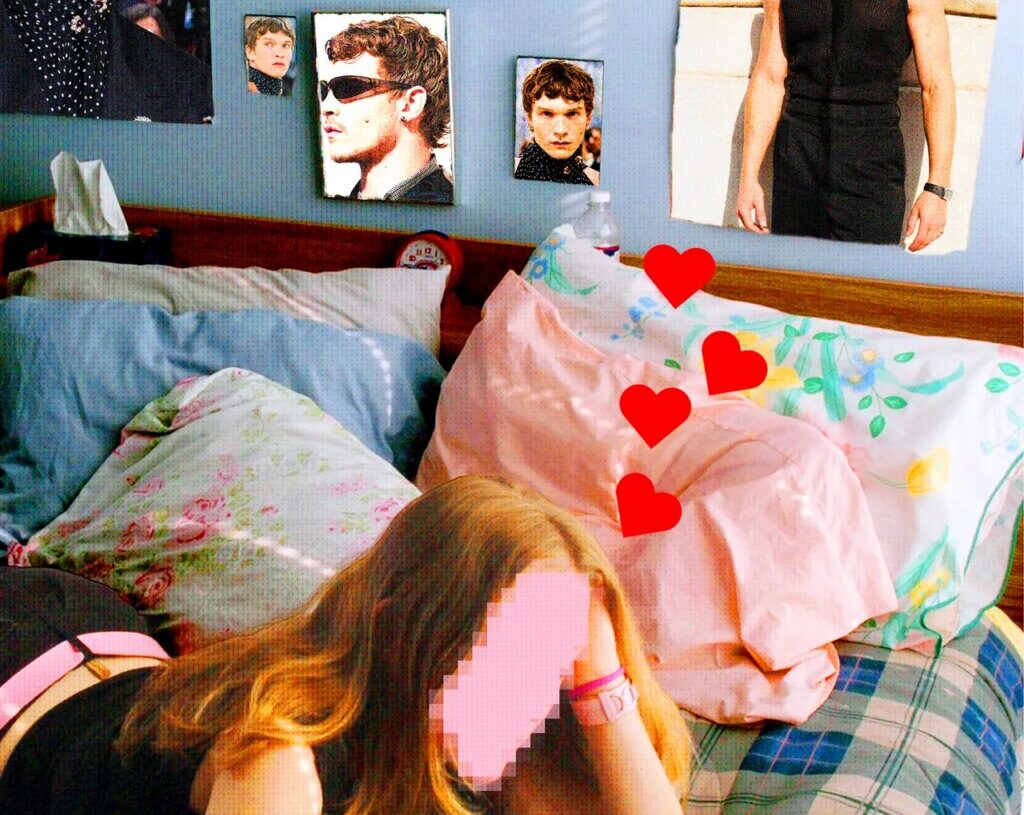
Earlier this week, a seismic shift occurred within the Heated Rivalry fandom involving the polarizing stan behind Club Chalamet.
It all started when X account “Fan Account Storrie Glorrie”—aka Simone Cromer, previously known as the creator of Timothée Chalamet fan account Club Chalamet—was in Paris for Fashion Week. As she recounted in her thread, she was waiting outside Hotel Meurice in sun-protective clothing and a mask to see one of the show’s lead actors, Connor Storrie. According to a post on X, Cromer was physically and verbally attacked by a fellow fan while waiting for Storrie, with the person allegedly calling her a “bitch” and a “stalker.”
The fan involved in the scuffle, identified as @mikadontyoudare, responded to Cromer’s tweet, writing, “hi babe  just stopped you from running towards connor and assaulting him, security can back me up, so can many fans.” What followed was a back-and-forth between two people waiting for hours outside a hotel, hoping to catch a glimpse of a famous actor they do not know personally, essentially accusing each other of being obsessive stalkers.
The incident garnered widespread press coverage, as well as mockery: “Club chalamet gets assaulted in SPF protective clothing by fellow stalker of actor who has been famous for seven months i can never willfully leave this platform,” one person wrote in a viral tweet.
Few, however, considered the plight of Storrie, who has been the subject of intense fan scrutiny for months—nor, for that matter, did anyone consider the plight of his poor publicist, who has to deal with the aftermath. (Storrie’s team did not respond to a request for comment.)
“You never want to see that happen in a fandom,” Olivia Shalhoup, the founder and CEO of the PR firm Amethyst Collab, tells WIRED. “It’s not a story I would want told in conjunction with my client.” Neither Cromer nor the other fan involved in the altercation responded to requests for comment.
The rumble outside Hotel Meurice, as well as the ongoing turmoil created by the intense Heated Rivalry fandom, raises the question: as fans become both more integral to a celebrity’s success, while simultaneously having more access to them, how does the rise of the parasocial relationship affect the work of a publicist? Do celebrities actually have any responsibility toward their fandoms—and for that matter, is it a star’s management team or their fans who control their narrative?
Since the days of teenage girls shrieking for the Beatles at Shea Stadium, impassioned fans have been integral to show business. But the internet has imbued them with a great deal more power. For celebrities, a large, devoted fan base is a double-edged sword: It’s a source of their income, but it also can be a huge pain in the ass for them and their teams.
In some respects, online fandoms have been a boon for PR as a whole. Many fans have much larger platforms than traditional journalists or media outlets, and their coverage is almost uniformly bound to be positive. With this in mind, publicists will often reach out to large fan accounts with exclusive offers to post a snippet from an artist’s upcoming music video, or invite them to a curated event in honor of the talent.
“In my experience fan pages will eclipse traditional press in huge numbers,” says Shalhoup. “Fans are essentially doing a large-scale marketing operation for you a lot of the time, and we want to be rewarding those who are doing that work.”
Celebrities, however, are constantly walking a tightrope between rewarding their fans with increased access, and providing too much of it. “There’s always this balance you’re dealing with, because you don’t want to alienate your fans and you can’t get the reputation of somebody being mean or shitty to them,” says Dawn Kamerling, the owner of PR agency the Press House. “But at the same time, the fans are rabid. So you need to set a boundary.”
Multiple publicists I speak with point to Chappell Roan as an example of someone who did a poor job walking this tightrope. Roan famously got flak when she released a statement in 2024 saying her fans made her feel “loved,” but “unsafe.” She received even more negative attention from her fandom in early 2026, when Brazilian footballer Jorginho publicly accused Roan’s security guard of being rude to his 11-year-old daughter at a São Paulo hotel. Roan publicly apologized to the fan and Jorginho later issued a statement saying she had nothing to do with the incident—the guard was working for a different artist. But the narrative that she was ungrateful to her fans had already been seeded.
“You never want it to get to that point,” says Kamerling. “That was a three-day news story, but in PR Land, that’s like three fucking years.” Roan’s team did not respond to a request for comment.
Social media has made it easier for fans to connect directly with their favorite celebrities, but it has also made it easier for them to track their IRL locations, creating a major safety risk. “We’ve almost started acting like security, which can be a little bit scary,” says Shalhoup. She says she once had to call an artist and beg her to take down a post because it accidentally revealed what NYC street corner she was standing on. “We have to be involved with absolutely everything they post.”
When Kamerling was managing the TikTok collab house Sway House in Los Angeles, including the influencers Josh Richards and Bryce Hall, she said it was not uncommon for them to post a TikTok in a public location and have fans show up there within minutes. “There’d just be hundreds of kids showing up being like, ‘Oh my God, so-and-so’s on the corner of Sunset,” she says. “It was amazing to watch.”
Social media has also turned public relations into a 24/7 job. All of the publicists I spoke to said they assiduously monitor what fans are saying about their clients. “You’re constantly looking at TikToks, subreddit comments, Instagram comments,” says Eddie Tabakman, a comms specialist who runs the social media brand Eddie the Media Trainer.
Having a highly engaged fandom, however, can rapidly turn into a PR nightmare if they decide to turn on you. Ashley Stoney, the vice president of public relations at the Curley Company, says her team was once working with a healthy food influencer who partnered with an applesauce product. Her fans swarmed the comments section, outraged that she would collaborate with a product they perceived to be unhealthy and a deviation from her brand.
Her team was shocked, but “we had to take what the fans said into account and be nimble,” she says. They reposted with another recipe that featured the product less prominently, appeasing the influencer’s followers.
There’s also the possibility that the fandom itself will turn ugly, playing host to bullying or harassment. Most publicists tell WIRED that celebrities should not issue comments on such behavior unless it rises to a certain threshold, such as if someone is threatening violence. But there are exceptions to this rule, such as if fans are using racist or harassing language, says Shalhoup. “I do think we as publicists have the responsibility to advise our clients when they should make a statement. You can’t control what your fans say, but you can always control what you say.”
In the case of the Heated Rivalry fandom, which has been besieged with toxic behavior as fans have divided into factions, stars François Arnaud and Hudson Williams posted a statement on their Instagram stories last March denouncing it: “Don’t call yourself a fan if you share racist/ homophobic/ biphobic/ misogynistic/ ageist/ ableist/ parasocial/ bigoted comments of any kind,” the statement said. “None of us need your hateful ‘love.’”
Storrie has not said anything publicly about the alleged violent altercation involving Club Chalamet. “There’s no benefit” to him commenting, says Tabakman. “It just associates you with people who are behaving badly.”
But the overall takeaway seems clear: “fandom’s great and it’s a huge asset, but if you don’t manage it accordingly, it can end up hurting you,” says Takabman. “The smartest thing you can do is prepare for that.”
The post Hollywood Thrives on ‘Rabid’ Fans. For Publicists, They’re a Nightmare appeared first on Wired.