Chief financial officers (CFOs) across U.S. companies said they’ve been able to navigate the challenges of increased energy costs as a result of the closure of the Strait of Hormuz, but that’s done little to assuage their anxieties around future inflation, according to new Fed data.
A survey published on Wednesday by the Federal Reserve Banks of Richmond and Atlanta and Duke University’s Fuqua School of Business surveying 530 financial executives found a growing disparity between CFOs’ trust in their own companies versus the economy more broadly as the war in Iran ostensibly concludes. Executives reported being able to absorb increased costs, but feel more pessimistic about rising prices more broadly. While two-thirds of companies saw increased production costs last quarter as a result of energy price shocks, only one-third passed those increases to consumers. However, inflation was a growing worry, with 25% of firms naming it as their most pressing concern in second-quarter 2026, up from 9.5% last quarter. CFOs slashed U.S. economic growth projections from 2.1% last quarter to 1.8% this quarter.
The pattern of a widening gap between one’s personal financial health and the broader economic health extends beyond the C-suite. The Federal Reserve’s annual Survey of Household Economics and Decisionmaking released last month found Americans’ overall financial wellbeing has held steady for years, with 73% of survey respondents saying they were doing OK or lived comfortably in 2025, compared to 75% in 2024. However, only 25% saw the national economy as “good” or “excellent,” mirroring 2024’s 28%, but falling far below the pre-pandemic 49%.
But with energy costs likely to persist above prewar norms, Atlanta Fed economist Brent Meyer suggested companies’ concerns about the economy may catch up to their own bottom lines. He noted that while pass-through rates have remained low now, if oil prices continue to rise or remain elevated, pass-through would skyrocket to about 90%.
“This suggests that in an environment of sustained higher cost pressures, firms may be unwilling or unable to absorb any more costs,” he said in a statement.
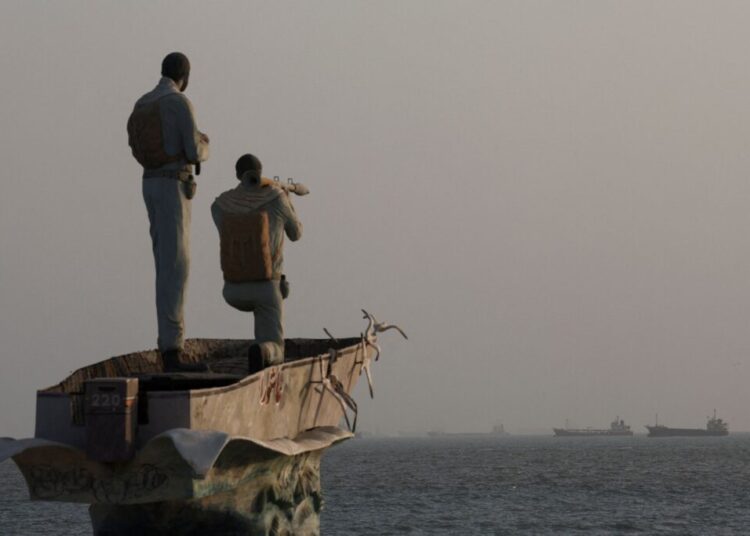
Though the U.S. and Iran signed a long-awaited “memorandum of understanding” earlier this month that set the state for a final settlement of the war, significant question marks loom about the aftershocks of this conflict, should it indeed come to an end. The Strait of Hormuz, through which 20% of the world’s oil previously was traded, was technically reopened following the interim deal, but the main central route of the trade corridor remains mined and closed, and traffic remains significantly below pre-war levels. According to data from shipping analytics company Kpler, 35 ships traveled through the strait last Saturday, compared to the 100 to 10 vessels in late February.
Inflation concerns continue to rise
While oil prices have dropped to around $74 a barrel—far below the peak of around $115 a barrel in April—experts warn prices will continue to be elevated above pre-war levels as a result of complications surrounding the Strait of Hormuz and previous patterns of energy costs, which follow the “rocket and feathers” effect of rising quickly, but falling slowly.
Restricted oil supply has depleted strategic oil reserves to the lowest levels in decades, and the Strait of Hormuz will likely take months to return to prewar traffic as a result of mine-clearing efforts, increase congestion, as well as oil and natural gas flows that altered over the source of the conflict as countries adapted their supply chains to the strait’s closure. The U.S. Energy Information Administration projects oil prices to level off at their still-elevated levels rather than fall to prewar norms.
These increased energy costs spell bad news for Fed economists and new Fed Chairman Kevin Warsh, who has taken a hawkish stance and vowed to target inflation, which has remained above 4%, compared to the Fed’s 2% target.
Austan Goolsbee, president of the Federal Reserve Bank of Chicago, told Marketplace this week that the U.S. has slipped backwards recently in its fight against inflation as a result of tariffs and energy shocks. While a more permanent deal with Iran would be a step in the right direction to combat rising prices, the U.S. still has to contend with rising labor costs, as well as transportation and healthcare costs keeping inflation high.
“We’ve been dealing with an inflation problem that’s well above the target and has been going the wrong way,” he said. “There are some signs, like the fact that some of the inflation came from tariffs, and that’s supposed to be one and done, that we could get some resolution in the Middle East, and maybe that inflation would go away. Those parts are good. The fact that we’ve seen it in services, which historically is pretty persistent, is a little more disturbing.”
The post U.S. companies swallowed the oil shock. They’re not sure they can do it again appeared first on Fortune.