Misty Eleryan is a dermatologist and Mohs surgeon in the Los Angeles area. Adam Friedman is the chair of dermatology at George Washington University School of Medicine and Health Sciences.
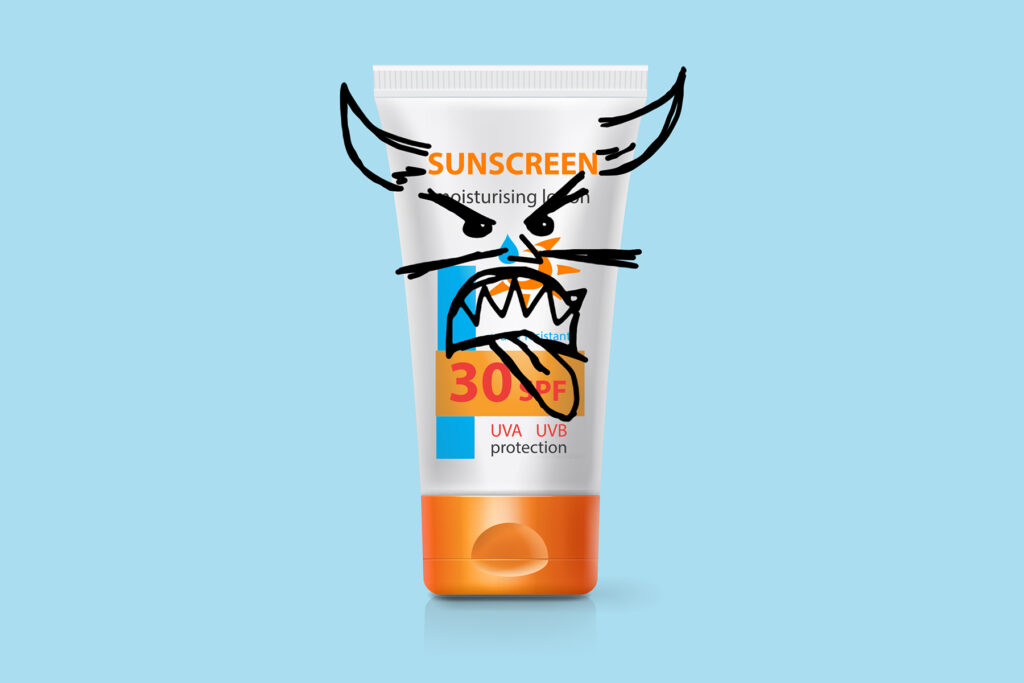
Every year at the start of summer, a familiar cycle repeats. The nonprofit Environmental Working Group releases its annual sunscreen guide, reigniting fears surrounding sunscreen safety. The guide’s message is predictable: Few sunscreens are both safe and effective. Consumers should beware.
This year’s coverage, including reporting last month by CNN, continues a troubling trend in health journalism: conflating theoretical concerns with demonstrated clinical harm, while minimizing the well-established dangers of ultraviolet radiation. That imbalance is increasingly shaping patient behavior in ways that concern us as dermatologists.
Skin cancer is the most common cancer in the United States. Daily broad-spectrum sun protection — including sunscreen, shade and protective clothing — is among the most evidence-based of preventive measures. Yet only a minority of U.S. adults report consistent sunscreen use. Messaging that undermines trust in sunscreen will not help.
We are already seeing the downstream effects in the clinic. More patients are pushing back against sunscreen use, because they have been led to believe it’s toxic. Some are abandoning sunscreen and turning instead to alternatives promoted on social media, such as beef tallow or coconut oil. At the same time, melanoma incidence continues to rise, particularly among younger populations.
To be clear, not all criticism put forth by the Environmental Working Group is without merit. The group rightly raises questions about modernizing regulations and allowing for sunscreen innovation. But the problem with the guide is how it frames risk. It presents uncertainty as danger and theoretical hazards as established harm, when they are not the same.
For example, the guide continues to emphasize how certain organic UV filters can absorb through the skin. It is true that scientists can detect such ingredients in a person’s blood after application. But detection alone does not establish biological harm. Modern analytic methods can detect substances at extremely low concentrations — often far below thresholds that have any clinical significance. Even the Food and Drug Administration studies so frequently cited in discussions of sunscreen safety state that absorption alone does not mean a product is unsafe, a distinction often lost in media coverage.
Similarly, the Environmental Working Group presents its sunscreen rankings as if they reflect widely accepted scientific standards. In reality, the rankings are based on a scoring system that has not been approved or adopted by major dermatologic, oncological or regulatory organizations.
Meanwhile, the dangers of UV radiation are neither theoretical nor uncertain. UV exposure is a known carcinogen, with decades of clinical and epidemiological data linking it to melanoma and nonmelanoma skin cancers, as well as skin issues such as dyspigmentation and premature aging.
In its claims about sunscreen effectiveness, too, the group ignores important information. The group has criticized higher SPF (or sun protection factor) formulations as misleading, noting that, under laboratory conditions, SPF 100 does not provide twice the protection of SPF 50. While technically correct, the lab does not reflect real-world use. Most patients apply far less sunscreen than recommended, miss areas and fail to reapply. Higher-SPF products can provide a meaningful margin of error, helping to compensate for under-application and imperfect use.
It is true that the United States has lagged in approving newer UV filters, thanks to long-standing regulatory constraints. This concern has been raised by dermatologists and researchers for years. But outdated does not mean ineffective. Existing sunscreens remain safe, effective and essential tools for reducing UV-related harm. When health journalists or nonprofits present precautionary messaging without appropriate context, advice can cross into alarmism, undermining public trust in interventions that are known to save lives.
The best sunscreen is not the one the Environmental Working Group deems perfect. It is the one people use consistently as part of a broader photoprotection strategy. Applying SPF, along with wearing sun-protective clothing and seeking shade, remains foundational to reducing the chances of skin cancer. That message may sound less dramatic than recent headlines, but it is far more aligned with the evidence.
Organizations such as the Environmental Working Group and major media outlets have significant influence over how the public understands risk. With that influence comes responsibility. Reporting on evolving science should include appropriate context, balanced risk-framing and input from clinicians who manage skin cancer on a daily basis.
Fearmongering headlines may generate attention. But when reporting on sunscreen’s safety and effectiveness discourages its use without adequately conveying the risks of UV exposure, those news stories contribute to a preventable public health problem — the rise in skin cancer. The public deserves evidence-based writing grounded in science rather than sensationalism.
The post We’re dermatologists. Sunscreen isn’t the problem. appeared first on Washington Post.