Quentin Letts is the parliamentary sketch writer of London’s Daily Mail.
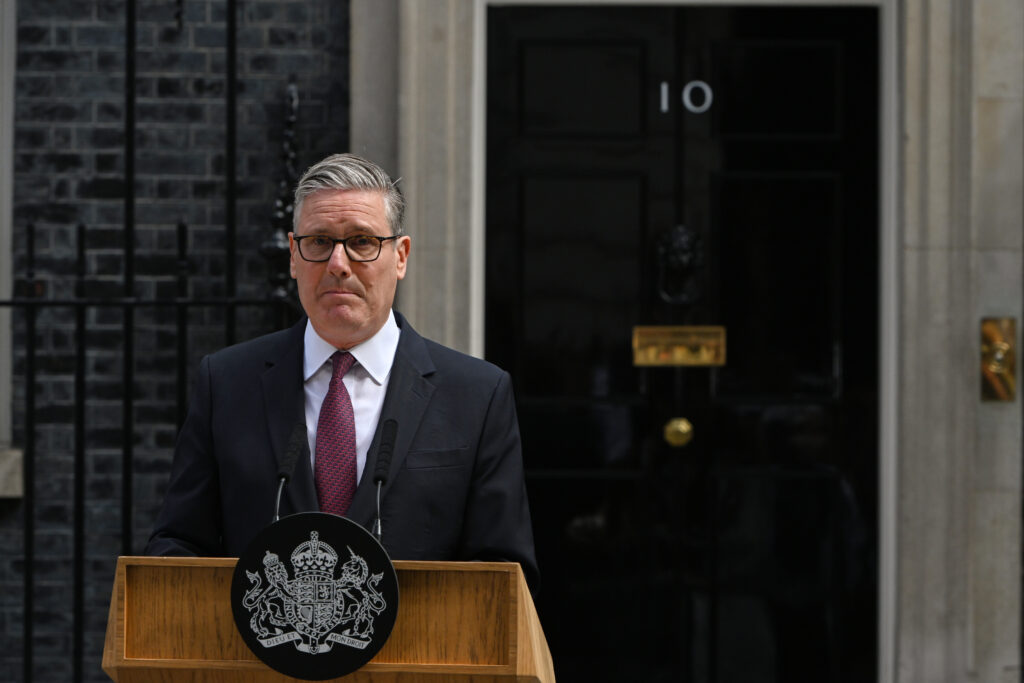
Britain’s prime minister has resigned to a chorus of indifference. Sir Keir Starmer made a tearful speech Monday standing in front of 10 Downing Street’s black front door, the now customary scaffold for London’s dizzying number of ex-premiers. Downing Street stands little more than 100 yards from the spot where King Charles I was executed in 1649.
Where did it all go wrong for socialist Starmer? Less than two years ago he led the Labour Party to a landslide general election victory. He used to speak of leading his government for a decade. Another claim was that Labour would put “country first, party second” and that the instability of the Conservatives, who chewed through five prime ministers in 14 years, was ending. Yet now Labour has bitten off its own head, and Westminster is again a hot pot of simmering uncertainty.
Starmer was undone by economic stagnation, underspending on defense, overspending on welfare and the appointment to the Washington ambassadorship of Peter Mandelson, who turned out to have been rather too close a friend of Jeffrey Epstein. All this, combined with Starmer’s lack of sparkle, contributed to terrible ratings for the 63-year-old former chief prosecutor. With one opinion poll finding that 79 percent of the population was dissatisfied with him, he was said to be the most unpopular prime minister ever — more unpopular, even, than the Conservatives’ Liz Truss, who lasted 49 tumultuous days in 2022.
Elections in early May for the Scottish and Welsh parliaments and for some councils in England went horribly for Labour. The party was particularly alarmed by how many seats it lost to Nigel Farage’s populist Reform UK party, which with its anti-immigration, antiestablishment message was winning blue-collar voters Labour once regarded as its own. Labour members of Parliament who campaigned in those elections came back to Westminster struck by a message they repeatedly heard on the doorsteps: “We can’t stand Starmer.”
This led them to wonder who could replace him. For a while there seemed no obvious answer, for Labour was not over-endowed with talent and the one person they wanted — Manchester’s Labour mayor, Andy Burnham — was not a member of the House of Commons, as a prime minister needs to be. Then came the daring gambit: A junior member of Parliament in the traditional Labour seat of Makerfield, near Manchester, sacrificed his seat to give Burnham an opportunity. The 56-year-old Burnham, who had been prevented by Starmer from standing in an earlier special election, jumped at it. This time Labour’s national executive committee did not block him. It, too, saw that Starmer needed catapulting out of office.
Burnham won the Makerfield special election on Thursday, easily beating Farage’s party. That came a week after the dramatic resignation of the serious, unshowy Defense Secretary John Healey, in protest at Starmer’s dithering over the defense budget. Healey’s resignation letter noted that Starmer was “unable,” and his treasury “unwilling,” to defend the country. For any prime minister, that is a deadly charge.
Starmer quit before he had to face Burnham in a Labour leadership election. Starmer told the nation that he expected the leadership election to be completed — and for his own tenure in office thus to end — by the end of August. That timetable has since been shortened by an announcement from the former health secretary, Wes Streeting, that he has abandoned his intentions to run for leader. Burnham may have a clear run, and therefore could be in No. 10 by the second week of July.
Of the likely new prime minister’s intentions we know so little that even Mrs. Bennet in “Pride and Prejudice” might hesitate to consider him suitable for one of her daughters. Burnham, darkly handsome and amiably blokeish, was a minor but steady figure in the governments of Tony Blair and Gordon Brown in the Noughties. Will he cut welfare, rein in Net Zero climate commitments and increase defense spending? No one knows. The British electorate might like such policies, but the Labour Party is well to the left of the voters.
Such matters need no longer worry poor Sir Keir. He took his leave by saying he was leaving “the biggest job in the country” to “spend more time on the most important job” of being a good husband and father. It was a modern take on Charles I’s last words: “I go from a corruptible to an incorruptible Crown.”
The post The indifferent fall of Keir Starmer appeared first on Washington Post.