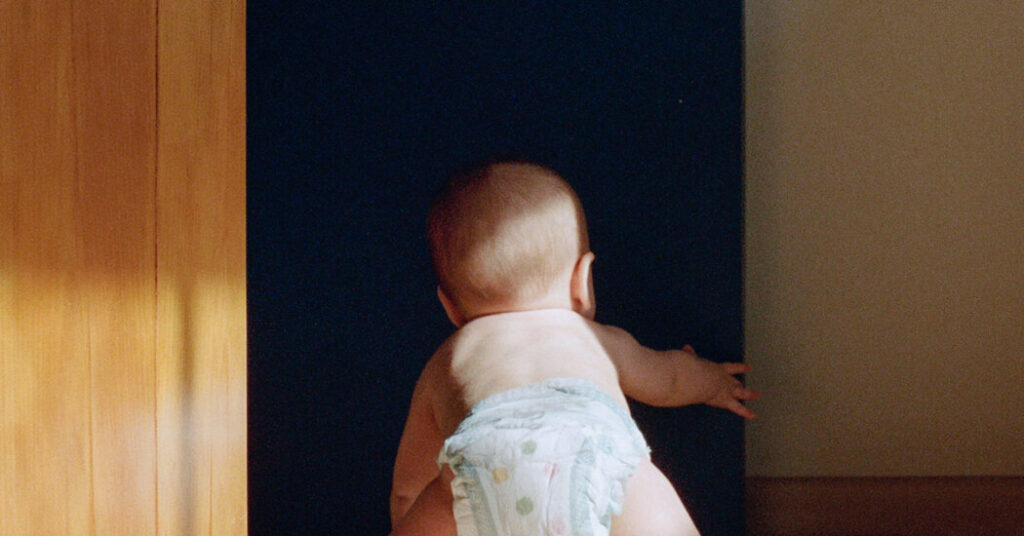
In the first hours after my daughter was born, three years ago now, I searched her for answers. I examined her ears, looking for the telltale shape associated with certain genetic syndromes. I inspected her mouth for a cleft palate. I watched her movements and wondered what they might reveal.
I don’t know what I would have said if, in those days in the hospital, I had been offered the chance to search her genome for predisposition to disease. But this may soon be reality. As genetic testing has become cheaper and more widespread, scientists around the globe are aiming to sequence tens of thousands of infants to study the feasibility of offering this type of testing to millions of babies at birth. This future is closer than we think, and I believe that we should embrace it — which means we need to be honest about how much work there is still to do.
Shortly after birth, almost all newborns have their heels pricked, and the resulting blood is tested for a few dozen serious conditions for which early treatment can change a child’s life. Genome sequencing promises the chance to screen for far more diseases.
Take, for example, hemophilia, a bleeding disorder that currently isn’t part of newborn screening. Early identification would allow families and clinicians to take precautions before the first crisis and in some cases begin prophylactic treatment.
Genome screening could help thousands of babies, but it opens the door to a set of thorny ethical questions. The traditional consensus about newborn screening is that you should target only conditions that manifest during childhood and that are treatable. But as genetic testing explodes the number of conditions we can find, choosing which ones to identify and disclose becomes harder. Should we disclose an illness if the only treatment for it is still in clinical trials? What’s more, these tests cannot say definitively if a disease will emerge, so a family could spend years worrying about an outcome that will not come to pass.
Many ethicists worry that families cannot handle such ambiguity — that such knowledge will cause more harm than good.
But as a doctor who delivers complicated news and as a mother, I want to ask a different question: Why are experts so confident that ignorance is the kinder choice — and who should get to make that decision? We cannot protect parents from uncertainty. Every child arrives with unknowable risks. Genome sequencing would neither create nor eliminate the types of questions that come with parenthood. We need to invest now in the counseling, education and clinical infrastructure that will help families navigate what they learn.
My generation often encountered genetic information as something frightening. We read stories about people grappling with whether to get tested for breast cancer genes or Huntington’s, a fatal neurodegenerative brain disease. We worried about privacy and the loss of health insurance eligibility. It stands to reason, then, that the idea of sequencing healthy newborns would — and should — give us pause.
At the core of our hesitation is a concept called genetic exceptionalism — the idea that genetic information is uniquely dangerous, uniquely frightening, uniquely deserving of protection. For decades this has been a foundational assumption in medical ethics. It has shaped consent laws, insurance protections and the way doctors decide what to tell patients and what to withhold. The question worth asking now is whether that exceptionalism still serves us.
Dr. Robert Green, a geneticist at Harvard Medical School and Brigham and Women’s Hospital, decided to find out. He started the first randomized trial of newborn genome screening in 2013, sequencing 159 infants and looking for disease-causing variants in over 4,000 genes. Dr. Green found that receiving genomic results did not increase parental anxiety or disrupt the bond between parent and child, despite the fact that more than 11 percent of the babies studied had mutations in disease-related genes.
In contrast with other studies in this field, Dr. Green included screening for some treatable diseases that begin to manifest only in adulthood, with the idea that these findings could lead to useful information and better care for the rest of the family. In one case, after a baby was found to have a BRCA2 gene mutation, the baby’s mother was also tested and found to share the variant, leading her to take preventive measures to lower her own cancer risk. “Saving a mother is good for the child,” Dr. Green told me.
Dr. Green has been candid about the limitations of his study. Only a small fraction of families approached immediately after birth at the hospital agreed to enroll. Those who enrolled initially were overwhelmingly white, well educated and financially comfortable. But in a second phase of the study that enrolled a mostly nonwhite sample, the same results held true — giving genetic results didn’t increase parental anxiety. It’s possible that these findings are a testament to the scaffolding of strong genetic counseling to put results in context, but it also speaks to the idea that parents might be able to manage this information better than the system would assume.
But not without help. Indeed, without universal parental leave and without a robust pipeline of pediatricians trained to deliver and explain genetic results, the benefit of sequencing could be undermined before it begins. A pediatrician in training recently described newborn genome sequencing to me as “a pediatrician’s worst nightmare” because of the amount of complexity it would introduce into an already overstretched field.
But widespread newborn gene sequencing could happen — sooner than we might expect. The National Institutes of Health is funding a study of newborn genome sequencing, also led by Dr. Green, which aims to enroll 30,000 newborns and will look at just over 750 conditions. Pediatricians will receive action sheets to help them interpret results. Unlike the more expansive testing in Dr. Green’s earlier study, the testing in this one is restricted to conditions that can be treated within the first year of life.
To understand what is at stake, consider two diseases. In Dr. Green’s 2013 trial, a newborn found to carry a mutation in the gene for elastin — a protein found in skin, lungs and blood vessels — underwent imaging that revealed aortic abnormalities that required monitoring. That finding meant more testing and more stress for the family. It may save his life.
This is the kind of information that is easy to say yes to, the kind of information that most studies would think parents should receive. But then there is Tay-Sachs, a fatal childhood condition. This condition isn’t being reported in the new N.I.H.-funded study, because it is not what the study would describe as actionable. But isn’t it? I would want to know about that finding, too, as awful as it is to consider, because it would change how I spent time with my child. The N.I.H. study is also choosing not to share murkier results, like an adult-onset predisposition to cancer, despite the ripple effects that information might carry. In all cases, if I were given the option, I believe that I would choose to know.
These are questions that parents and doctors are going to have to ask ourselves. Because once you’ve sequenced the genome, the data exists. The question of which genetic findings to identify within that data and share with parents is not fixed. Researchers will make new associations. Families will request information. Promising new treatments will emerge. Right now, many large research projects are, like the N.I.H. study, disclosing only a relatively narrow range of conditions. But it seems shortsighted to believe that once this begins, it will stay within those limits.
The job now, before sequencing newborns becomes widespread, is to build a system that can support every family. That means counselors trained to deliver complex results, the infrastructure to follow up on what they find and, maybe most important, the honesty to acknowledge how much we still don’t know.
In the early moments after my daughter’s birth, I was looking for a window into the future, for a way to know who she would become. I was never going to find that anywhere. Whatever her genome holds, whatever risks it names or doesn’t name, she arrived entirely herself. No test could tell me how gentle she would be with her baby dolls or how it would feel when she tells me she loves me. What I want for her is the same as what any parents hope for their children: to be as healthy and happy as possible. And if knowing her genome can help her get there, then I would rather she inherit that knowledge than our fear of it.
Daniela Lamas, a contributing Opinion writer, is a pulmonary and critical care physician at Brigham and Women’s Hospital in Boston.
The Times is committed to publishing a diversity of letters to the editor. We’d like to hear what you think about this or any of our articles. Here are some tips. And here’s our email: [email protected].
Follow the New York Times Opinion section on Facebook, Instagram, TikTok, Bluesky, WhatsApp and Threads.
The post Would You Want to Know Your Baby’s Genetic Future? appeared first on New York Times.