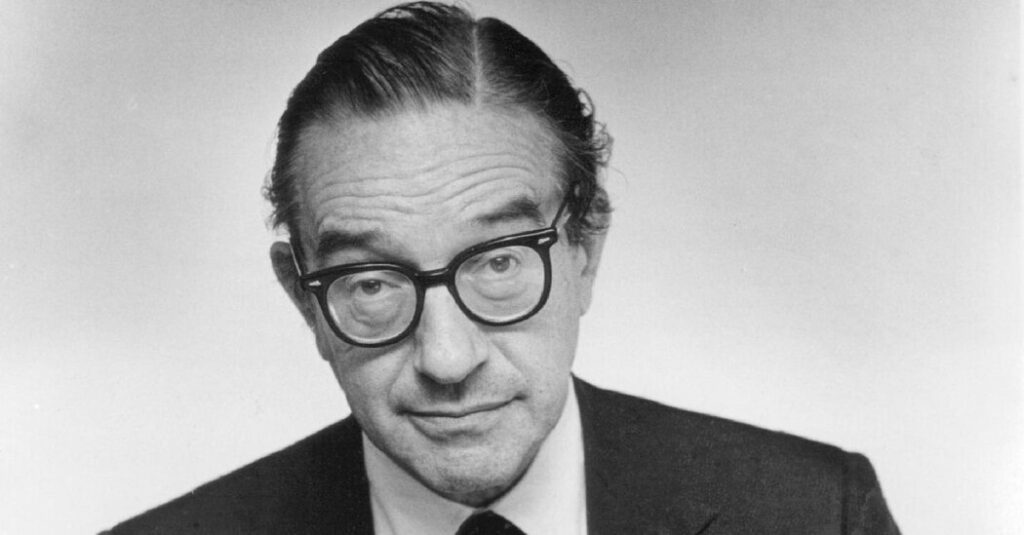
Alan Greenspan, who in nearly two decades as chairman of the Federal Reserve nurtured a long run of prosperity, navigated crises and was a powerful and polarizing force in shaping market-friendly policies, died on Monday. He was 100.
His death was announced by his wife, Andrea Mitchell, the chief Washington correspondent for NBC News, which reported her statement.
“Alan passed away at our home this morning at the age of 100 from complications of Parkinson’s disease,” she said in the statement.
The pre-eminent economic policymaker of his time and arguably the most recognizable economist of any era, Mr. Greenspan led the central bank under four presidents of both parties from 1987 to 2006.
Much of his tenure coincided with a streak of affluence in which he stood as the embodiment of a triumphant, post-Cold War strain of American capitalism: optimistic, faithful in the power of markets to improve living standards, captivated by the power of technology and averse to regulation.
But the ideological stamp he put on policymaking came to be associated as well with the destructive consequences of forces that emerged on his watch, including deregulation of banking and Wall Street, the loss of American jobs to free trade and persistent concerns about bubbles in stock and housing prices.
A full obituary will follow.
The post Alan Greenspan, Fed Chairman Through Prosperity and Crisis, Dies at 100 appeared first on New York Times.