Emily Dufton is the author of “Addiction, Inc.: Medication-Assisted Treatment and America’s Forgotten War on Drugs.”
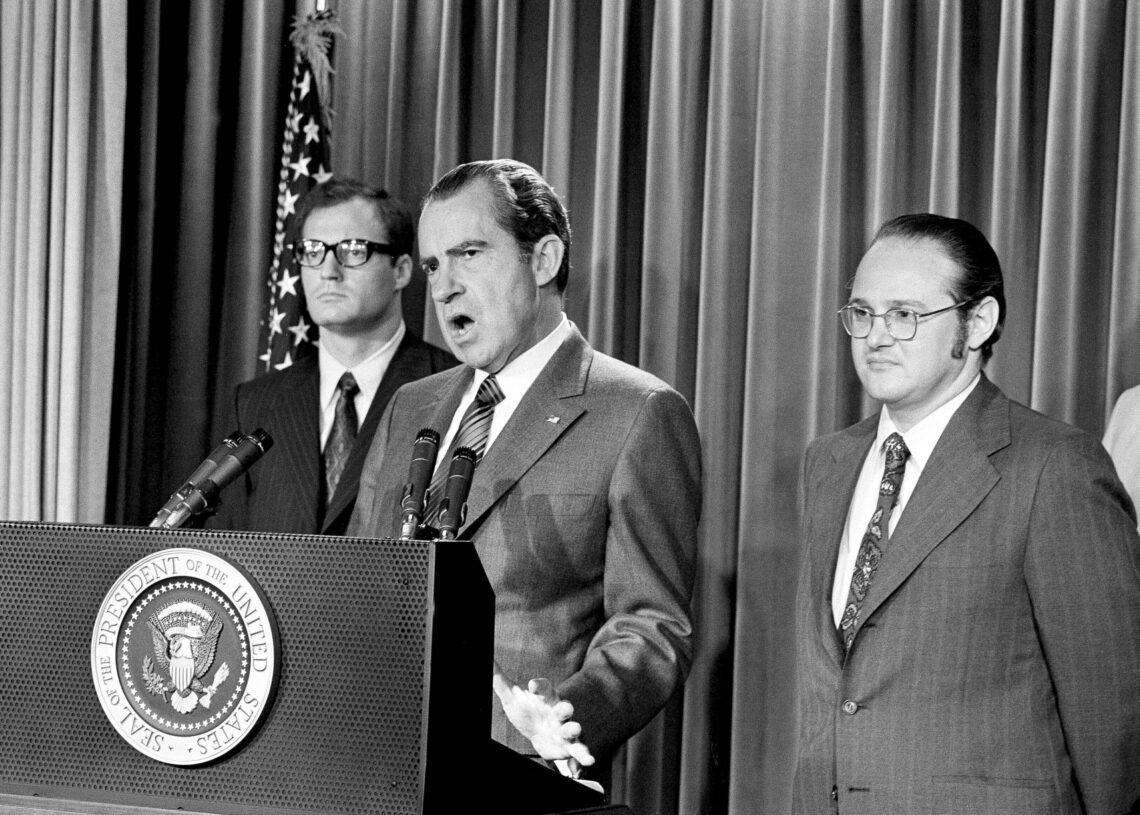
Fifty-five years ago on Wednesday, President Richard M. Nixon launched what is widely remembered as America’s original “war on drugs.”
It is often held that Nixon declared the drug war on June 17, 1971, to criminalize addiction, target his political enemies and set the nation on a path toward the prison-heavy policies that emerged in the 1980s and 1990s. Nixon did not use the phrase “war on drugs” that day, but he did announce a “new, all-out offensive” against drug abuse, which he called “public enemy number one.”
The rhetoric was exactly what Americans expected from a law-and-order president. What followed, however, was something different. Instead of mandating the construction of more prisons, Nixon announced the largest expansion of addiction treatment in U.S. history.
The centerpiece of the effort was the Special Action Office for Drug Abuse Prevention, headed by the psychiatrist Jerome Jaffe. Controlling two-thirds of the federal drug budget, the office rapidly expanded access to addiction treatment, including counseling, therapeutic communities and methadone maintenance. The initiative’s goal was simple: to make treatment available to any heroin user who wanted it.
By early 1973, more than 72,000 people were voluntarily enrolled in federally funded treatment programs, including more than 23,000 receiving methadone. It was the largest federal investment in addiction treatment infrastructure in U.S. history.
This was a remarkable departure. For more than half a century, federal drug policy had focused overwhelmingly on law enforcement. Nixon himself campaigned against the “scourge” of narcotics and spent his first years in office emphasizing arrests and imprisonment for drug use.
But midway through his first term, Nixon pivoted to public health.
Crime and heroin use were rising in cities nationwide. Overdose deaths were climbing. And in May 1971 came alarming reports from Vietnam that as many as 15 percent of American servicemen there were addicted to the pure, cheap and ubiquitous heroin the Vietnamese sold to soldiers. A media firestorm erupted in response, warning of the threat posed by the tens of thousands of “GI junkies” who would destroy the fabric of American society when they went into withdrawal.
In response, Nixon could have doubled down on arrests and punishment. But he expanded access to treatment and rehabilitation instead.
When the Special Action Office’s treatments became widely available, the effects on the street were noticeable. Overdose deaths declined. Drug-related emergency room visits fell. Drug use dropped, as did drug arrests, and in cities nationwide crime rates fell for the first time since their dramatic rise in the 1960s. Heroin addiction did not disappear, but the crisis that prompted Nixon’s intervention eased considerably.
Nixon’s holistic approach to heroin worked for him politically, too. When he campaigned for reelection in 1972, Nixon didn’t have to focus on crime. Instead, he dominated his Democratic opponent, Sen. George McGovern (South Dakota), and swam into a second term with high approval ratings and the heroin epidemic under control.
This history often surprises people. Nixon’s drug war is often lambasted as the opening chapter in an era of mass incarceration. But the historical record suggests a more complicated reality. On addiction policy, his administration sounded more like modern public health advocates than drug warriors.
Unfortunately, Nixon’s approach did not survive his time in the White House.
The Special Action Office effectively disappeared after Watergate. In 1974, it was folded into the National Institute on Drug Abuse, where treatment gave way to research. Then in the 1980s, the Reagan administration shifted responsibility for addiction treatment to the states with block grants and reduced federal funding by about 25 percent. The national treatment infrastructure Nixon built began to fragment and, without federal funding, privatize.
What followed was the era many Americans now associate with the drug war, when the crack cocaine epidemic prompted mandatory minimums and aggressive sentencing laws. Without federal support and sufficient funding, treatment became increasingly difficult to access, while politicians embraced tougher rhetoric. These developments occurred in the 1980s and ’90s, long after Nixon’s treatment initiative had faded. Yet Nixon receives much of the blame.
As a result, Americans have spent decades condemning one of the few moments in our history when addiction treatment enjoyed broad bipartisan support.
This matters because the country remains in the grip of an opioid crisis. More than a million Americans have died of drug overdoses since the turn of the century, and synthetic drugs such as fentanyl and nitazenes continue their deadly sprints nationwide. Meanwhile, medications such as methadone, buprenorphine and naltrexone — considered the gold standard for treating opioid addiction today — all emerged from the federal treatment and research infrastructure Nixon’s initiative created, yet they remain harder to access now than in 1971.
The 55th anniversary of Nixon’s drug war should not be an occasion for unquestioning nostalgia. But neither should it be an occasion for simplistic condemnation.
The irony is that the most enduring — and most forgotten — legacy of Nixon’s 1971 drug war was that it was not a war of punishment at all. Instead, faced with a national drug crisis, Nixon concluded that law enforcement was not enough and built the largest addiction treatment system in U.S. history instead. At a moment when overdose deaths continue to devastate communities, that is the part of Nixon’s drug war worth remembering.
The post Americans condemn Nixon’s war on drugs. If only they knew the truth. appeared first on Washington Post.