For decades, outdated rules and regulations have constrained the ability of local television broadcasters — the providers of local news, the most trusted information available to Americans — to compete, grow, and invest in their own future. During that same time, a handful of Big Tech platforms have amassed unprecedented economic power, each one dwarfing all of traditional media and dramatically reshaping how Americans consume news and information.
Companies like Google/YouTube, TikTok, Amazon, Meta’s Facebook and Instagram, and Netflix now reach virtually every screen in every home and every device in every pocket. Their scale is staggering. Today, YouTube accounts for one-eighth of all television viewing in the United States. One in four young adults report getting their news from TikTok. The advertising numbers are just as stark: according to S&P Global/Kagan, YouTube alone billed more in video advertising last year than all of broadcast television combined. In 2026, one Wall Street analyst predicts that just five digital entities — Facebook, Amazon, Microsoft, Google, and TikTok — will control 65% of the advertising market, worth $260 billion.
These companies are not built to prioritize fact-based journalism or civic discourse. Their business model rewards clicks, not accuracy or accountability. While their content competes with trusted, fact-based journalism in the commercial marketplace, it does not serve the same critical purpose in the marketplace of ideas that is so vital to the proper functioning of our democracy. That makes the threat these companies pose to local broadcasters and local news very real and very urgent.
If all of this sounds somewhat familiar, it should. Local newspapers were once indispensable — deeply rooted in their communities and widely trusted. Then, with the rise of online news and advertising, their economics began to unravel. New competitors emerged with a scale and reach local publishers simply couldn’t match. The consequences were severe. Thousands of newspapers closed. Many others were hollowed out. According to the Medill Local News Initiative, in the last 20 years nearly 270,000 jobs at local newspapers have been lost. Today, communities are lucky if there is a single paper left. When regulatory relief finally came for newspapers, the economics had already collapsed — a warning local broadcast cannot afford to ignore.
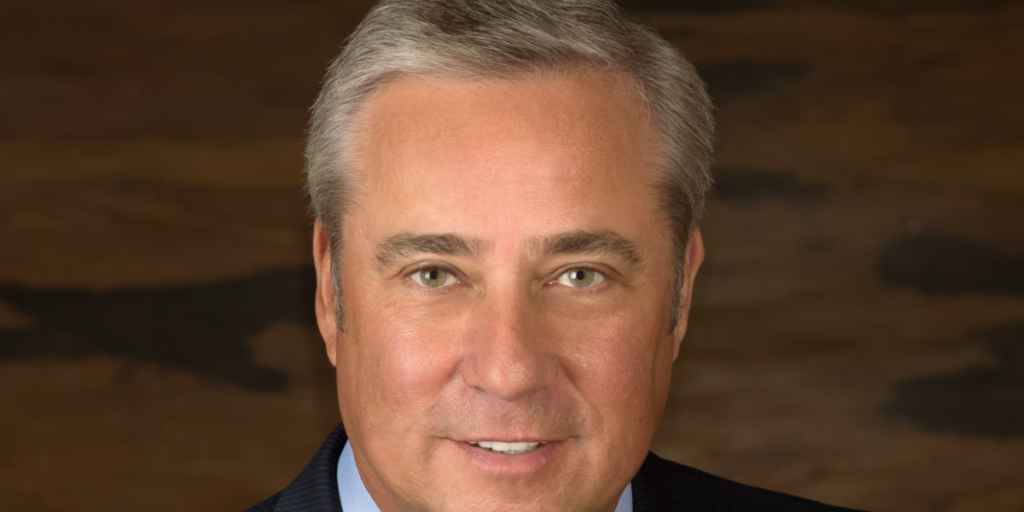
Local broadcast television now faces a similar inflection point. I have spent the past 30 years of my life building one of the country’s leading local television companies, Nexstar Media Group. I founded the company in 1996 with one television station in Scranton, Pennsylvania, located in the back of a converted Kresge’s department store. Today, with TEGNA under the Nexstar umbrella, we provide local news and programming to more than 130 communities across the country and employ more than 18,000 people, nearly 9,000 of whom are journalists.
Americans consistently rank local newscasts as their most trusted source of information. Across Nexstar stations, we produce more than 300,000 hours of local news and programming each year. And in an era of rampant misinformation and growing polarization, local journalists provide a critical counterweight — offering verified facts and a forum for civic engagement. Sustaining that mission in today’s environment requires scale — which is exactly why Nexstar pursued the acquisition of TEGNA.
This transaction is vital to the future of local television and local journalism. Without the ability to grow, local broadcasters will struggle to compete for audiences, attract advertising, and invest in the journalism that is vital to our communities. With it, we can expand our reach and preserve something no algorithm can replicate: trusted local news. Even combined, Nexstar and TEGNA represent just 15% of the more than 1700 full-power stations across the country and have no presence in 20% of the country.
The alternative is dire. A future where Americans rely on algorithm-driven feeds, viral content, and AI-generated summaries for information. A future where local voices are diminished or disappear altogether. A future where fewer institutions are dedicated to reporting facts, holding power to account, and fostering informed civic dialogue. No one wants their news from a chatbot or a rage-optimized social feed. And Americans deserve more than a shrinking set of national outlets that do not reflect the diversity of their communities. This deal offers us all a chance to preserve real news options for future generations of Americans.
The opinions expressed in Fortune.com commentary pieces are solely the views of their authors and do not necessarily reflect the opinions and beliefs of Fortune.
The post Nexstar CEO: big tech swallowed local newspapers. Local TV could be next appeared first on Fortune.