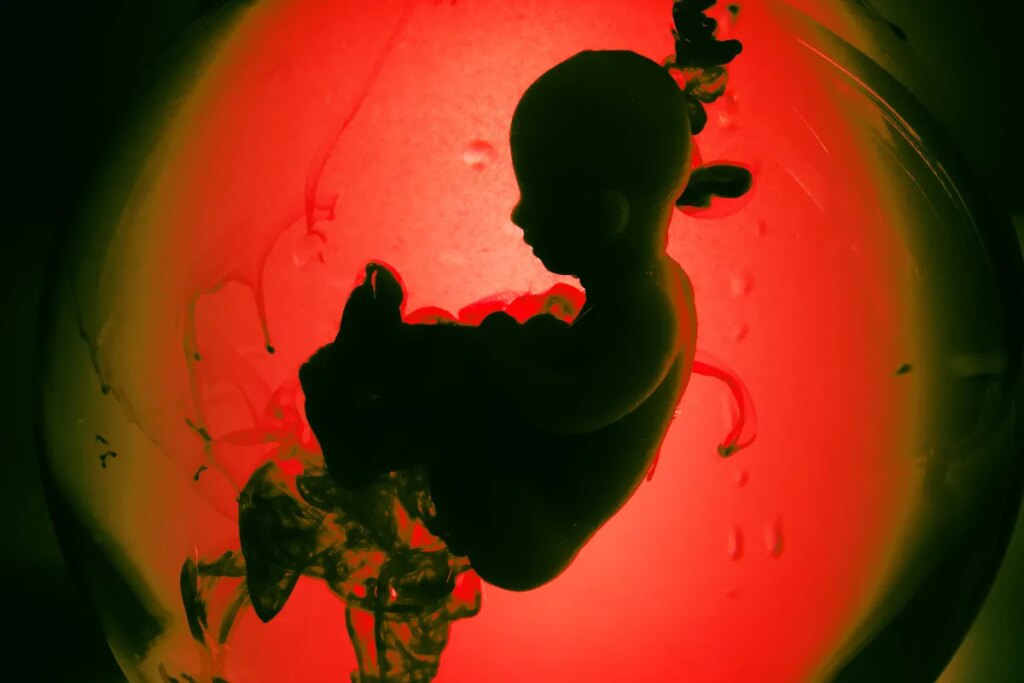
Editing the genes of a human embryo remains highly controversial, particularly after Chinese scientist He Jiankui shocked the world eight years ago by doing just that using the popular gene-editing technique CRISPR — and then allowing the embryos to be carried to term and born.
Proponents say the tech could allow us to treat diseases in powerful new ways, while critics liken it to eugenics, arguing it could set a dangerous precedent by allowing parents to select certain desirable traits.
It should therefore come to no surprise that the most recent attempt to edit human zygotes, embryos at their earliest single-cell stage, has once again fueled controversy. As detailed in a yet-to-be-peer-reviewed paper, a team led by Columbia University geneticist Dieter Egli used a technique called base editing, essentially editing a single strand of DNA, to edit two genomic sites.
The goal wasn’t to establish promising new therapeutic or medical treatments, as the scientists noted in their paper. Instead, they attempted to demonstrate that base editing was a viable way of editing sequences of DNA in embryos without risking the damage earlier attempts involving CRISPR have caused.
But as Scientific American reports, the latest research could lay the groundwork for more controversial work, despite the embryos not being carried to term, with pioneering genome‑editing researcher and Alexis Komor, who helped develop CRISPR, telling the publication that the “cat’s out of the bag.”
Komor argued that without any strict regulatory oversight in the US, Egli and his colleagues may have broken an existing “gentleman’s agreement,” in the kind of research that “kind of opens the floodgates.”
The geneticist called the latest study a “gateway to embryo editing to do enhancements,” highlighting how controversial the field remains.
The research is also being supported by Nucleus Genomics, a company that screens IVF embryos for genetic disorders, which has already been steeped in controversy over its claims.
Simply put, base editing makes tiny incisions in a single strand of DNA instead of removing entire segments, as is the case with CRISPR. Early experiments have already proved promising. Last year, a 9.5-month-old baby was cured of a rare genetic disorder thanks to a cutting-edge gene therapy involving base editing.
Egli and his colleagues targeted two genomic sites that correspond to cholesterol management and hemoglobin production-related genes for their research, “because they are well studied in the context of somatic gene editing, rather than based on therapeutic promise in the germline,” according to the paper.
But the results left something to be desired. For one, many of the edited embryos featured the same type of cells that differed genetically from each other, a phenomenon called mosaicism, which can lead to medical problems if the zygotes were to develop into embryos and eventually babies, as the New York Times points out.
“It is possible that some of the potentially harmful effects would not be evident until after birth,” Wake Forest University bioethicist Ana Iltis, who was not involved in the research, told the NYT.
The researchers behind the latest study, however, remain hopeful, explaining that plenty of work remains until the tech could be used to cure or head off diseases.
“There’s still work to do before getting to that point, but this research gets us closer,” coauthor and Nucleus Genomics chief clinical officer Nathan Treff told the NYT.
Others put it far less favorably.
“What they are really doing is providing the ‘baby improvers’ with a how-to manual for forays beyond the ethical pale,” University of California, Berkeley, geneticist Fyodor Urnov, who was not involved, told the newspaper.
More on gene editing: Startup Secretly Working to Gene-Hack Human Baby
The post Scientists Concerned Latest Gene Editing of Human Embryos Could “Open the Floodgates” appeared first on Futurism.