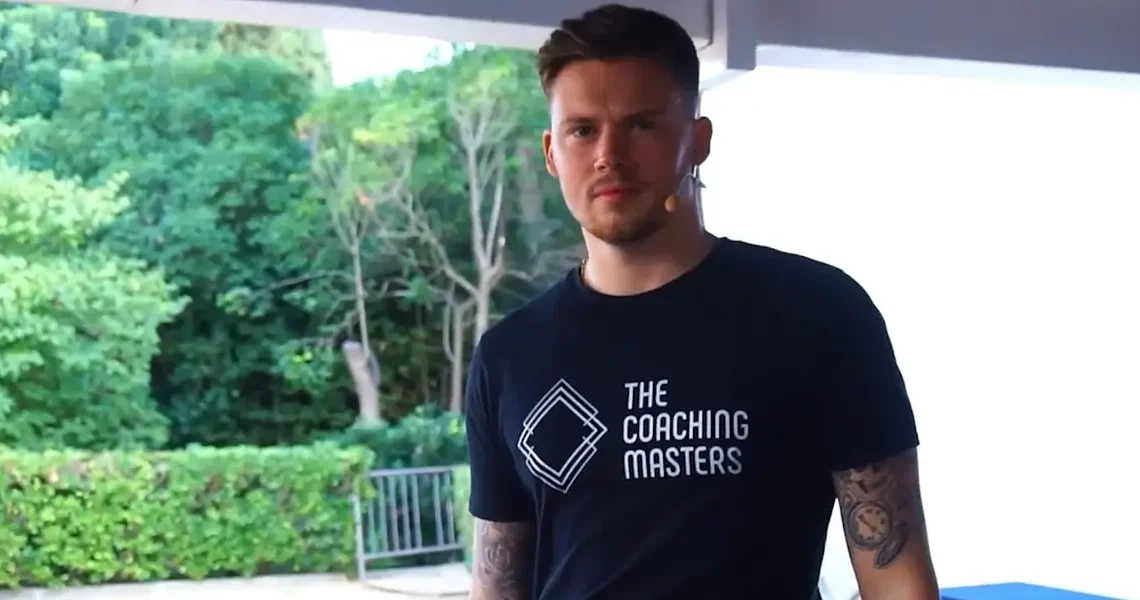
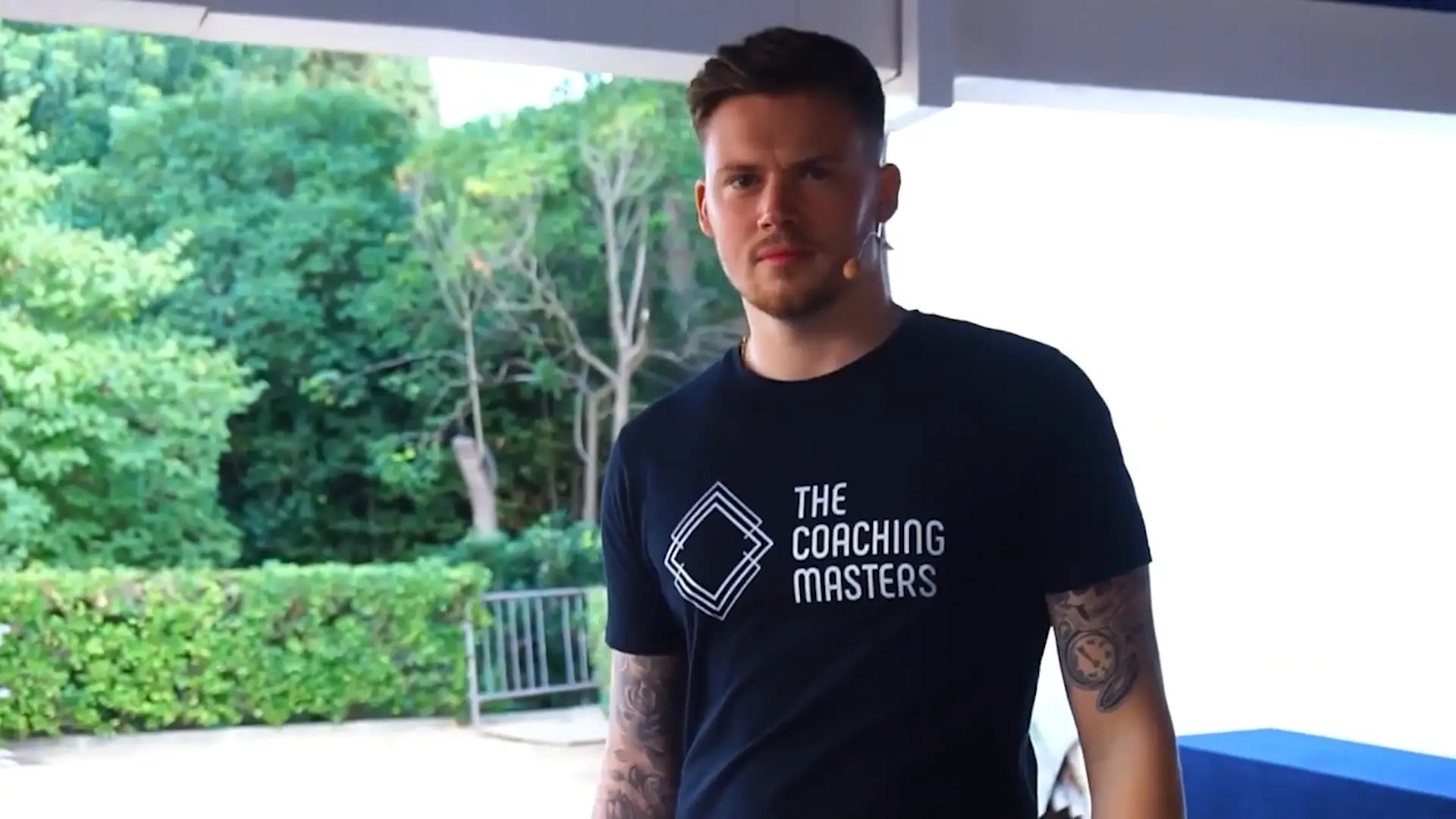
Lewis Raymond Taylor will be the first to tell you he’s a psychopath. “I think things. I don’t feel,” he told Business Insider.
Today, Taylor helps aspiring life coaches through The Coaching Masters, an online education company with 15,000 students across 87 countries that he cofounded.
His path to entrepreneurship was anything but conventional, though.
Before building a business valued at $25 million, Taylor served multiple prison sentences for crimes ranging from shoplifting and vandalism to drug dealing and violent assault.
He attributes that behavior to a combination of factors, including an emotionally difficult childhood, abuse, and what he says are underlying psychopathic traits.
There’s no formal diagnosis for psychopathy in the American Psychiatric Association’s diagnostic manual.
However, Taylor says he was diagnosed with antisocial personality disorder as a teenager, which has many traits that overlap with psychopathy, including lack of remorse, impulsivity, low fear, and emotional detachment.
While his circumstances have changed dramatically over the years, he says those traits never went away. “I’ve always displayed every single symptom,” Taylor said. “I still display it now, but I’ve been able to channel it.”
He believes those same traits that once fueled his criminal behavior later became an asset in running a business.
“I would not be the success I am without being a psychopath.”
The photo that forced him to confront a hard truth

Taylor grew up in Kings Langley, England, and says he was a troubled child who was expelled from secondary school. He also describes an emotionally abusive relationship with his father, who frequently told him he would never amount to anything.
By his late teens and early 20s, Taylor says he was addicted to cocaine and alcohol, getting into frequent fights, and embracing a reputation for being reckless and dangerous.
“When I was fighting, I was fighting to hurt, to win, to feel powerful,” he said.
His turning point came in 2014 after he punched a man during an altercation, leaving the victim with a brain hemorrhage and in a coma for several days. Taylor was sentenced to 18 months in prison for grievous bodily harm and served nine months behind bars.
While in prison, a friend told him someone had posted two photos of him outside the same courthouse seven years apart with the caption: “Nothing changes.” That stuck with him.
Shortly after, back in his cell, Taylor said he looked at his reflection in a scratched piece of metal. “I realized I was the problem,” he said. “But I’m also the solution.”
He began attending rehabilitation programs and studying math and English. A prison tutor convinced him he was capable of going to university, which encouraged Taylor to complete an access course where he earned top marks, and he began volunteering in recovery programs after leaving prison.
How psychopathy became a business advantage
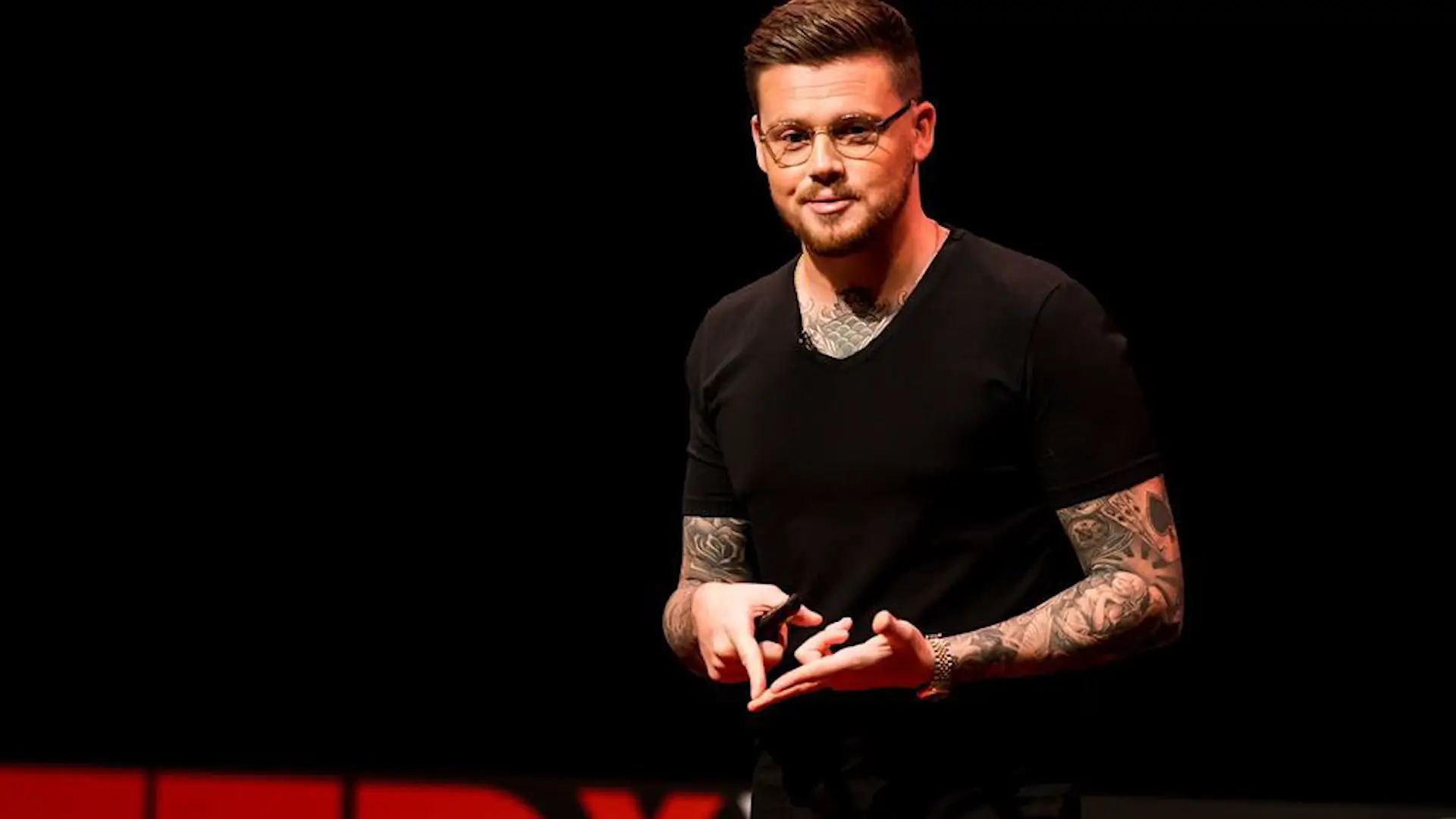
As Taylor rebuilt his life, he was surprised to realize the criminal behavior was gone, but many of the traits associated with his diagnosis remained.
Rather than fight them, he learned to use them.
“A lot of people ask me how I’m successful,” Taylor said. “I just figure out what I want to do and then I make a plan of one, two, three, and then I take steps one, two, and three.”
Taylor believes emotional detachment allows him to make decisions without being slowed by fear, insecurity, embarrassment, or self-doubt.
While he says many people can become overwhelmed by uncertainty, he can focus almost exclusively on execution.
He also sees other psychopathic traits differently from most.
What some might call manipulation, he views as persuasion. “I am very manipulative, but to help someone,” he said. “I will persuade you to think better about yourself and live your life beyond your wildest dreams.”
What some might call impulsiveness, he sees as a willingness to take risks. “My lack of fear enables me to not be burdened by it.”
And what some might view as emotional bluntness, he considers an ability to think strategically under pressure. “I seem to be very methodical and strategic in my way of kind of taking very simple steps one after another with no emotional burden pulling me back,” he added.
Taylor acknowledges that those same traits can create challenges
He says he becomes frustrated with employees who don’t see solutions as quickly as he does and describes himself as a more directive leader than a nurturing manager.
“I don’t have much of a tolerance to support them emotionally from that real strong leadership perspective,” he said, adding that, “I become more of a dictator sort of leadership style.”
Even after years of therapy, rehabilitation, and self-reflection, Taylor says he still doesn’t know exactly how much of his personality is rooted in biology and how much was shaped by his upbringing.
Whatever their origin, he rejects the idea that those traits have to determine a person’s future.
“The things you’ve done are not the person you are,” Taylor said. “Your identity is something that can mold and adapt and change.”
Read the original article on Business Insider
The post Self-proclaimed psychopath built a $25M life coaching business. He says emotional detachment helped him get there. appeared first on Business Insider.